
Hay momentos en que una sociedad cambia porque ciertas palabras dejan de decirse en secreto. Feminism did exactly that: it took experiences historically relegated to secrecy or whispering—desire, pleasure, violence, autonomy over one’s body—and brought them to the center of the public conversation. Abortion still lives on that border between what is tolerated in private and what is uncomfortable when mentioned out loud, despite being a right recognized by law in many countries, including Spain and Argentina.
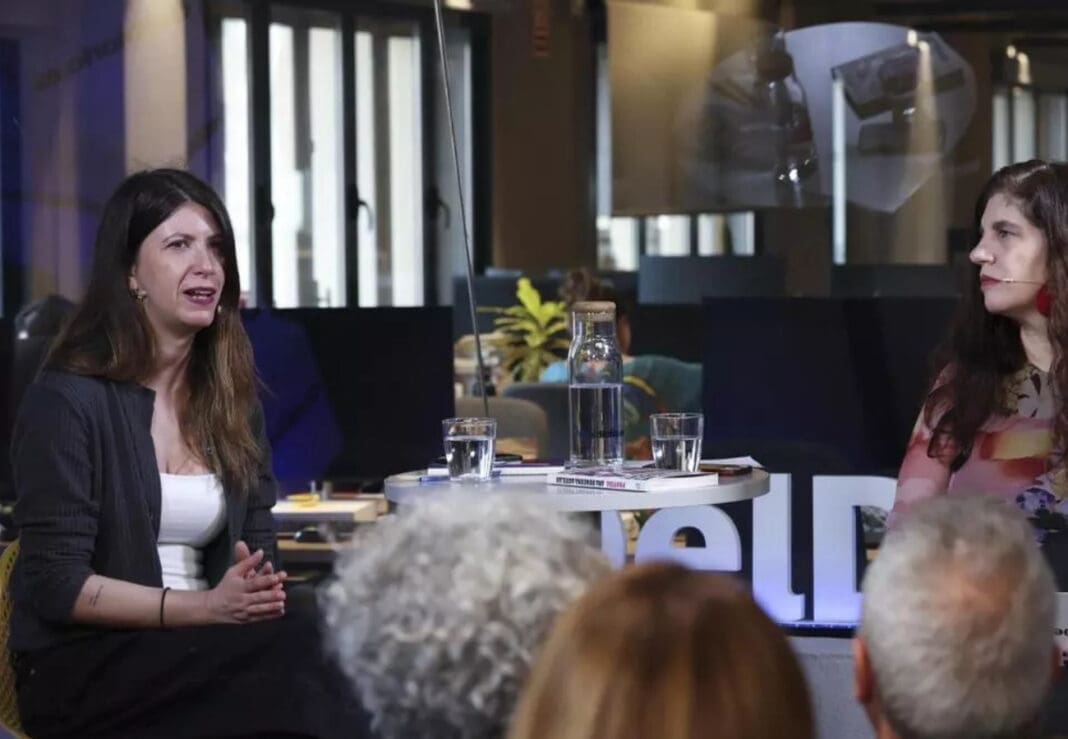
At the book presentation Pro life. A manifesto in favor of abortion, by Ana Requena Aguilar, a Spanish journalist, the most powerful thing, besides the ideas of the book, was the scene built around a word historically expelled from public conversation. Talking about abortion remains, even today, a form of cultural disobedience.
The book presented in the Diario.Es editorial office is published at a time when the new right is trying to reinstate shame as a form of social control. There was also Luciana Peker, author of Hateocracy, one of the most lucid books to understand how reactionary discourses build enemies around feminisms, dissidence and sexual freedom. In this context, talking about the right to decide stops being just a discussion about women: it becomes a conversation about democracy.
Because abortion was never just a health or legal discussion. It was always also a narrative dispute. Who can speak. From where. With what legitimacy. For too long, the dominant narrative forced women to justify themselves, to explain their pain, to demonstrate trauma. As if the only valid experience of abortion was one inevitably crossed by guilt.
One of the most powerful ideas of the talk was precisely to dismantle this cultural construction. Not to deny that there may be pain or contradiction, but to question the imposition that every woman must come out of that experience broken to be considered morally acceptable. As if the conservative mandate needed repentant women and not free women who freely decide about their bodies.
There were also specific references that brought the debate down to the realm of real experiences. From Nativity scene, the Argentine film inspired by the case of a young woman criminalized after an obstetric emergency, to recent examples in Spain linked to gynecological violence and debates about anesthesia in medical interventions in Murcia. There was also talk of the so-called “post-abortion syndrome”, a scientifically discredited category but still used by conservative sectors to impose fear and guilt around the right to decide.
Because each advance in sexual and reproductive rights expands the democratic perimeter. And each setback reveals something deeper than a moral discussion: the desire to control bodies to discipline freedoms.
Perhaps that is why the presentation had something of a collective act of reparation. Not a triumphalist celebration, but the realization that we still need to talk. That even where abortion is legal, it often remains socially condemned.
To name abortion is to bring it out of the closet. And bringing something out of the closet is never just about making it visible: it also involves disputing who has the right to live without shame.