
- More than identity: The Center warns that 30.6% of the group is at risk of poverty, especially affecting migrant people and trans women.
- The challenge of lesbian visibility: Only 16% of the people served are cis women, which is why the center launches the “Això va per tu” campaign to break the gender gap.
- Innovation against violence: In October 2026, the INTRA+ project will be presented, a pioneering initiative to address intragender violence in LGTBI couples.
In the heart of a Barcelona that boasts of being a beacon of freedoms, the LGTBI Center of Barcelona It stands as much more than a public facility: it is the real thermometer of our community. In a 2026 marked by the paradox of having the most advanced laws in history and, at the same time, a worrying rebound in hate speech, we sat down with the center’s team to dissect the reality that crosses its door every day. From the housing crisis and the vulnerability of migrants to the urgency of weaving networks in the face of loneliness, we discover why, in the digital age, spaces for physical reception and psychological support continue to be the last frontier of our resistance.
Rainbow Magazine: Barcelona has always been a pioneering city in rights and freedoms. From the counter and consultations of the LGTBI Centre, what is the reality that you see every day? What are the most pressing concerns that people walk through your door with today?
From the LGTBI Center we see a diverse reality, but also clear: the needs of the LGTBIQA+ group are multiple and are not limited to sexual orientation or gender identity. They are often crossed by structural inequalities such as poverty, racism or difficulties in accessing basic resources.
Within the group, migrant people are those who face greater situations of inequality and discrimination, largely due to social and institutional racism. Many arrive after having suffered violence or persecution, and experience processes marked by grief, migratory trauma and the loss of support networks. Added to this are legal and administrative barriers that make their regularization and access to housing, employment or healthcare difficult, increasing the risk of social exclusion and affecting their health.
Another constant demand is the coverage of basic needs: food, housing and access to employment. According to the LGTBI+ State Report 2024 of the LGTBI+ State Federation, 30.6% of the group is at risk of poverty, a figure higher than that of the general population. This situation is worsened in certain groups, such as trans people, lesbian and bisexual women or intersex people, who have higher unemployment rates.
All of this shows the need for public policies that go beyond symbolic recognition and guarantee a real redistribution of resources.
At the same time, the LGTBI Center has established itself as a reference space where people come in search of guidance, support or a safe environment. Many consultations are related to identity or sexuality processes, especially for trans or non-binary people who need support and information. We also deal with situations of emotional discomfort, family conflicts or acceptance difficulties, as well as cases of discrimination or LGBTIphobic violence in areas such as work, education or public spaces.
In short, what we see every day is that, although Barcelona is a city that is very advanced in terms of rights, many people still need spaces for support, accompaniment and community to be able to live their identity freely. And that is where the LGTBI Center plays a very important role.
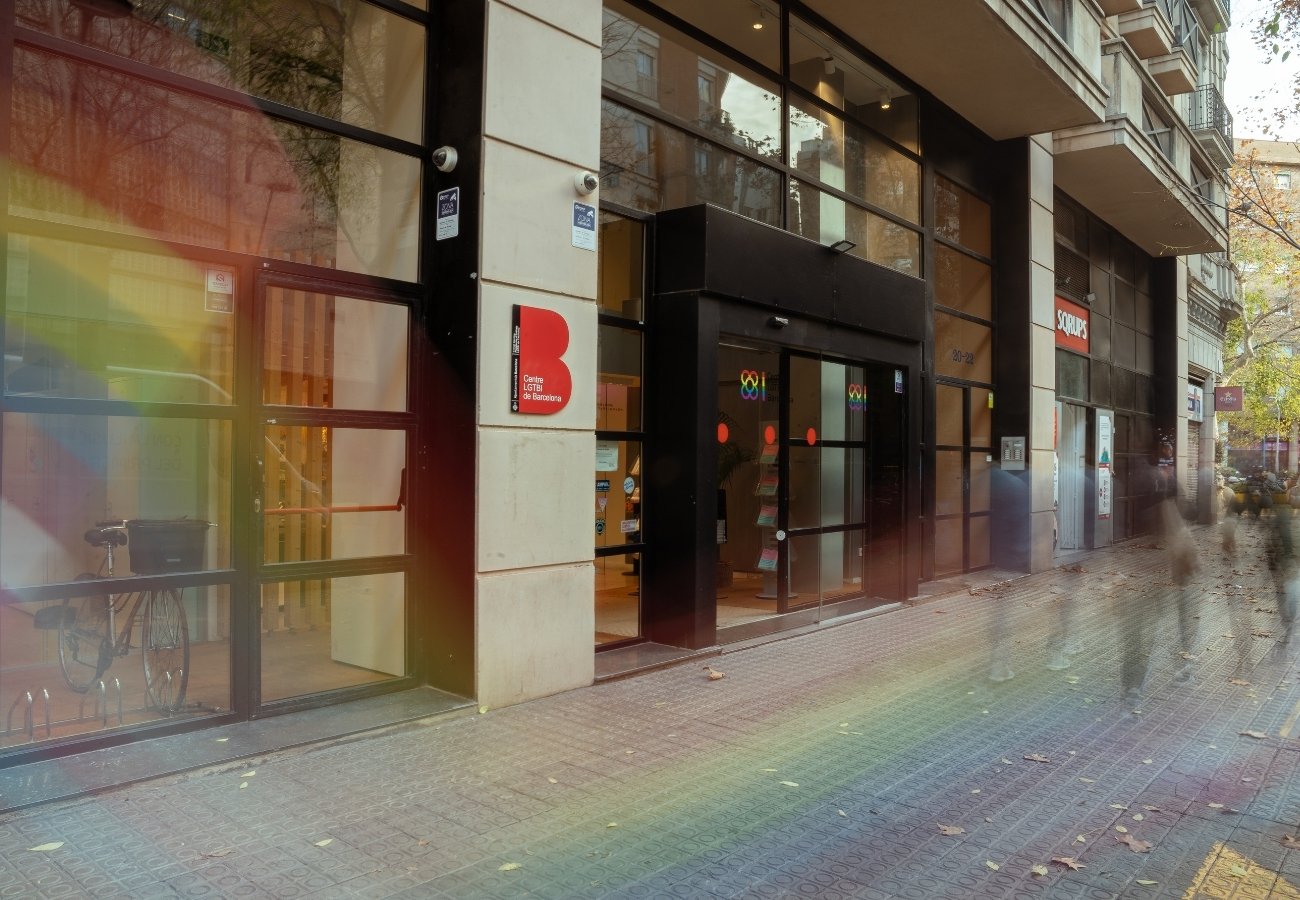
Rainbow Magazine: To understand the magnitude of your work, can you share some recent figures with us? For example, what is the volume of people that pass through the center per year and what are the services (psychological, legal, traffic, etc.) that citizens demand the most today?
During the year 2025, the social intervention area of the LGTBI Center served 1,196 people in individual services. Of them, 719 people went through the reception service, which is the gateway where we listen to the demand and guide each person to the most appropriate resources. We also served 249 people in the legal advice service and 228 in the psychological support service.
To these figures we must add participation in group spaces, such as Trans Group, el grupo de hombres GBTI o el taller de entrenamiento de la voz, que reunieron 172 participantes durante el año. In total, the social intervention area registered 1,368 participations in direct care services.
If we broaden our view to the center as a whole, During 2025, 6,552 requests for information and guidance were received, which gives an idea of the volume of people who approach the facility to find out about available resources or ask for support.
Regarding demands, we see that reception and psychological support are the most requested services, because many people arrive in moments of doubt or discomfort and first need a space for listening and guidance. There is also an important demand for legal services, especially in cases related to discrimination, family conflicts, immigration rights or administrative procedures linked to trans people.
Rainbow Magazine: We have more advanced laws than ever, but at the same time we see an uptick in hate speech. How is this contradiction managed from a public center and how does it affect the mental health of the users who come to you?
It is a paradox that we see very clearly in daily care. Whenever there is more visibility and more recognition of rights, contrary reactions also appear. Historically, this has happened like this: when a minority group gains rights, emancipation and visibility, discourses of rejection or attempts to question these advances also increase. With feminism and women’s rights we have also seen it very clearly in recent years. In a context marked by the conservative rise, the extreme right uses the advances of women and LGTBIQA+ rights as priority objectives to instill moral panic, reinforce authoritarian projects and consolidate structural inequalities.
Still, it is important to remember that we continue to move forward. Today we have legal frameworks and public policies that allow us to respond to these situations in a much clearer way than a few years ago.
At the same time, we see very clearly the impact that these speeches have on people’s lives. Many arrive at the center with anxiety, fear or a feeling of setback, especially young people who are building their identity in a context of strong media exposure. That is why the center’s work combines two dimensions: the active defense of rights and the response to LGTBIphobia, but also psychological and social support to care for the well-being of people who are affected by this social climate.
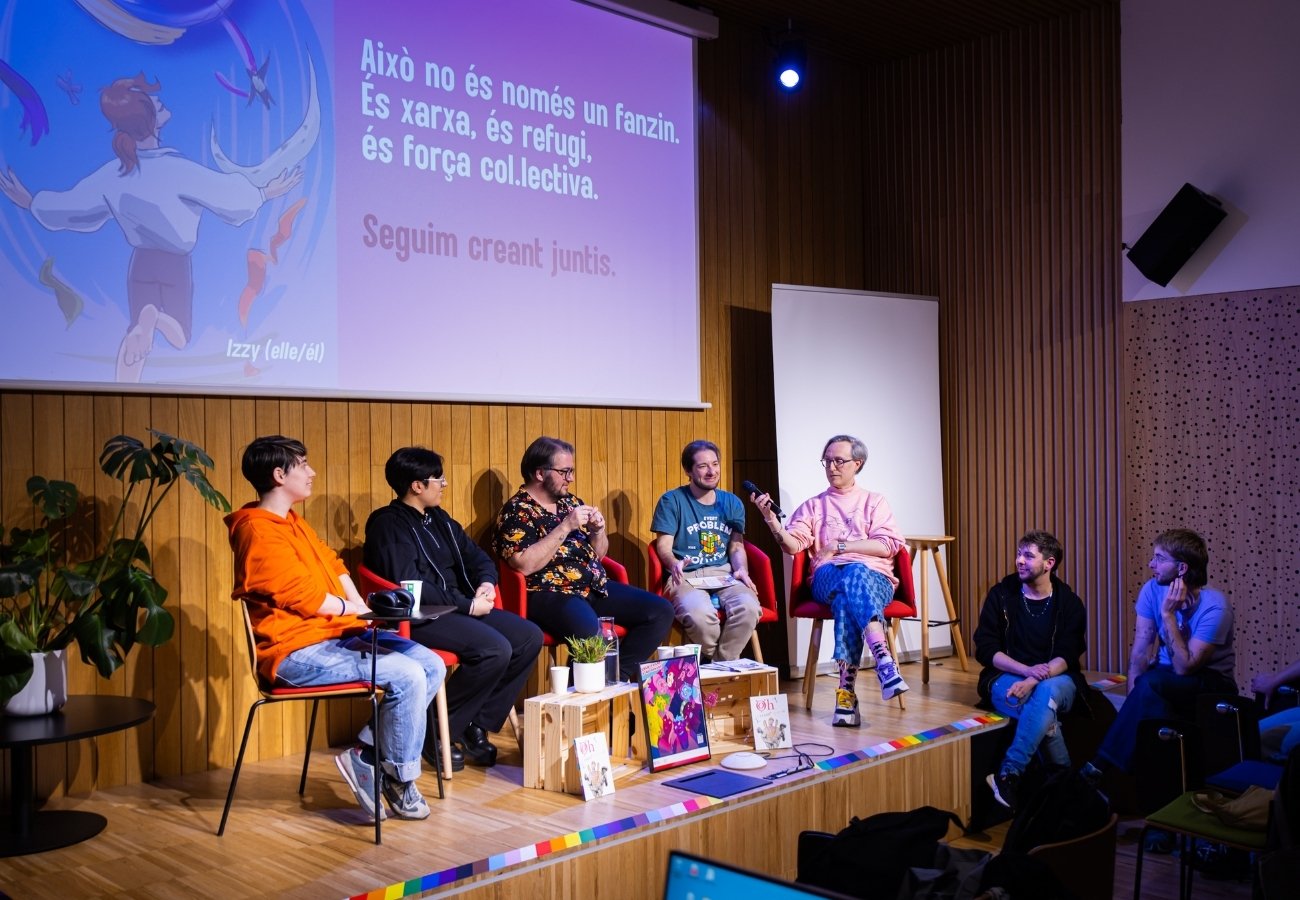
Rainbow Magazine: The LGTBIQ+ collective is immensely diverse. How do you work to ensure that the center is a safe and useful space for the most vulnerable realities, such as LGBTI migrants, older people or trans youth?
One of the keys to the work of the LGTBI Center is understanding that there is not a single reality within the group. The experiences of LGTBIQA+ people are influenced by many other factors such as origin, age, administrative situation, health or economic situation. That is why we work from an intersectional perspective, trying to understand how these inequalities intersect in the lives of the people we serve.
In practice this begins with the reception service, where we listen to each situation individually and assess which resources may be most appropriate. Many times we work in coordination with other social, health and community services in the city, because the needs that appear are not always just identity-related: they may be related to mental health, international protection processes, access to basic rights or situations of violence.
In order to address this diversity, the team carries out continuous training in very diverse areas, such as mental health, accompaniment to people seeking international protection, attention to the deaf community, addressing violence or intervention with trans youth, among others. This allows us to constantly improve the quality of care and adapt services to new realities that are emerging.
In addition, from the center we also promote group spaces and community work with entities in the territory, because we understand that people’s well-being also depends on the possibility of generating networks and community. Groups like the Trans Group or other mutual support spaces allow people to share experiences and reduce isolation.
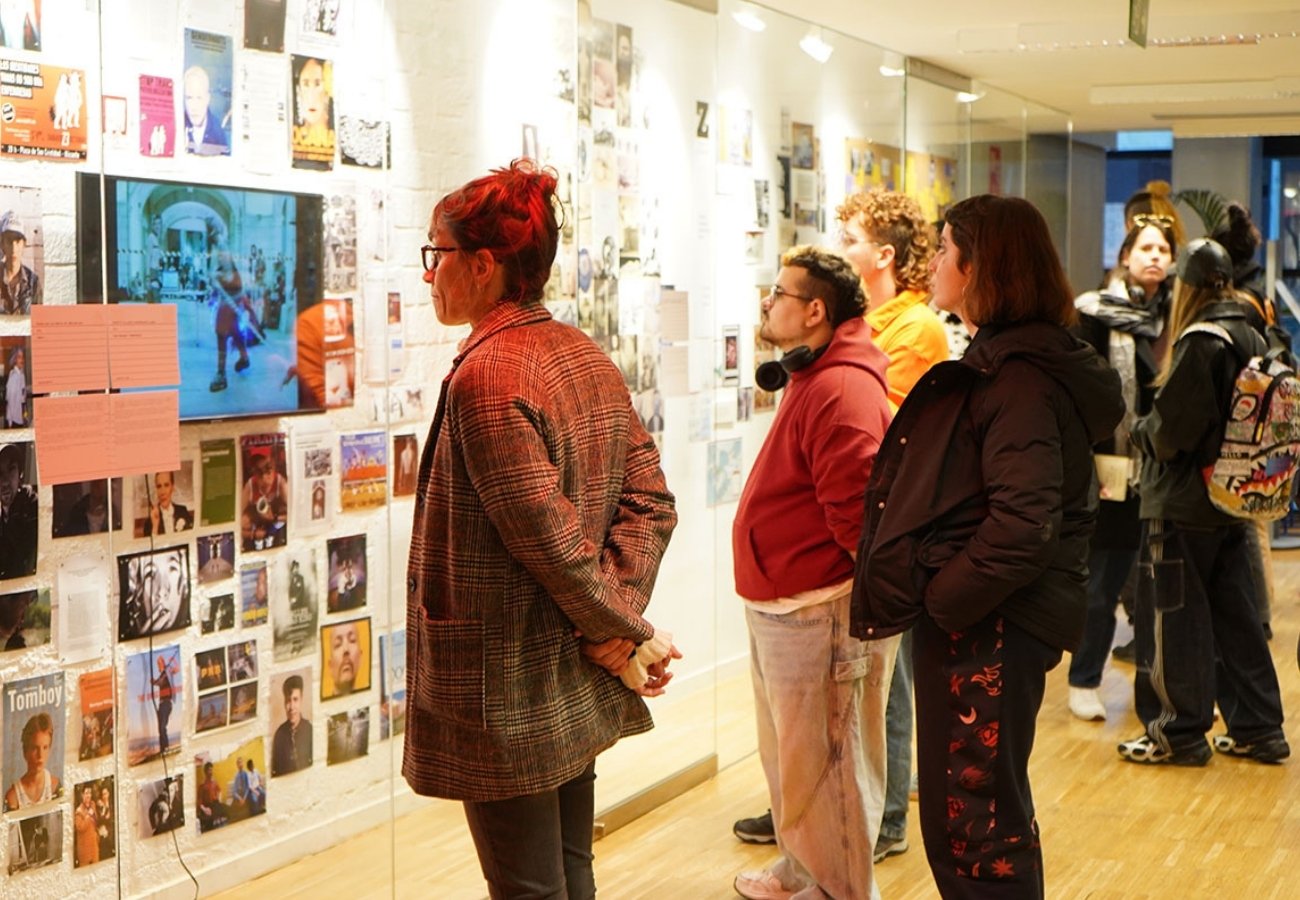
Por último, el Centro LGTBI cuenta con una programación cultural propia como herramienta de sensibilización abierta a la ciudadanía, a través de mesas redondas, talleres, exposiciones fotográficas y visitas guiadas por la ciudad. Articulated quarterly under specific concepts related to sexual and gender dissidence, it is committed to working from a transfeminist, intersectional and territorialized perspective in a transversal way.
Along these lines, community promotion involves the participation of different facilities and entities from different districts of the city to decentralize their activity and expand the community impact to different groups.
Issues such as LGTBIQA+ aging, trans* childhood and youth, or migration have been specifically worked on at Annual Conferences through workshops and conferences, with the aim of promoting the creation of public policies from activism, academia, and citizenship.
Rainbow Magazine: Of all the services you offer (psychological, legal, work, family counseling…), which do you think is the great unknown and that you would like more people to take advantage of?
One of the challenges we have right now at the LGTBI Center is to improve access to services for lesbian and bisexual women. For example, according to 2025 data, of the 719 people served by the social intervention area, more than half were cisgender men (53.9%), while cis women represented 16.8% and trans women represented 13.3%. This data tells us that there is still a perception that the center’s services are more aimed at gay men, and that is something we want to change.
That is why we have recently promoted the “Això va per tu” campaign, which seeks precisely to bring LGTBI Center for lesbians and bisexuals and remember something very simple: “Did you know that in Barcelona there is an LGTBI Center that also serves free thoughts for you?” The campaign is based on a clear idea: there are women in the group who perhaps do not feel addressed by the services or who have had negative experiences in other institutional spaces, and we want to break that distance.
We also know that, structurally, many lesbians and bisexuals tend to go less to services related to well-being or self-care, compared to other profiles of the group. Added to this are previous experiences of stigmatization or invisibility in public services, which can generate distrust.
That is why at the LGTBI Center we are working to incorporate a feminist and intersectional perspective in the design of services, reviewing methodologies, spaces and forms of care so that they are truly inclusive and welcoming for all the realities of the group. The objective is clear: that any LGTBI person in the city, including lesbians and bisexuals, feel that this center is designed for them.
Rainbow Magazine: The LGTBI Center is famous for housing the headquarters of historical associations in Barcelona. What is the day-to-day life of this coexistence between such diverse entities? How does the center facilitate these associations to collaborate with each other rather than working as “islands”?
One of the great riches of the LGTBI Center is the coexistence, in the same space, of historical entities of the movement together with the technical team of the center itself. This creates a living ecosystem where activism, social accompaniment and community work intersect daily.
This proximity greatly facilitates coordination: cases are referred quickly and almost immediate assessments can be made, something quite pioneering because it avoids long bureaucratic circuits. For users, this translates into less waiting and higher quality care.
Furthermore, sharing space favors joint work, the exchange of knowledge and the generation of more comprehensive responses. This model turns the LGTBI Center into an innovative facility, by combining public attention with the experience of the associative network.
One of the challenges is to continue expanding the diversity of the present entities—both with temporary and stable spaces—to better reflect the plurality of views in terms of gender, age and intersectionality. In this sense, the objective is for the center to be increasingly representative of the queer and transfeminist richness of the social fabric of Barcelona.
Rainbow Magazine: For new groups or smaller associations that are being born right now in the neighborhoods of Barcelona and are looking for a space or support: What requirements must they meet to be part of the center’s ecosystem or use your spaces for their activities?
The Center is a space open to the city, where LGTBIQA+ entities and projects can program their own activities. As a general criterion, these must be linked to sexual and gender diversity and be freely accessible.
In addition, the Center has spaces for entities that wish to have a workplace, whether stable or temporary, from which to offer personalized services. Currently, the criteria for assigning these spaces are being reviewed with the aim of reinforcing the representativeness of the entire LGTBIQA+ collective, incorporating a greater plurality of perspectives—in terms of gender, age and intersectionality—and favoring the diversity of themes and approaches present in the Center. As we said in the previous question, the center has to be increasingly representative of the queer and transfeminist wealth of the city.
Rainbow Magazine: Beyond individual attention, the center is a brutal meeting point in Barcelona. What type of regular activities, exhibitions or support groups do you currently have active so that the community can socialize and network?
At the LGTBI Center we have the Trans* i No Binari Group as a regular meeting place, intended for gender non-sident people to have a non-judgmental space to share their experiences and their process in a non-therapeutic way. Being the oldest group in the center, it has served as a point of socialization since its beginnings, crossed by values such as respect, confidentiality, tolerance and voluntary participation.
On the other hand, temporary groups such as the voice training workshop or the GBTI men’s group are organized annually, in accordance with the demands detected by the Social Intervention area that are not being covered by the city’s municipal services.
The LGTBI Center also offers various activities linked to our programming cycles, which we always articulate around a specific concept or idea. Until the end of June, the cycle “(RE)Actions: Rebel·lia, comunitat i alegria radical” proposes to reflect on forms of resistance to the current advance of the extreme right through talks, round tables, workshops, an exhibition and guided tours of the old Model prison. Some activities included in this cycle are round tables on young people and new masculinities or anti-racism, and workshops on digital strategies to combat misinformation or feminist self-defense.
Rainbow Magazine: Looking ahead to the coming months of 2026, what projects, workshops or special events do you have on the agenda that you are particularly excited about? Is there anything new that readers of Rainbow Do they have to be very attentive to sign up?
One of the projects we are most excited about this year is INTRA+, an initiative that we have launched from the LGTBI Center to improve the approach to intragender violence within LGTBI relationships. This is a topic that for a long time has remained quite invisible, even within the group itself, and we believe that it is essential to start talking about it with more tools and knowledge.
The INTRA+ project seeks precisely to generate training, resources and spaces for reflection to improve the detection and support of these situations, both from public services and from the associative fabric. The idea is to be able to build a framework that allows addressing these violence from a specific perspective, taking into account the particularities that can occur in LGTBI relationships.
In this sense, one of the important events of the year will be the Annual Conference of the LGTBI Center, which we will celebrate in October, and which will be dedicated precisely to this topic. During these days we will present the project and open spaces for debate with professionals, entities and people from the group to reflect on how to better address violence in LGTBI relationships.
We believe it will be a very interesting time to put the topic on the table, share experiences and generate collective knowledge, and we hope that many people in the city will be encouraged to participate.
Rainbow Magazine: Surely you lived through very hard times, but also beautiful stories. Without naming names, can you share with us a recent moment or anecdote that made you say: “this is why all the work we do is worth it”?
More than 700 stories pass through the reception service each year, so we could mention many cases in which the center has been a space of support at important moments in people’s lives. Each situation is different: sometimes it is simply a matter of offering information or a first orientation, and other times we accompany more complex processes.
We are also aware that, in some particularly difficult situations, the center’s own services may fall short, because there are realities that require broader interventions, for example, related to housing, mental health or the administrative situation. In these cases, what we do is guide or work in coordination with other city resources, activating different services so that the person can find the support they need.
The case of a young boy who had to leave home when he began his gender transition comes to mind. He arrived at the center at a difficult time, and from here we were able to guide him legally and accompany him to activate different city resources. Today he continues to maintain contact with the center and, together with his network of friends, has been able to build a supportive environment to move forward.
Beyond specific cases, there is something that happens often and has a lot of value: the messages of gratitude or the good evaluations we receive in satisfaction surveys. Sometimes people we cared for a long time ago come back simply to tell us that they are better or to thank them for the support they received during a difficult time. They are simple gestures, but they help us remember that the work we do can be useful at certain times in people’s lives.
Rainbow Magazine: For readers of the magazine Rainbow who are reading us right now, whether they are from Barcelona or outside: how can they approach the center, participate or contribute their grain of sand to your work?
For those who read us, whether they live in Barcelona or are passing through, the LGTBI Center is a space open to everyone. You can simply come to see it, get information or participate in the activities that we program throughout the year, which range from cultural proposals to spaces for meeting and reflection.
In addition to finding care and support services, the Center is also a place to share, learn and be part of community life. And for those who want to get more involved, we are always open to accepting proposals, collaborating with projects or generating new initiatives that add to the diversity and richness of the city’s LGTBIQA+ fabric.