


- The Greens candidate wins with 56.4% of the votes, becoming the first green mayor of Germany’s third city.
- Krause will take office on May 1, marking the end of almost eight decades of SPD governments in the Bavarian capital.
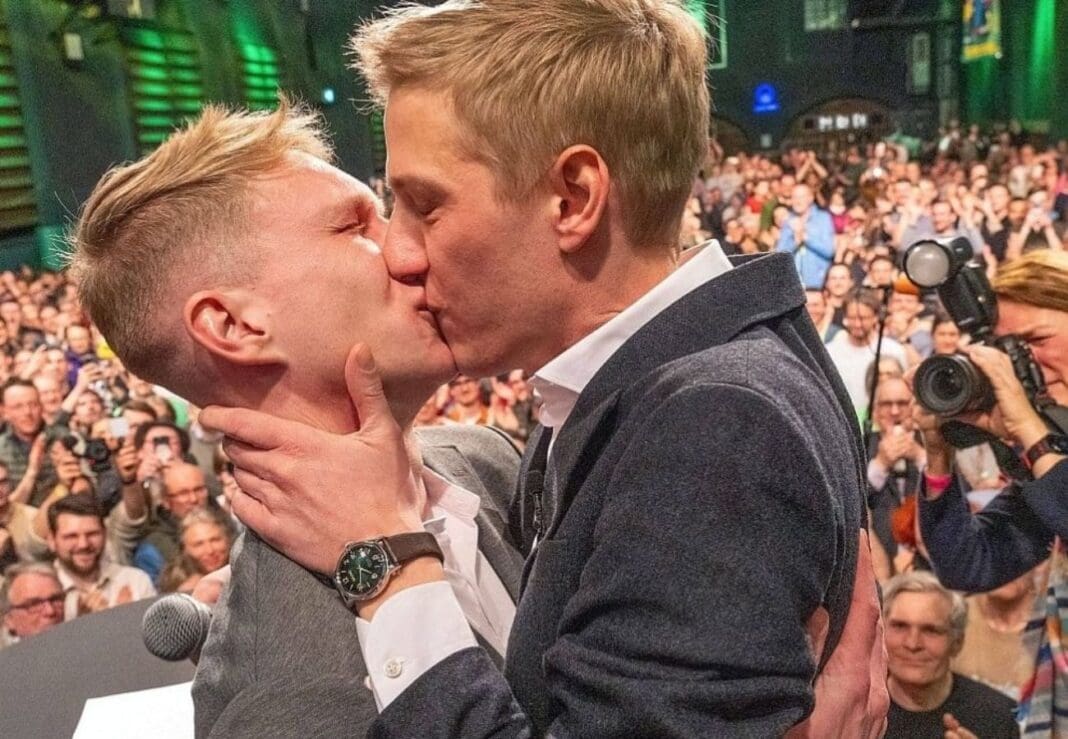
- Her victory has left one of the images of the year: a public kiss with her fiancé, the doctor Sebastian Müller, with whom she got engaged in Granada.
For the first time in its modern history, the city of Munich has elected a representative of the Alliance 90/The Greens to lead the city council. Dominik Krause’s victory in Munich not only represents a change of acronym after 80 years of dominance by the Social Democratic Party (SPD), but also places a openly homosexual man and from the millennial generation at the head of one of the most influential metropolises in Europe.
From applied physics to the top of City Hall
Born in Munich in 1990, Krause has a profile that combines technical training with a long activist career. Master in Applied Physics and Engineering from the Technical University of Munich, he began his political career in the Green Youth, reaching the council in 2014. His rise is the result of years of work in local politics, where he served as deputy mayor from 2023 before defeating the veteran Dieter Reiter in this second electoral round.
Beyond the macroeconomic data, Krause’s figure stands out for its naturalness. After knowing the results, the new mayor celebrated his victory by kissing his partner, Sebastian Müller. Krause did not hesitate to point out “Sebi” as the fundamental pillar of his life and his political success, sending a message of normalization and pride to all German citizens.
A commitment with Andalusian flavor
Dominik Krause’s personal story has a special connection with Spain. In 2024, during a romantic trip through Andalusia, Müller proposed to her in front of the Granada Cathedral. Under the strains of a street orchestra, the now mayor said “I do” in one of the most romantic scenes that the couple has shared publicly.
At 35 years old, Krause represents a new generation of European leaders who do not separate their identity from their vocation for public service. His mandate, which will officially begin on May 1, is seen by analysts as an unequivocal sign that LGTBIQ+ leaders have come to stay in the most important institutions on the continent, transforming traditional power structures through visibility and scientific rigor.