
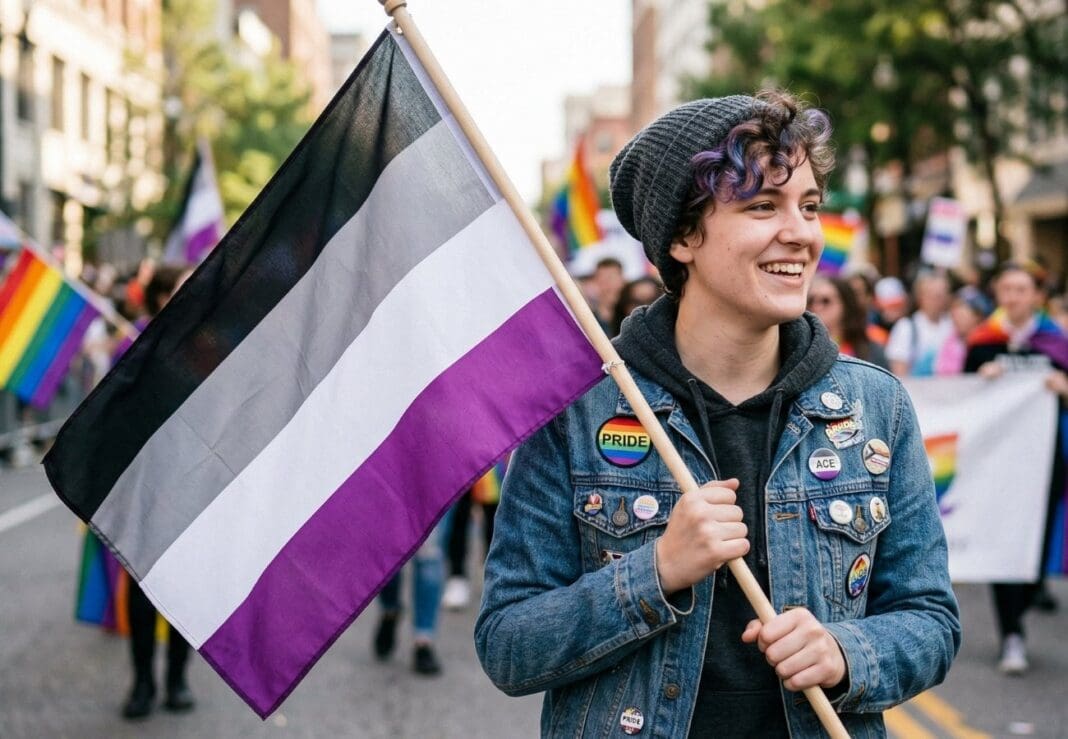
Today is April 6, 2026 and, if you have looked at the calendar, you will know that we celebrate the International Asexuality Day (DAY). You may be wondering, “Just another day?” Well yes, and I’m going to explain to you why this is especially necessary in a world that seems obsessed with everything, from a car advertisement to our most intimate relationships, passing through the filter of sexual desire.
Sit comfortable. We’re going to chat about what it really means to be under the ace umbrella, why visibility is a mental health issue, and how we’re managing this in 2026.
What is asexuality? Beyond dictionary labels
Let’s see, let’s get to the basics. When we talk about asexuality, we are not talking about a phase, nor about a choice (such as celibacy), much less about an illness. Being asexual is simply experiencing little or no sexual attraction to other people. So easy and so complex at the same time.
But of course, since we love to complicate everything, sometimes we forget that sexual orientation is not a concrete block. It is more of a spectrum, a gradient of colors. Within the ace community (a term of affection to refer to this group), there are people who:
- He never feels sexual attraction.
- You feel it only in very specific circumstances (such as demisexual people).
- You feel attraction but don’t want to put it into practice.
Does it blow your mind a little? It’s normal. We have been educated to believe that sex is the engine of the world and that, if you don’t look for it, “something happens to you.” But what if we are simply different diversities?
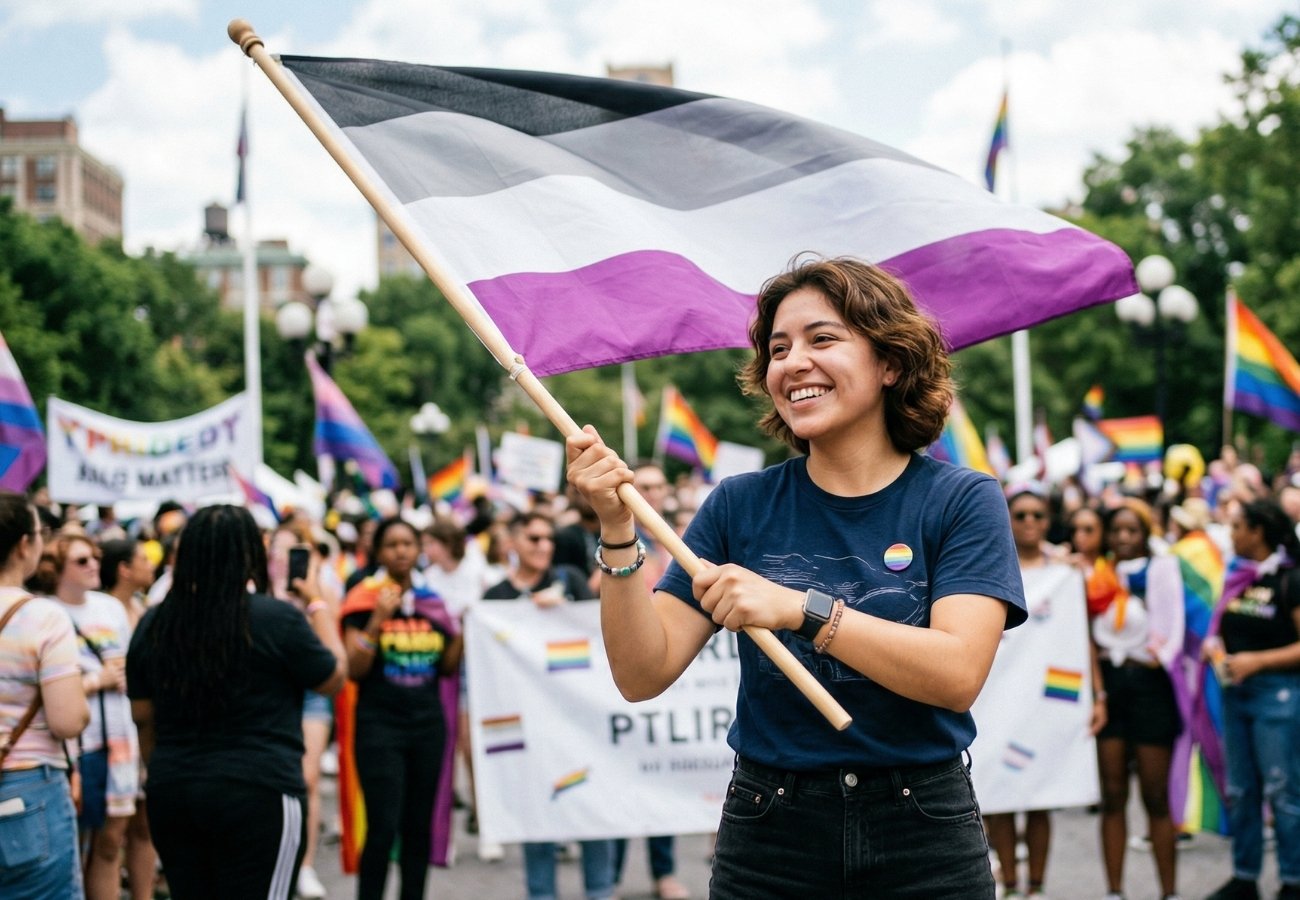
The “A” in the acronym LGTBIQ+: The great forgotten one
Often, when we say LGTBIQ+, that final “A” (which also includes people aromantic and allies) remains in the shadows. In the Rainbow editorial office we discussed it a lot with Minerva, our data manager. She told me this morning that, despite being in 2026, studies on the asexual population are still scarce compared to other groups.
This lack of information creates a legal and social vacuum. If they don’t see you, you don’t exist. And if you don’t exist, you have no specific rights or protection against discrimination. Because yes, acephobia exists. It is not usually obvious physical violence on the street, but it is subtle violence: the comment of “you haven’t found the right person”, the pressure from your partner to “comply”, or the medical judgment that tries to look for a hormonal imbalance where there is only one way of being.
Romantic attraction vs. Sexual attraction: The divided attraction model
This is one of those points where I would love for us to pause and reflect. Have you ever felt immense affection for someone, a crazy desire to share your life, but without feeling like sleeping with that person?
For many asexual people, romantic attraction (wanting to establish an emotional or romantic bond) goes along a completely different path than sexual attraction. You can be asexual and be romantic, want to have a partner, get married or start a family. Or you can be aromantic and not want any of that.
This is where I wonder: Why is it so difficult for us to separate love from sex? Is it possible that our society is so narrow-minded that it does not conceive of intimacy without the genital component? I’ll leave it there for you to take a look at.
Challenges in 2026: The pressure of hypersexuality
We are in a digital age where erotic content and sexualization are just a click away. In this context, declaring yourself asexual is almost an act of rebellion. Young people from the LGTBIQ+ collective often tell us in interviews for the magazine that they feel “broken” for not feeling what they see in series or on social networks.
Visibility today is not just saying “I exist”, it is saying “I am fine like this”. I don’t need to be fixed. In the equality laws that we have analyzed this year in the magazine, asexuality is barely mentioned as a reason for protected discrimination. It is one of our pending issues for this legislature.
How to be a good ally of the asexual community?
If you have come this far and want to support your ace brothers, I leave you some very simple keys that we usually apply in writing:
- Don’t assume: Don’t assume that everyone wants sex or that sex is the end goal of any date.
- Validate their experiences: If someone confides in you that they are asexual, don’t tell them that “it’s a phase.” Believe him.
- Differentiate concepts: Learn that affection, romance and sex do not always go hand in hand.
- Ask respectfully: If you have questions, ask from healthy curiosity, not from judgment.
Questions that remain to be answered
At the end of the day, International Asexuality Day invites us to rethink our own relationship with desire. Working on this article myself, I have been left thinking: How many times have I pressured someone, even if unintentionally, to fit into my standards of sexual “normality”?
I don’t have all the answers, and I don’t think anyone does. But what I do know is that a person’s freedom begins with being the owner of their own desire (or lack thereof). In a 2026 that flies towards the technological and the immediate, perhaps asexuality will teach us to value other forms of human connection that are slower, more intimate and, above all, more diverse.
And what do you think? Do you think we are ready to accept that sex is not a universal obligation? I would love to read your reflections in the comments.
Happy Asexual Visibility Day! Let’s continue building an LGTBIQ+ community where we all fit, without exceptions.