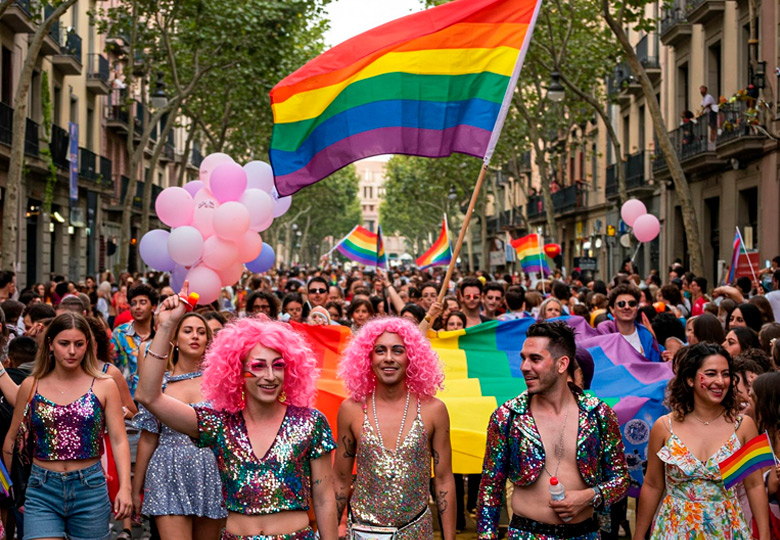

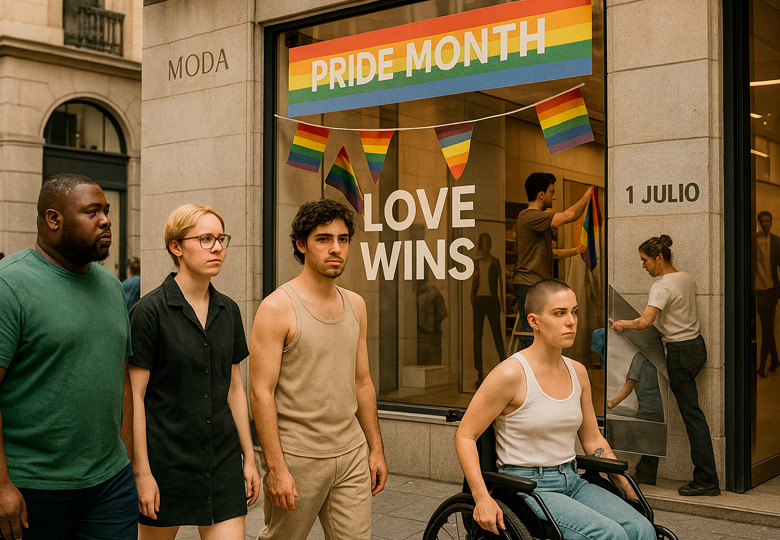
Every June, the rainbow arrives. You see it in shop windows, advertisements, social networks, mugs, cookies, underwear… Everything becomes “proudly diverse.” But have you ever wondered if those brands that hang the multicolored flag really support the LGTBIQ+ community? Or if they just do it because, honestly, sells.
Welcome to the wonderful and confusing world of pinkwashing.
🌈 What exactly is pinkwashing?
The term comes from English, and basically means “pink wash.” It refers to the strategy that companies, governments or institutions use to appear inclusive or progressive regarding LGTBIQ+ rights, when in reality their actions do not support that image. It is a kind of “corporate posture”, where diversity is a slogan… and little else.
The problem is not that they put up a rainbow flag. The problem is what they do (or don’t do) when the Pride lights go off.
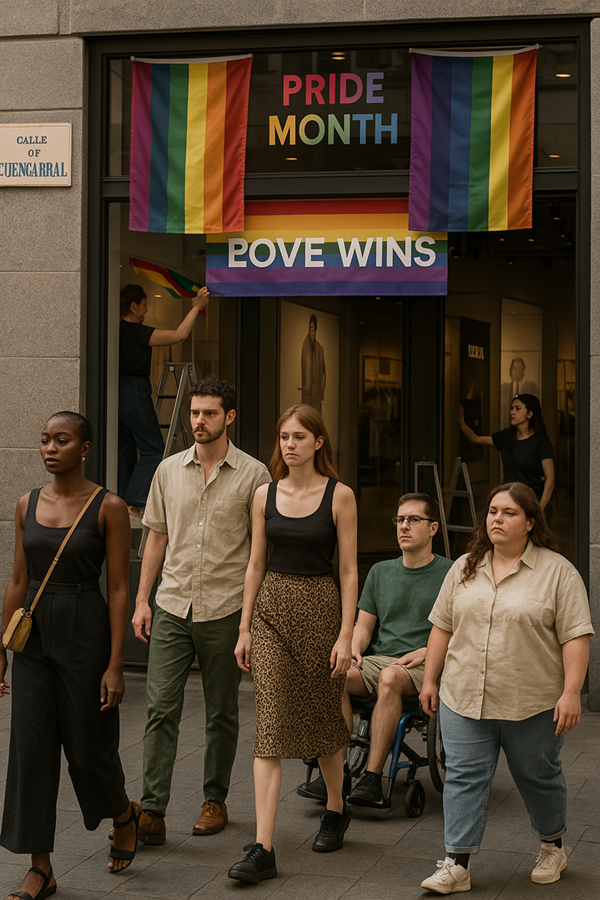
🛍️ How to detect pinkwashing?
There is no exact formula, but here are some signs that should make you raise your eyebrow:
-
The brand changes its logo to rainbow colors only in June… but it does not have internal inclusion policies.
-
Sell “proud” products without donating a single euro to LGTBIQ+ causes.
-
It has campaigns full of queer-friendly messages, but it collaborates with companies or governments that discriminate against the group.
-
You advertise to queer people, but you don’t hire them on your teams.
- Advertisement - -
Silences support when controversies or LGTBIQphobic attacks arise.
In summary: if your supposed ally only appears in the “beautiful” moments and disappears in the key moments… be suspicious.
🧃 Examples that have generated controversy
✖️ Absolut Rainbow without real commitment
For years, vodka brand Absolut has released rainbow-designed bottles. But different groups have accused him of turning pride into a marketing campaign, without there being a constant commitment or actions that support the community in a structural way. Can a pretty bottle make up for that?
✖️ Zara and its LGTBIQ+ collections
Zara has launched “Pride” lines more than once, full of t-shirts with Love is Lovetype slogans. But the brand has been criticized for not having transparency about its production chain or showing real commitment to the labor rights of queer people, especially in countries where it operates and being LGTBIQ+ is a crime.
View this post on Instagram
✖️ Disney and its “support for diversity”
Disney has started to include queer characters (thank you!), but it has done so very timidly and often in seconds that can easily be removed in countries with censorship. At the same time, it has financed political campaigns in the United States that go against trans rights. Contradictions? Quite a few.
✅ And are there brands that do it well?
Yes! Because not everything is empty marketing. There are companies that really get wet:
✔️ Ben & Jerry’s
Beyond its crazy flavors, the ice cream brand has been very active in defending LGTBIQ+ rights. He has supported campaigns for marriage equality, made significant donations to queer organizations, and used his networks to denounce injustices. Not only in June.
✔️ Flamingueo (Spain)
This young, Spanish company collaborates with queer creators, gives them visibility throughout the year and has inclusive internal policies. It is not a multinational, but it is a good example of how you can be authentic and responsible.
📣 Why does this affect us so much?
Because when a brand appropriates our struggle without real commitment, it erases us. It turns our identities into a passing aesthetic. And that hurts.
pinkwashing trivializes our stories, reduces them to a trend. And you know what? Being LGTBIQ+ is not a trend. It’s a reality. One that involves struggles, rights, lives. It’s not just brilli-brilli in June.
💭 What if we turn it around?
We can also see it as an opportunity. Every time a company releases its “Pride product,” it’s a perfect time to ask awkward questions:
-
Who are they giving voice to?
-
Where are they investing that money?
-
Who is behind the campaign?
-
What do they do the other eleven months of the year?
It’s not just a matter of canceling. It’s a matter of demanding more. More consistency. More commitment. More truth.
⚠️ But… is it always bad?
Let’s open melon. Because not everything is black or white either. Some people in the group believe that, although there is a certain posture, it is better to have visibility than to have nothing. That seeing logos with rainbows, even if it’s marketing, can help normalize. It can make a queer teen see a brand that makes them feel included.
And they have a point. Maybe not all pinkwashing is 100% harmful. Maybe the problem is not that they use colors… but how and why they use them.
So is a balance between commercial visibility and real support possible? We leave that answer to you.
💬 Conclusion: we don’t want your rainbow if there is no action
If you are a brand and you are reading this: it is not enough to put up the LGTBIQ+ flag in June. We want you to hire people from the group, to speak up in difficult moments, to have inclusion policies, to be consistent.
And if you are a consumer: you have power. Choose consciously. Review, ask, point out what doesn’t add up. Because your money is a vote. And you can use it to support those who are really on our side.