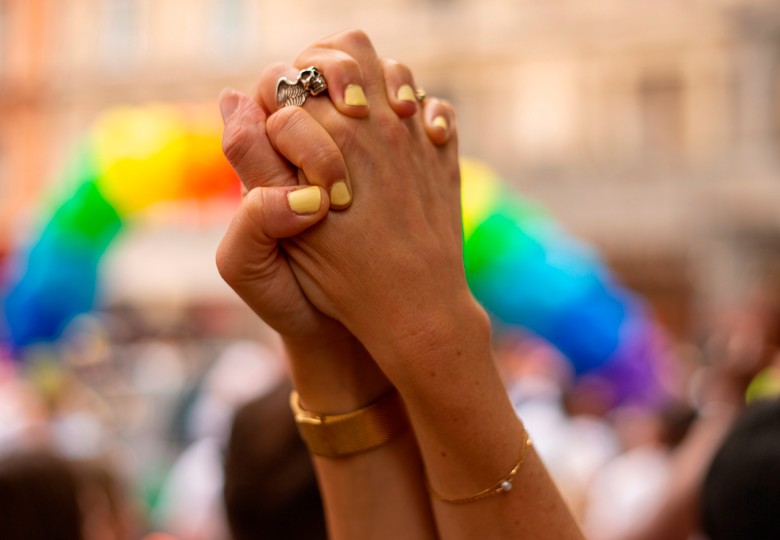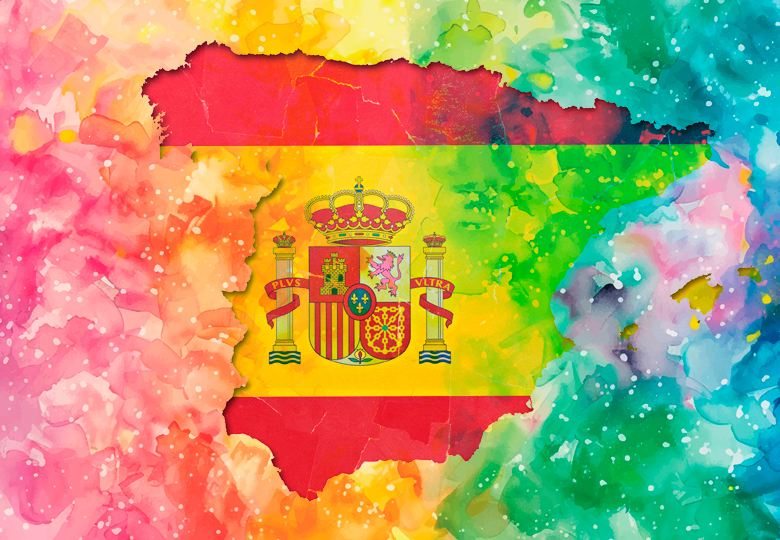


Talking about LGTBIQ+ activism in Spain is talking about courage, resistance and the fight for equality. The history of LGTBIQ+ rights in the country cannot be understood without the people who, in times of repression and adversity, rose up to defend what we consider fundamental rights today. But who were those voices that made the difference?
First steps: from hiding to vindication
In the years of Franco’s regime, homosexuality was not only a social taboo, but it was also legally persecuted. The Vagrants and Criminals Law of 1954 included homosexuals as a group to be repressed, which resulted in arrests and imprisonment. Despite this hostile context, some groups began to form underground.
One of the first was the Spanish Homosexual Liberation Movement (MELH), founded in 1970 in Barcelona. Although its existence was brief, it laid the foundations for a fight that would not stop.
With the death of Franco in 1975, the transition to democracy opened a new scenario for the vindication of rights. In 1977, Barcelona hosted the first LGTBIQ+ pride demonstration, organized by the Front d’Alliberament Gai de Catalunya (FAGC). It was an act of courage, since the Social Dangerous Law still existed, which criminalized homosexuality.
Key figures of activism
The advancement of LGTBIQ+ rights in Spain would not have been possible without the action of people committed to the cause. Among them, we highlight some figures whose work left a mark.
- Pedro Zerolo (1960-2015): Politician and activist, he was one of the most recognized voices in the fight for equal marriage, approved in 2005. A tireless defender of LGTBIQ+ rights, his legacy is still valid in Spanish politics.
- Carla Antonelli: First trans woman to hold a position in the Parliament of Spain, she has been a key activist in the defense of the rights of trans people, participating in the drafting of fundamental laws for their protection.
- Armand de Fluvià: Pioneer of activism in Spain, he founded the FAGC and fought since the 70s for the decriminalization of homosexuality and the recognition of rights.
View this post on Instagram
Legal advances and pending challenges
Activism has been essential to achieving milestones such as equal marriage in 2005 or the Trans and LGTBIQ+ Rights Law in 2023. However, despite these advances, the work is not finished. Hate crimes remain a concern, as does ensuring access to health and education without discrimination.
There are also new challenges, such as the fight against the rise of hate speech on social networks or the protection of LGTBIQ+ people in rural environments, where discrimination may be more pronounced.
The future of activism
LGTBIQ+ activism in Spain has evolved, adapting to social and political changes. The new generations continue to raise their voices, using digital tools and public participation spaces to continue moving forward. But how to ensure that the rights achieved are irreversible? What strategies will be key in the future?
The history of LGTBIQ+ activism in Spain is not closed. Every day a new chapter is written, with new protagonists willing to continue fighting.