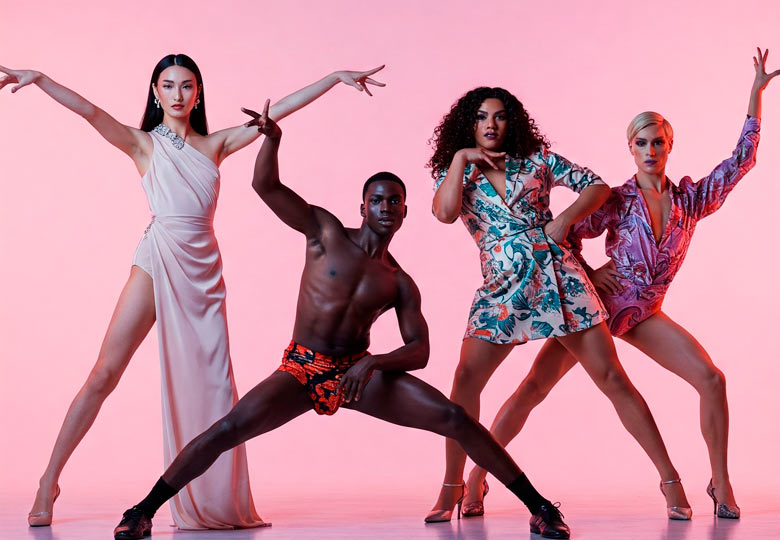


Every March 31 the International Trans Day of Visibility is celebrated, a date that was not born for celebration, but for recognition. To tell the world that trans people exist, resist and deserve to live with dignity. But how far have we really come? And what is left to do?
Today we propose an open reflection, without judgments or absolute answers. Because talking about trans identities is not only telling stories of struggle: it is also opening spaces where all realities fit, with their nuances, contradictions and needs.
What is trans visibility and why does it matter?
Being visible, in many cases, is a political act. For many trans people, showing their identity to the world can be a brave decision… but also a risky one. We live in a society where the binary norm (man or woman, period) continues to set the rules of the game. Everything that goes beyond that is uncomfortable. Question. Bothers.
Therefore, having a day to recognize the existence and contributions of trans people is not a symbolic detail. It is a way of saying: “Here we are and we are also part of this world”.
Visibility can empower, but it can also expose. It will always depend on the context, the support received, the family, educational or work environment. Being a trans person in Madrid is not the same as being in a small town. Coming out at 15 is not the same as coming out at 50. Not all experiences are the same. Nor should they be.
Brief history of March 31: where does this date come from?
Trans Day of Visibility was promoted in 2009 by Rachel Crandall, trans activist from the United States. He did so in response to the lack of dates that celebrated the achievements and lives of trans people, beyond pain or violence.
Until then, the only globally recognized day was Trans Remembrance Day (November 20), which commemorates victims of transphobia. Crandall thought: “It’s good to remember, but we also need to celebrate those who are still here.”
And he was right. Because although there is still much to denounce, there are also stories of pride, resistance, joy and authenticity that deserve their space. Visibility is a tool. It doesn’t solve everything, but it does help break down prejudices.
What does it mean to be trans today?
Being trans is not a fad, nor an ideology, nor a TikTok trend. It is a deep, real experience and as valid as any other identity. And although the diversity within the trans umbrella is immense (binary, non-binary, genderfluid, agender…), they all share something: the right to define themselves.
Today, being trans in Spain may seem “easier” than a few decades ago, at least on a legal level. The Trans Law approved in 2023 represented an important advance: it allows the registry change of sex without the need for medical reports or hormonal treatments. But just because there are laws does not mean that everything is already done.
Many trans young people continue to face bullying at school. Many adults, to job rejection. Attacks based on identity continue to exist. Transphobic jokes on TV, too. And let’s not mention the hatred that runs rampant on social networks.


And what can we do?
Talking about the topic is already a first step. Listen to trans people. Don’t assume your gender. Ask the pronouns. Correct us without drama if we screw up. And, above all, not speak on their behalf when there are trans voices that can tell their story better than anyone else.
We leave you some concrete ideas:
-
Follow trans creators on networks and amplify their messages.
-
Do not share transphobic hoaxes (even if they are “joking”).
-
Support projects led by trans people.
-
Check your language: small gestures generate big changes.
-
If you work in media, education or health, educate yourself and apply the trans perspective in your environment.
But does visibility have any limits?
Although this day seeks to empower, there are also critical voices that ask for a more complex view. Some trans people feel that the pressure to “be visible” forces them to constantly expose themselves. As if they had to explain their identity to be accepted.
There is also concern that certain sectors use visibility as a “facelift”, without applying real changes. Brands that celebrate March 31 with a photo on social networks but do not hire trans people. Institutions that talk about inclusion while denying basic resources.
So… is visibility useful if it is not accompanied by transformation?
Trans childhood and youth: a generation with its own voice
One of the most important (and most controversial) focuses is on childhood. More and more children express early on that they do not identify with the gender assigned at birth. And yes, although it is difficult to understand, they have the right to be heard.
Accompanying is not imposing. It is allowing them to explore, to express themselves, to grow freely. The key is respect, love and truthful information. No moral panic. Unprejudiced. Without infantilizing those who already know very clearly who they are.
And representation in the media?
Still uneven. Although there are more and more trans characters in series, films or literature, we still fall into stereotypes: the victim, the scandal, the easy joke. We need real, diverse stories, told from within. And yes, also happy endings.
We must stop seeing trans identity as a “personal tragedy” and start seeing it for what it is: a legitimate expression of human diversity.
A future beyond the label
Maybe the day will come when we won’t need dates like this. In which trans people do not have to claim their existence because it is already guaranteed. But in the meantime, let’s continue paving the way. With doubts. With contradictions. Eager to learn.
Visibility isn’t everything, but it can be the beginning of something better. Are we willing to look, really?