


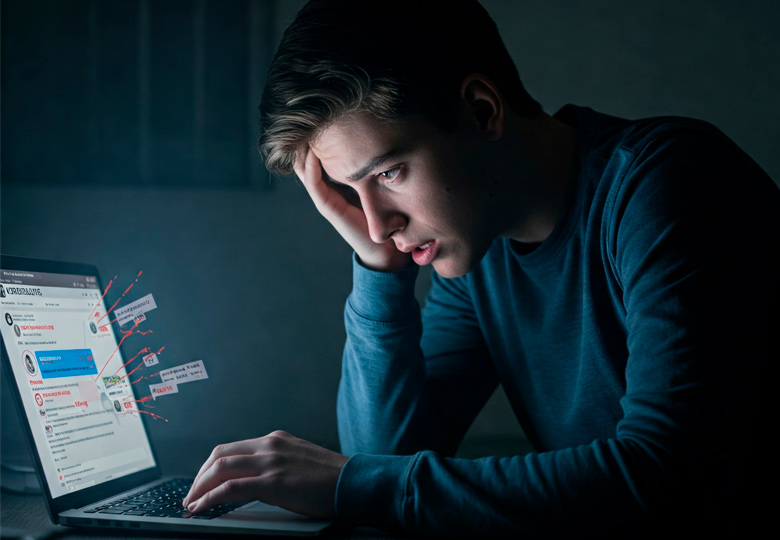
We live in a hyperconnected world. We spend hours on social networks, we share moments, we debate, we flirt, we get informed… But, for many LGTBIQ+ people, the digital world has also become a battlefield where harassment is their daily bread. And no, it’s not an over-the-top drama! It is a reality that, in 2025, continues to affect thousands of people in Spain.
Digital harassment: beyond the “haters”
When we talk about digital harassment, we are not just referring to offensive comments on Instagram or a “troll” loose on Twitter (well, X, but for many it will still be Twitter). It is something deeper and more dangerous. We are talking about threats, blackmail, forced outing (when someone reveals your sexual orientation or gender identity without your consent), identity theft and dissemination of intimate content without permission.
Digital platforms have given voice to diversity, but they have also served as a loudspeaker for hate. And although networks claim to have anti-harassment policies, they often seem ineffective.
Scary (and thought-provoking) facts
If you thought that this was a matter of a few isolated cases, pay attention to this data. According to LGTBIQ+ rights organizations in Spain, digital harassment has increased by 30% in the last two years. And the worst thing: more than 60% of victims do not report out of fear or because they believe that “it will be of no use.”
Dating apps have also become a space where harassment is rampant. Insulting messages, threats or even “hunting” attempts by homophobic groups have put the community on alert. How do we get to this point?
Types of digital harassment that affect the LGTBIQ+ community
- Forced outing: Having someone decide for you when and how you come out is an assault. On social media, this can take the form of screenshots exposed without permission or “leaked” messages.
- Hate messages and threats: From homophobic and transphobic comments to direct threats. Some people believe that being behind a screen gives them the right to insult without consequences.
- Identity theft and account theft: Creating fake profiles with photos of LGTBIQ+ people to ridicule or extort is more common than we think.
- Blackmail and sextortion: Some cybercriminals take advantage of people’s vulnerability to demand money or favors in exchange for not sharing intimate photos.
- Discrimination in dating apps: Not everything is rosy on Grindr, Tinder or Bumble. Racism, fatphobia and transphobia continue to be huge problems in these spaces.
How to protect yourself?
Okay, we know the Internet can be a hostile place, but all is not lost. There are ways to protect yourself:
- Configure your privacy well: There is no need to share your entire life on networks. Adjust who can see your posts and avoid giving out too much personal information in public.
- Do not respond to provocations: Haters look for reactions. Ignoring and blocking is usually the best option.
- Report and report: If you receive harassment, use the platform’s reporting tools and, if it is serious, report it to the authorities.
- Be careful what you share: Especially in dating apps, avoid sending compromising photos to people you don’t trust.
The role of digital platforms
Social networks and dating apps have a great responsibility in this issue. Although some policies have improved, the reality is that hate speech and harassment continue to circulate without much control. Should they do more? Probably yes.
Many users ask for stricter verifications, more effective artificial intelligence against hate and, above all, quick responses to complaints. But we are still far from seeing a definitive solution.
The million-dollar question: Are we moving forward or backward?
In some aspects, we have improved. There is more awareness, more resources and more courage to report. But, on the other hand, digital hate seems to have become normalized in certain spaces. And this is where we have to reflect: Can we change this?
The answer lies not only in laws or platforms, but also in the community and mutual support. Reporting, making visible and not letting fear silence us is key.
In the meantime, remember: block, report and move on. You are not alone. ✨