
Second sporting event at the Ciutat Esportiva
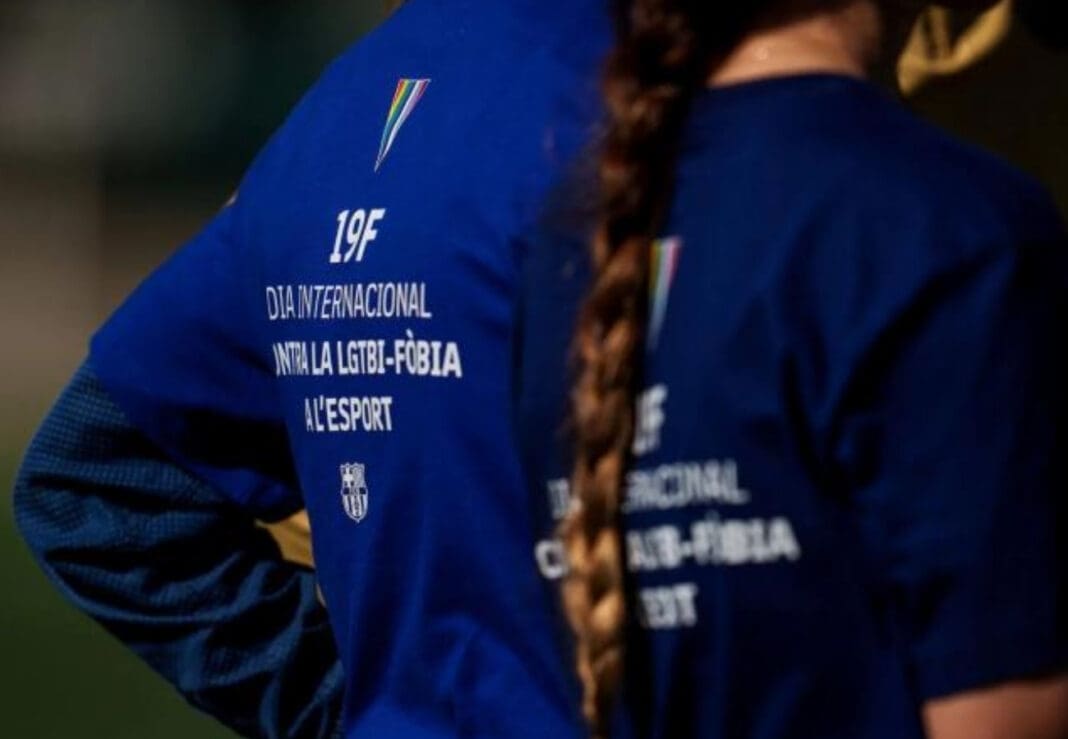
On February 23, FC Barcelona will hold an internal sports meeting for the second consecutive year on the occasion of the International Day against LGTBI-phobia in Sports. The event, aimed at the Club’s workers, will take place at the Ciutat Esportiva and seeks to consolidate itself as a space for coexistence, awareness and real commitment to equality.
The initiative is part of the actions that Barça promotes every year to reaffirm its commitment to sport as a tool for social transformation. Beyond the symbolic gesture, the objective is clear: to promote safe and inclusive environments on and off the field of play.
Mixed football as a collective message
The meeting will be held on February 23 and will consist of several soccer matches with mixed teams. The proposal combines sporting activity and advocacy, inviting participants to express their rejection of any form of discrimination towards the LGTBIQ+ group.
It’s not just about playing. It’s about sending a message. Because sport continues to be one of the spaces where LGTBIQ+ visibility encounters the greatest resistance.
The question that flies over every year is inevitable: Has professional football really made progress in terms of diversity? Or do we continue to talk about inclusion while the stands remain silent?
LGTBI-phobia in sports: a persistent reality
The LGTBI-phobia is not an abstraction. It has direct consequences on the emotional health of those who suffer from it: anxiety, isolation, depression and even abandonment of sports.
In many cases, the fear of rejection prevents athletes from living their identity freely. And that has a human cost.
Faced with this reality, FC Barcelona claims sport as an educational and transformative space, where respect must be an unquestionable value.
February 19: the legacy of Justin Fashanu
The International Day against LGTBI-phobia in Sports is celebrated every February 19 in memory of Justin Fashanu, the first professional footballer to publicly declare his homosexuality, in 1990.
Fashanu, a British player and one of the first black footballers to achieve media notoriety in England, suffered intense social and media pressure after making his sexual orientation public. He died in 1998, aged 37.
His story marked a before and after. Today his legacy continues through the Justin Fashanu Foundation, which works against homophobia, racism and stigma in sports.
Remembering it is not a mere historical gesture. It is a way of asking ourselves what has changed and what still remains to be transformed.

More than a symbolic day
The second sporting event of FC Barcelona will not by itself resolve the structural barriers that still exist in professional sports. But it does send an internal and external signal.
Inclusion cannot remain a one-time campaign. It must become institutional culture.
Are we ready for professional football to truly be a space where all identities can feel safe?
Or do we still need commemorative dates to remember something that should be basic?
The ball rolls. Equality should too.