

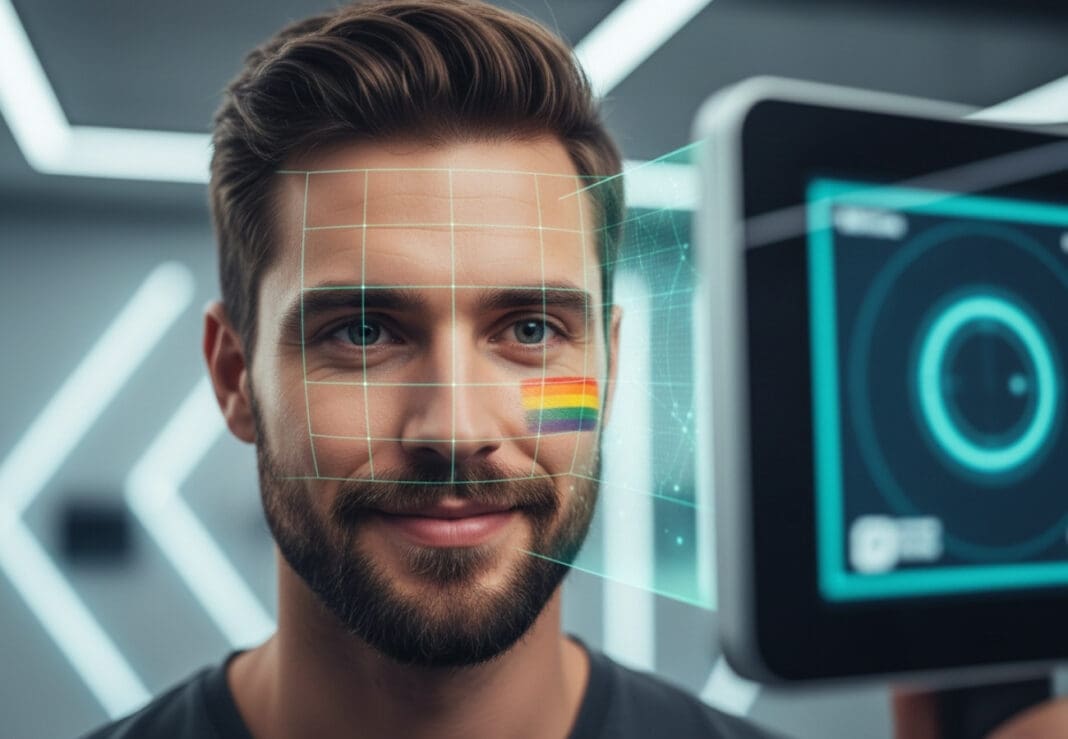
The app strengthens access control in the United Kingdom, Australia and Brazil
Grindr will begin to require mandatory age verification through facial recognition and, in some cases, an official document in certain countries in 2026. The measure will not be global, but it will affect territories such as the United Kingdom, Australia and Brazil, where new digital security laws force adult platforms to verify the age of majority of their users.
The company calls the system “Age Assurance” and its stated objective is to prevent minors under 18 years of age from accessing the application.
And here it is worth remembering something basic: Grindr is a +18 platform. It always has been. What changes now is the way of demonstrating it.
What does verification consist of?
The system is not based solely on entering a date of birth. In countries where it will be mandatory, the process includes:
- Video selfie with biometric recognition: The user must record themselves in real time to confirm that they are of legal age. The system analyzes facial features and age estimation.
- Official document (if necessary): If the automatic estimate is not conclusive or if the person opts for it, a passport, driver’s license or other official document with a photograph may be required.
- Access blocked without verification: In affected countries, the app will not be able to be used without completing the process.
According to Grindr, biometric data is encrypted and deleted after validation.
In which countries will it be mandatory?
Currently, the verification required by law will apply to:
- United Kingdom (due to the Online Safety Act)
- Australia (from December 2025)
- Brazil (from March 2026, after the approval of the ECA Digital)
In these territories, verification affects both residents and people who connect from there.
In the rest of the world – including Spain and most of the European Union – there is currently no direct legal obligation that forces Grindr to implement this system universally.
Security vs. privacy: the inevitable debate
The measure has a clear objective: to protect minors and legally shield the platform. But it also raises legitimate questions within the LGTBIQ+ community.
What real guarantees exist regarding the use and storage of biometric data?
Can mandatory verification discourage use in countries where sexual orientation remains a social risk?
How are LGTBIQ+ people protected in hostile contexts where showing documentation could expose them?

Security is necessary. But so is trust.
Could I reach Spain?
Spain has developed national age verification tools for digital environments, and the European Union is working on broader control mechanisms for sensitive content. However, today there is no rule that specifically requires Grindr to apply mandatory biometric verification in Spanish territory.
That could change in the future, depending on how European regulation regarding the protection of minors online evolves.
Necessary evolution or excess control?
The era of “yes, I’m 18” without proof seems to be coming to an end in some countries. The international trend is towards stricter verifications on adult platforms.
The underlying issue is not just technical.
Are we facing a necessary improvement to protect minors? Or at the beginning of a new stage where access to LGTBIQ+ digital spaces will be increasingly monitored?
As always, the balance between security and digital rights will be the key.