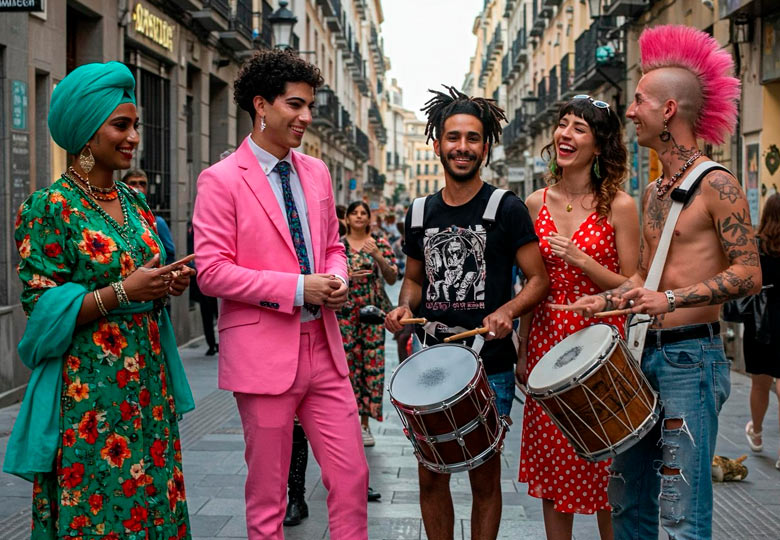

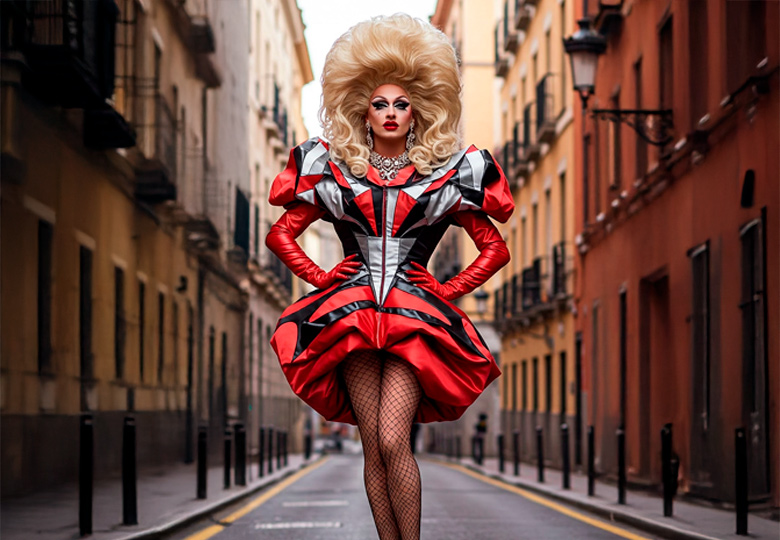
Madrid, with its characteristic dynamism and its ability to transform, has always been a place where identities meet, collide and reinvent themselves. In recent years, one of the most emblematic neighborhoods of the capital, Lavapiés, has experienced a metamorphosis that has turned it into a new point of reference for the LGTBIQ+ community. Although Chueca has historically been the gay epicenter of the city and Malasaña an alternative enclave, Lavapiés is gaining ground as one of the most vibrant and diverse areas for those seeking an inclusive cultural, social and leisure offer. But how has this neighborhood come to be considered, along with the others, an essential place in the Madrid gay scene?
Lavapiés: A neighborhood in constant change
Lavapiés has been, over the years, a space where different cultures, histories and languages coexist. Located in the Embajadores district, south of Madrid, this neighborhood has gone from being a working class area with a great diversity of immigrants to becoming a fashionable place, with a growing influence of art and bohemia. In the last 20 years, Lavapiés has experienced an urban transformation that has accompanied its social change. Gentrification, although controversial, has brought with it new shops, bars, art galleries and a leisure offer that, at first, seemed difficult to imagine in a neighborhood known for its working-class tradition.
The most evident change in Lavapiés has been the rise of the LGTBIQ+ community. Although it does not have the same visibility as Chueca, where pride and LGTBIQ+ events are the center of neighborhood life, Lavapiés has managed to stand out for its inclusive, diverse and accessible environment. While Chueca represents a more consolidated identity within the community, Lavapiés has managed to attract attention for its authenticity and the mix of cultures it offers. Here, the LGTBIQ+ community has found a place where they can develop both personally and socially, without the labels that sometimes limit experiences in more commercial areas.
A diverse neighborhood in every sense
What makes Lavapiés so special is, precisely, that unique mix of different identities. If Chueca is known for its nightlife and Malasaña for its alternative and countercultural atmosphere, Lavapiés has managed to create an inclusive space that attracts both locals and foreigners, artists and activists, young people and older people. In its streets, one can find everything from gay bars to international cuisine restaurants, from associations that fight for the rights of the LGTBIQ+ community to groups that work for the integration of immigrants and people in vulnerable situations.
One of the most interesting aspects of Lavapiés is its ability to integrate gay identity within a broader context. Here it is not just about being gay, but about being part of a global community that, despite its differences, comes together to celebrate its diversity. This more inclusive approach has been one of the keys to its success, as it has allowed the neighborhood to become a meeting point for people of all orientations and genders, regardless of their origin.
Why has Lavapiés become a new gay destination?
There are several factors that explain this transformation of Lavapiés into a new key point for the LGTBIQ+ community. Firstly, its proximity to Chueca means that many people who live or frequent the area are attracted to the bohemian and multicultural energy of the neighborhood. The cultural offer is another determining factor: from theaters to concert halls, through film festivals and exhibitions, Lavapiés has become a place where alternative, and often queer, culture has a place. Furthermore, the presence of LGTBIQ+ groups that promote visibility, rights and inclusion has helped consolidate this space as one of the most representative.
Accessibility is another key factor. While rental prices and commercial premises have increased in neighborhoods like Chueca, Lavapiés remains a relatively affordable area. This has attracted a younger audience, mostly artists, activists and LGTBIQ+ people who are looking for a place where they can live, work and interact more freely and authentically. It is a neighborhood that does not have the pressure to “be perfect” like Chueca, and its attractiveness lies in that imperfection.
A necessary contrast: is there invisible gentrification?
Although Lavapiés has experienced a boom in popularity, not everything is so idyllic. A topic that is not often touched on in the conversation about its transformation is gentrification. As in other neighborhoods in Madrid, prices are rising, and many of the people who have been part of the original essence of the neighborhood are being displaced. The arrival of new residents with higher purchasing power, along with the opening of new businesses aimed at a more exclusive audience, is changing the face of Lavapiés.
Gentrification has also generated tension around what it means to be “a gay neighborhood.” Is Lavapiés losing its original character and connection to marginalized communities in favor of a more commercial and “trendy” aesthetic? This opens a debate that will probably continue to accompany the evolution of the neighborhood.
Where is Lavapiés going?
Lavapiés, like many neighborhoods around the world, is constantly evolving. Its role as one of the new gay neighborhoods in Madrid along with Chueca and Malasaña has made it an example of how the city adapts to the times, but also a symbol of the challenges involved in the growth and transformation of an urban space. In the future, we will probably see gay identity blending even more with other groups, but is this process truly inclusive or is it leaving some people behind?
The answer, perhaps, lies in how the residents of Lavapiés, and especially the LGTBIQ+ community, are involved in preserving the values that have made this neighborhood a special place. Diversity, tolerance and creativity are the foundation on which it has been built, and perhaps therein lies its true success.