

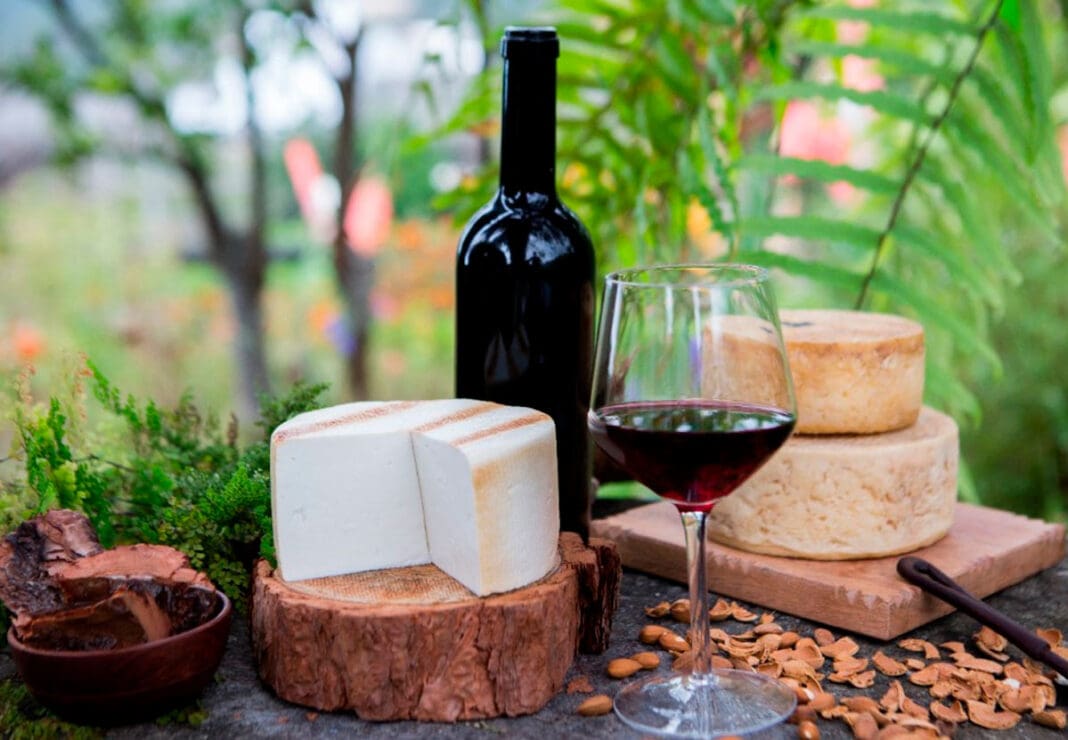
In August, La Palma dresses up for the grape harvest. It is not only the moment when the grapes reach their right point, but an event that unites tradition, volcanic landscapes and the silent work of those who have made wine a way of life. Between the freshness of the morning and the sweet aroma of freshly squeezed must, Isla Bonita opens the doors to its wine history.
More than harvest: a shared ritual
On La Palma, the harvest is not only an agricultural process. It is a custom that is lived in community. At dawn, families, friends and neighborhoods gather to pick the grapes before the midday sun floods everything. The day starts with a simple breakfast – where the Palmero sponge cake is not missing – and concludes with a festive lunch. Work, encounters and joy are mixed in a tradition that wins more hearts every year.
Isn’t it curious that in an increasingly fast-paced world, people here still find time to work together, talk and celebrate under the same sky?

The floor that gives character
The palm land is the result of centuries of eruptions. Ash and volcanic rock have created a mineral-rich terrain that retains moisture and regulates temperature. This combination gives the grape a unique character, difficult to imitate elsewhere.
Many strains are over a century old and have not been grafted, keeping their genetics intact. Varieties such as Malvasía Aromática, Albillo Criollo or Listán Negro continue to produce wines with personality, freshness and a deep link with their origin. Since 1994, the La Palma Denomination of Origin has protected and recognized this authenticity, supporting those who have known how to keep this heritage alive.
A trip from winery to winery
Touring La Palma through its wineries is discovering a mosaic of flavors. In Old Summit, Bodegas Tamanca, founded as a family business in 1996, produces fresh whites, expressive reds and Malvasías that have conquered palates. Its restaurant, integrated into the winery, offers the opportunity to pair wine and local cuisine.
In the south, Teneguía Wineries It is an example of cooperation. With more than 70 years of history, it brings together the production of farmers from various municipalities, achieving wines that reflect the diversity of the island. Also in Fuencaliente, the winery Victoria Torres practices biodynamics and takes the palm tree essence to places as far away as Japan.
In the north, Tagalguén Wineries produces organic wines in Santo Domingo de Garafía, while in Las Tricias, Perdomo Wineries (Piedra Jurada) shows that passion can be transmitted from generation to generation. Within walking distance, Vitega y The Nispero They make fresh whites and tea reds that accompany local cuisine.
In the west zone, Noroeste Wineries (Veganorte) It has been awarded on multiple occasions and offers a tasting space on the border between Tijarafe and Puntagorda.
Wine Museum and living tradition
For those who want to go beyond the palate, the Wine Museum in Las Manchas proposes a journey through five centuries of wine history. Among ancient cisterns and representative vines, you learn how wine has evolved along with the island.
Palmero wine is not just a product: it is the protagonist in pilgrimages, markets and popular celebrations. It can be found in wineries, farmers markets, supermarkets and restaurants.
And for hiking lovers, many routes cross vineyard areas. Vines on vines or creeping crops accompany the path, adding extra value to the experience of walking through Isla Bonita.

A toast with a future
The grape harvest on La Palma is, in reality, a dialogue between past and present. A reminder that, even in a changing world, there are customs that resist and reinvent themselves. Maybe the next time you uncork a wine from the island, you won’t just taste the grapes: you will also feel the strength of the land and the warmth of its people.