
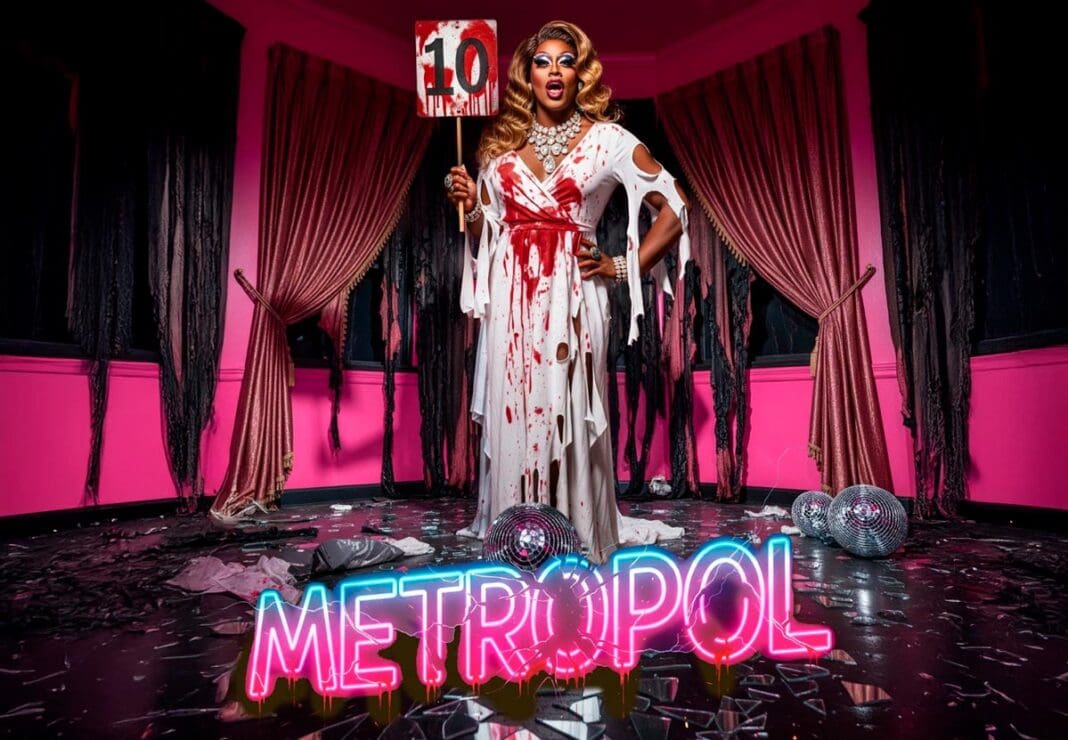
In Metropol, Casto Divo immerses us in a nighttime universe that is much more than a simple club: it is a refuge, a trench and, in many ways, an uncomfortable mirror of LGTBIQ+ reality. Set in a New York in the mid-70s – a time of creative euphoria, police repression and latent fear – the novel combines elements of thriller, social drama and ballroom culture with a dark and visceral aesthetic.
From the prologue, the tone is clear: there is no complacency here. The text of Glamniss—queen of terror and special guest on these pages—functions as a manifesto. It claims the power of the monstrous as a symbol of queer resistance, linking the mythology of terror with the experiences of those who live outside the norm. The premise is direct: being a monster is also surviving.
Narrative and setting
The story alternates intimate and almost cinematic scenes with moments of absolute rawness. The Metropol is presented as another character: a space saturated with light, music and sweat, but also with fear, secrets and wounds that are not always seen. The description of the club and its balls is reminiscent of the best underground queer cinema, with aesthetic references that refer to drag culture, performance and the fight for visibility.

The historical context is well woven: the shadow of HIV/AIDS (“the pink plague”), police brutality and institutional discrimination run through the plot without falling into flat didactics. The text portrays how collective fear can infiltrate even the closest relationships, and how safe spaces become authentic bastions.
Characters
The cast is large and diverse, with figures that move between tenderness, rage and pure survival. Sade, a trans woman on the run from a violent relationship, embodies the vulnerability that is transformed into strength thanks to the community. Luna Noire, diva of the stage and matriarch of the club, is the heart of Metropol: protective, charismatic, capable of offering a lipstick as if it were a weapon.
Danvers “The Hyena”, a Latina police officer trapped in a body foreign to the system, provides one of the most uncomfortable and powerful arcs. His resistance against the machismo and internal homophobia of the police station adds tension and complexity. The portrait of police brutality, without filters or concessions, is one of the hardest—and most successful—points of the novel.
What works
-
Visual and sensory atmosphere: Each chapter looks like a movie scene. Neon lights, smell of tobacco and cheap perfume, sharp dialogues.
-
Direct language: There is no fear of showing the uncomfortable, the ugly or the uncomfortably real.
-
Characters with layers: Even the secondary figures have memorable lines and humanity.
-
Integration of ballroom culture: The voguing, the categories, the ritual of the balls are presented with respect and knowledge.
- Advertisement -
What squeaks
In some passages, the accumulation of descriptions and metaphors can hinder the narrative rhythm, especially in high-tension scenes. There are also moments where the crudeness of certain police dialogues, although plausible, may be excessive for readers less familiar with that type of verbal violence. However, these excesses seem deliberate: the novel does not want to be comfortable.
Final reflection
Metropol is not just fiction; is a queer memory capsule. It reminds us that safe spaces are not born from nothing: they are built with nails, with love and with resistance. It tells us about how the community survives not only external threats, but also internal ones: fear, shame, loss.
For the LGTBIQ+ community today, where the rights achieved are once again at risk and hate speech resurfaces strongly, the novel is an urgent reminder: without memory there is no future, and without community there is no refuge. The Metropol of fiction may not exist, but the need for those places—real or symbolic—remains the same.