
Federico Jiménez Losantos has done it again. Under the protection of a large newspaper like El Mundo, he has published an article whose title itself, “Pedophile, communist and socialist whore pride”, constitutes an exercise in stigmatization and contempt towards millions of people. It is not a political criticism. It is not an ideological disagreement. It is the deliberate use of hate as a communication tool.
And the truly worrying thing is not just that someone writes something like that. In a democracy anyone can express opinions, even deeply wrong ones. The serious thing is that a media outlet with the influence of El Mundo considers it acceptable to turn an entire historically persecuted community into the target of a discredit campaign.
Because the LGTBI movement has never fought for privileges. He has fought to survive.
He has fought to stop being imprisoned.
It has fought to stop being considered a disease.
He has fought to stop being fired for loving.
He has fought to stop being beaten.
He has fought to exist.
Those who today talk about Pride as if it were a threat forget—or pretend to forget—that just a few decades ago many people had to hide who they were to keep a job, avoid a beating, or not be expelled from their own families.
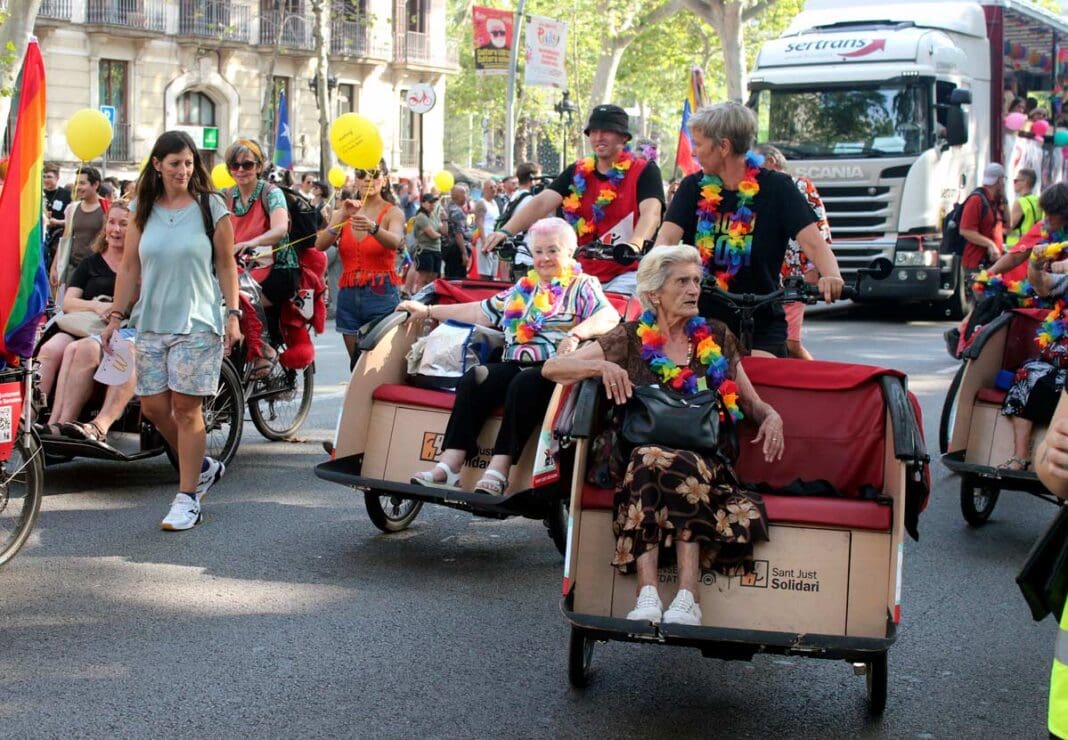
Pride was not born as a party.
It was born as a response to violence.
Why do they always make us the enemy?
There is a pattern that is repeated over and over again in many countries. When conservative movements and, especially, the extreme right need to build a cultural enemy, LGTBI rights appear among their main objectives.

It doesn’t happen because we are especially powerful.
It happens because we represent exactly what a certain worldview challenges.
For centuries, a social model was built based on very clear hierarchies: men over women; heterosexuality over any other orientation; gender understood as an immovable biological destiny; the family conceived as a single legitimate possibility.
The LGTBI movement challenges precisely these structures.
It is not intended to impose a way of living.
It aims to demonstrate that there are many equally valid forms.
And that bothers those who need the traditional order to remain intact.
When a society accepts that a woman can love another woman, that a man can care for instead of dominate, that a trans person deserves exactly the same dignity as anyone else, or that someone can live outside of gender stereotypes, the privileges built on inequality are weakened.
That is why it is easier to manufacture fear than to debate equality.
There is also a problem within our own community
But it would be a mistake to think that the only problem comes from outside.
There is also a deep lack of knowledge within the collective itself about our history.
And a people that does not know its history will always be more vulnerable to those who seek to rewrite it.
For decades we were defined by medicine and psychiatry. The word “homosexual” was long associated with a clinical classification that made us sick or deviant people. Although the term describes a sexual orientation and today does not in itself imply pathologization, for much of the 20th century it was deeply linked to that medical imaginary.
Faced with this, the liberation movement strongly adopted the word “gay”, a term born from the community itself, which allowed the construction of a political and cultural identity far from diagnosis and stigma.
Later we understood something essential.
The discrimination suffered by homosexual men could not be separated from that suffered by lesbian women, bisexual people or trans people.
The HIV/AIDS crisis reinforced that collective consciousness. While thousands of people died amidst institutional indifference, the movement understood that only solidarity could respond to abandonment. The acronyms began to reflect this common political construction, incorporating in an increasingly visible way lesbians, bisexuals, trans people and, later, intersex people.
They were not simple letters.
Each letter represents a struggle that had long remained invisible.
And what does “queer” really mean?
For some it has become a kind of ideological threat.
Nothing could be further from the truth.
Originally, queer was an insult meaning “weird” or “strange.” Like so many other persecuted communities have done throughout history, many people decided to reappropriate that insult and turn it into a symbol of pride and resistance.
Today the term has different meanings.
For many people it is an open identity that avoids reducing someone solely to their sexual orientation or gender identity.
It can also describe those who live outside the traditional norms of how a man or woman should behave.
A heterosexual person can identify with this way of breaking stereotypes without ceasing to be heterosexual.
And that is precisely one of the greatest riches of the concept.
Talking about queerness does not consist of talking about genitals.
It consists of stopping making the genitals the center of one’s identity.
For too long, society reduced LGTBI people to an implicit question: “what do they do in bed?”
As if our existence could be summed up in our sexual practices.
Nobody defines a heterosexual person by the sexual relationships they have.
Why should it be done with us?
Being gay, lesbian, bisexual, trans or queer speaks about identities, affections, life experiences and rights. Not sexual practices.
Reducing ourselves solely to sex has been one of the most persistent forms of dehumanization.
Ignorance always precedes hatred
That is why articles like that of Jiménez Losantos are not simple opinion columns.
They are possible because there is a huge lack of knowledge about who we really are.
When someone doesn’t know a story it is much easier to believe any caricature.
It is much easier to accept that Pride is an extravagance than to understand that it was born as a protest against violence.
It is much easier to associate the acronym LGTBI with an ideology than to understand that behind each letter there are decades of discrimination, activism and democratic conquests.
Ignorance has never been innocent.
It has always been the best fuel for prejudice.
Defending our rights is defending democracy
History shows that when a government or a political movement begins by singling out a minority, it never ends there.
Today it can be LGTBI people.
Yesterday it was the women.
Before it was migrants.
Tomorrow it will be any group whose existence is useful to distract from real problems.
That is why defending LGTBI rights is not only about protecting a minority.
It consists of protecting the democratic principle according to which no one should lose rights because of who they are.
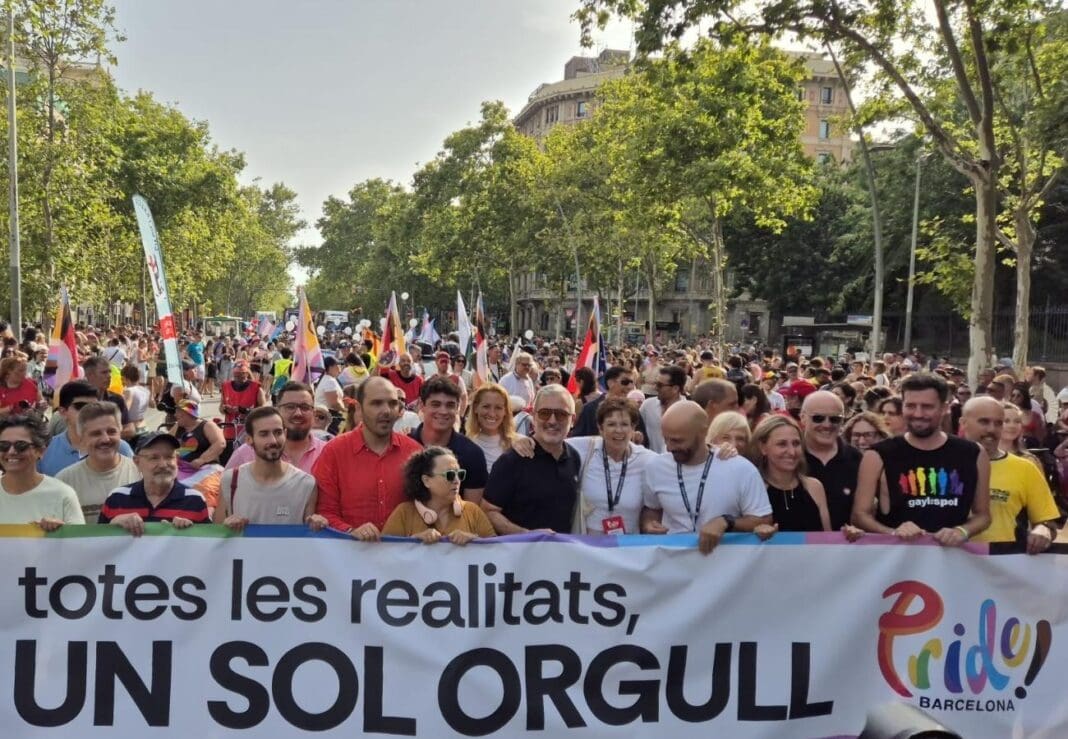
Pride does not represent hate.
Represents memory.
It represents resistance.
It represents dignity.
It represents the certainty that no society can be called free as long as there are people forced to justify their own existence.
And that is precisely why we continue to go out into the streets.
Not because we want to be different.
But because one day we aspire for being different to stop mattering.