

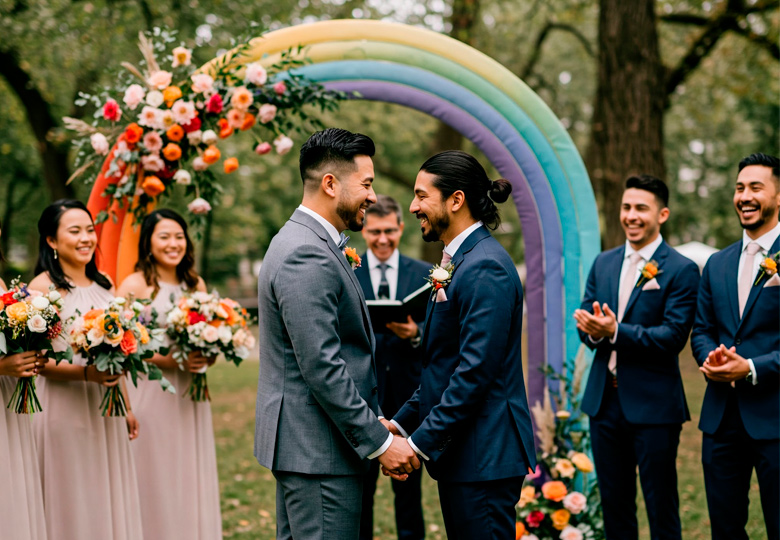
Organizing an event, be it a wedding or a party, is always a challenge. But when we focus on inclusion, the challenge becomes an opportunity to create something truly special, where everyone feels welcome, respected and comfortable. Inclusive weddings and events not only focus on celebrating love in all its forms, but also on creating a space that breaks traditional molds and is an authentic reflection of who you are, your values and those of the people who accompany you.
In this article, we are going to explore how you can organize an event or inclusive wedding, offering practical advice, but also opening up the debate about the complexities that can arise when planning a truly diverse event. In the end, the idea is that you feel inspired to take those steps that will make a difference and make your celebration a true uniting space for all people.
1. Define what being inclusive means to you
The first thing of all is to understand what having an inclusive wedding or event means to you. Is it inclusive of people of all sexual orientations and genders? Is it giving space to people with different disabilities? Is it making an effort to integrate different cultures, races or religions into your celebration? The concept of “inclusion” can vary greatly from person to person, so don’t be afraid to ask yourself what kind of inclusion you want to create.
The key is to be honest with yourself and with your partner (or your organizing team, if it is a collective event). From there, you can begin to make adjustments that ensure your wedding or event is truly inclusive, and not just superficially “diverse.”
2. Break with traditional norms
Traditional weddings are often based on norms and expectations that do not always reflect current realities. White for the wedding dress, the distribution of space according to gender or the expectations of the roles in the ceremony are just some examples of these molds. Why follow those rules when you can create something unique that truly represents everyone involved?
Think about rituals. Some couples choose to incorporate customs from different cultures to reflect their diversity. If you have friends or family from different parts of the world, why not integrate some of their traditions or practices? This is not only inclusive, but also enriching. The options are endless, and inclusion can make every aspect of your event even more meaningful.
3. Make sure everyone feels comfortable
If we want an event to be inclusive, the physical and emotional comfort of the guests is key. Is there access for people with reduced mobility? Is it easy for people with hearing or vision disabilities to actively participate? Paying attention to these details is essential, and it is not just about “providing a service.” It is an act of respect for the dignity of people.
If possible, include a team of trained professionals to facilitate accessibility and the necessary support for those who need it. Wheelchairs, sign language interpreters or applications for simultaneous translation can make a difference in making everyone feel part of the celebration.
4. Language matters: use inclusive language
Language is a powerful tool that can make someone feel welcome or excluded. At an inclusive wedding or event, it is essential to be aware of the way you communicate. When writing invitations, programs, or even speaking during the event, be sure to use language that doesn’t reinforce stereotypes or exclude anyone.
Avoid assuming the gender of your guests, use terms like “couple” instead of “boyfriend/girlfriend” when necessary, and make sure your messages and communications reflect the diversity of genders, sexual orientations, and life experiences of those around you.
5. An inclusive wedding is also an ecological and ethical wedding
A key aspect of inclusion is considering the impact the event has on the world we share. Many times, weddings or events can be consumerist and unsustainable, but by organizing an inclusive celebration, you can also make it ethical and ecological. From choosing suppliers that respect human rights to selecting recyclable materials or using fair trade foods, every decision counts.
Think about it: your wedding can not only be inclusive in terms of people, but also in terms of the resources you consume. This way, your event will reflect your respect for all people and the planet.
6. Invite everyone to be who they are
The people who attend your wedding or event should feel at home, without having to fit into a mold. Remember that not everyone identifies with the traditional roles of “girlfriend” and “boyfriend,” and that’s okay. Some people prefer a freer, label-free approach, and your event should be a safe place for all of those identities.
Similarly, those who attend can choose the clothing in which they feel most comfortable. If someone feels more chic in a suit or dress with vibrant colors, feel free to choose what they like most. At the end of the day, what matters is that your wedding or event is a celebration of love and the freedom to be yourself.
7. What if not everyone agrees with your inclusive approach?
Although inclusion should be a universal value, the reality is that, sometimes, there may be those who do not share the same vision. It is important to anticipate and reflect on how you will handle possible criticism or misunderstanding, both from family and friends. This does not mean that you should give in to pressure, but it is essential that you know how to handle difficult situations with empathy.
In many cases, people who don’t immediately understand your inclusive approach need time. Perhaps a clear and respectful dialogue is the best way to explain why these types of weddings are necessary and how their inclusion is also based on respect and love.
An open debate on inclusion in events
We have to ask ourselves: is it possible that sometimes, by wanting to be “too inclusive”, we run the risk of making the entire event more about the politics of inclusion than about the true celebration of love and the joy of the occasion? Should we relax a little and allow the spontaneous moments of joy and love not to have to be labeled or analyzed? Perhaps, on some occasions, “perfect inclusion” ends up losing its initial purpose: enjoying an event that celebrates life in all its forms. This reflection opens the door to a valid and necessary debate on the balance between the inclusive and the authentic.
Organizing an inclusive wedding or event is not only about being “politically correct”, but about embracing diversity as something that enriches everyone. The key is to respect, understand and celebrate what each person brings to the table, and create an environment where everyone feels free to be who they are. And although the path may seem complicated at times, in the end, the effort will be worth it when you see all the guests fully enjoying the celebration.