
Street art has become a powerful tool of expression, especially within the LGTBIQ+ community. In many cities around the world, murals and graffiti not only beautify the urban environment, but also convey messages of inclusion, love and resistance. In this article, we will explore how these urban works make diversity visible and encourage a dialogue about identity and acceptance.
Street Art as a Voice of the Community
For decades, urban art has been a space of resistance and vindication. In the LGTBIQ+ context, this type of art challenges stigmas and prejudices, offering a platform for marginalized voices to be heard. Murals dedicated to iconic figures of the queer community, such as Marsha P. Johnson or Harvey Milk, not only celebrate their legacies, but also educate the population about the history of the movement.
Murals that Inspire and Unite
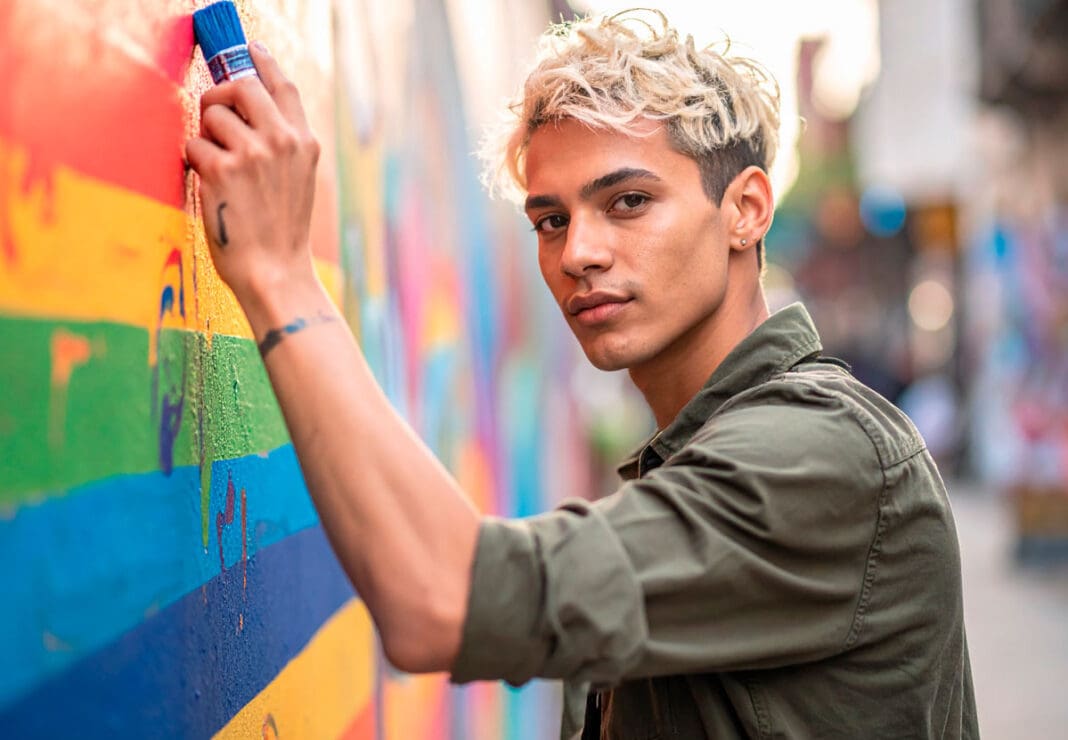
Murals are perhaps the most visible form of queer street art. These large urban canvases transform gray facades into colorful tributes to diversity. For example, in cities like Madrid and Barcelona, it is common to find murals depicting the rainbow flag, each color symbolizing a facet of the community: life, healing, sunlight, and more.
In addition to aesthetics, murals have a significant social impact. By occupying public spaces, these artistic works invite reflection. What does it mean for a queer person to see their identity represented in their daily environment? How does this affect your sense of belonging and self-esteem? The answers may be deeply personal, but the overall message is clear: diversity should be celebrated.
Resistance Graffiti: A Form of Activism
Graffiti, often associated with vandalism, can be a powerful form of activism. In many cities, queer graffiti artists use their art to protest homophobia and transphobia. Phrases like “Love is love” or “Diversity is strength” appear on the streets, becoming slogans of struggle and acceptance.
This type of art can also be ephemeral. Graffiti is often erased or covered up, raising the question: is street art a form of temporary resistance? The fleeting nature of these works may reflect the LGTBIQ+ community’s ongoing struggle to be seen and accepted. Each graffiti can be a declaration of war against invisibility.
Diversity in Street Art: Beyond Sexuality
Although queer street art often focuses on sexual identity, it also encompasses other dimensions of diversity, including race, class, and disability. This inclusive approach is vital, since intersectionalities within the LGTBIQ+ community are complex and diverse.
Artists such as the collective “Las Chicas del Cable” in Spain address issues such as the representation of trans women and the struggle of racialized people within the queer movement. In doing so, they expand the conversation about what it means to be part of the LGTBIQ+ community, recognizing that each identity brings a unique nuance to the collective experience.
A Space for Reflection
When looking at queer murals and graffiti, one can’t help but wonder: what role does art play in the construction of identity? Can street art really change public perception of the LGTBIQ+ community? These questions invite a deeper analysis of the function of art in society.
On many occasions, street art challenges dominant narratives and offers alternatives. It encourages us to consider diversity not just as a concept, but as a lived reality. However, it is also necessary to reflect on the impact that art has on the communities it seeks to represent. Is there a risk that art will become a simple form of cultural consumption, stripping messages of their historical and political context?
Critical Perspectives: The Risk of Commercialization
Despite the importance of queer street art, there are those who criticize its commercialization. In some areas, art has become a form of tourism, where works are displayed more as attractions than as expressions of struggle. This raises the dilemma of whether art can still be a vehicle for social change or whether it is being transformed into a product for mass consumption. Is it possible to maintain the authenticity of the message in such a commercialized environment?
Queer street art is a vibrant manifestation of diversity and resistance. As the world moves towards greater acceptance of queer identities, urban art will continue to play a crucial role in making these realities visible. Each mural and each graffiti tells a story that deserves to be told, reminding society that diversity is a fundamental value.
On this journey, it is essential that both artists and viewers continue to question and reflect on the meaning of art in our lives. What stories do we want to tell? How can we use art to foster a more inclusive world? Answering these questions can be the first step towards a more diverse and welcoming future.