

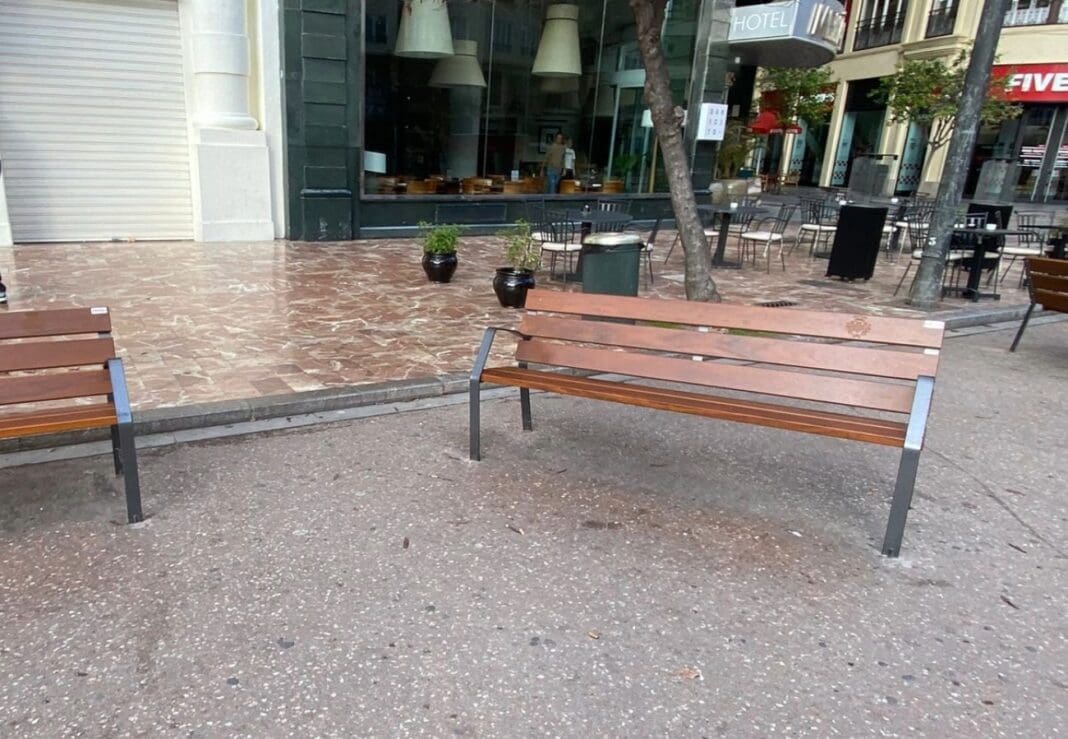
Throughout history, symbols in public spaces have reflected the values of a society and the commitment of its rulers. In Valencia, the recent movement of the municipal council, led by María José Catalá and her Vox partners, has provoked an intense controversy that goes beyond mere urban gardening. The replacement of the benches with rainbow and purple colors, emblematic of the fight for equality and diversity, in the central Plaza del Ayuntamiento, has been interpreted by the socialist opposition as a clear and direct application of what they call the “ultra agenda”.
For the reader who visits the city or lives in it, the absence of these elements may seem like a minor detail. However, for the councilwoman of the Municipal Socialist Group, Nuria Llopis, the act has an inescapable ideological charge. Llopis has demanded that Mayor Catalá reconsider the measure and reinstate the seats, denouncing that this act is not “a coincidence, this is ideology.”
Have you noticed? The purple and LGTBI banks are no longer there.
First on the Puente de las Flores, now in the Plaza del Ayuntamiento.
It is not a coincidence: it is a political decision.
From @PSOEValencia we say it clearly: València is diverse and we are not going to allow… pic.twitter.com/syfd3O3g7c
— PSPV-PSOE València /❤️ (@PSOEValencia) January 26, 2026
Llopis’s criticism focuses on two fronts. On the one hand, it points out the previous abandonment of the infrastructure: it assures that the current corporation allowed the banks to deteriorate due to lack of maintenance. On the other, it underlines the final decision to replace them completely. In her words, the mayor “demonstrates every day that she is more reactionary than her partners and that she does not need them to continue erasing equality and diversity from our streets and squares”.
A structured setback in equality policies?
This incident does not occur in isolation. The socialist councilor argues that the elimination of these banks is part of a “structured plan” to dismantle the equality and diversity policies that have been observed since the change of government.
The list of precedents that the Socialist Group puts on the table is extensive and significant:
- Sexist Violence: One of the first actions was to remove the banners against sexist violence in the rallies after the murder of women. The elimination of objectives to promote women’s equality and actions aimed at victims of sexist violence in the statutes of the defunct València Activa is also mentioned.
- 8M and Institutional Recognition: The refusal in the municipal plenary session to approve, for the first time in its history, an institutional declaration on the occasion of 8M (International Women’s Day), an event that the government partners even celebrated publicly in the Plaza de la Virgen.
- LGTBIQ+ visibility: The previous removal of the rainbow benches on the Puente de las Flores, an action justified at the time by the remodeling of the bridge and its dedication to former mayor Rita Barberá.
In this context, the removal of the LGTBIQ+ and purple symbols from the Plaza del Ayuntamiento seems to confirm a pattern, where the visibility of social struggles for equality and against LGTBIQ+phobia is being systematically reduced in institutional and public spaces. It is argued that, just as the removal of banners from the town hall balcony (Women’s Day, LGTBIQ+ Pride Day) was justified by alleging that those of diseases such as ALS were not posted either, a false neutrality is sought that, in practice, makes the active struggle invisible.
A call for collective reflection
When a symbol of diversity is removed, what message is sent to citizens, especially members of the LGTBIQ+ community? The fight for equality is not only fought in offices, but also in the hearts of cities, where colors and messages act as constant reminders of inclusion.
Is symbolic neutrality really neutral, or does it become a tool to erase the achievements of minorities?
What impact does it have on society and on young people to see how the symbols that represent their identity or their rights are eliminated from the space that is supposed to belong to everyone?
To what extent is the maintenance of these visual elements a barometer of political commitment to equality?
Councilor Llopis has been clear: Catalá “continues to make the fight against LGTBI phobia invisible”. The ball is now in the court of the City Council, which must decide whether equality and diversity will continue to have a seat, literally, in the nerve center of Valencia.
Publicidad