
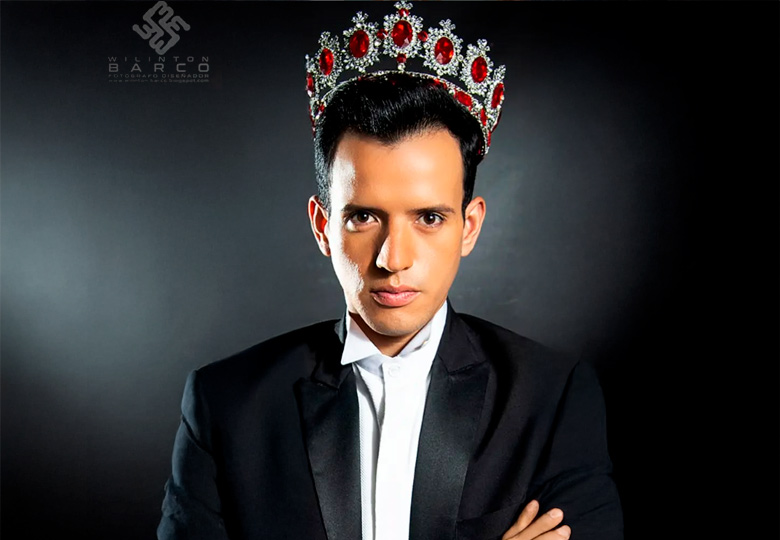
Can a tattoo, a diverse identity and a country of origin become a conviction? For Andry José Hernández Romero, a 31-year-old Venezuelan stylist and visible member of the LGTBIQ+ community, the answer seems to be yes. His story has shocked both for what it represents and for what it reveals: an immigration system that discriminates based on appearance, identity and origin.
A dream cut short by unfounded suspicions
On May 23, 2024, Andry began his journey to the United States in hopes of finding a better future. On August 29, when he showed up for his appointment at Customs and Border Protection (CBP) in California through the CBP ONE system, he was detained on suspicion of belonging to a criminal gang.
The American authorities, according to statements from his family, based their suspicions on something as subjective as his tattoos. Specifically, a crown on his wrists, a symbol of the Three Wise Men of Capacho cultural foundation, of which he has been a part since he was little. Despite presenting evidence of his innocence—birth certificate, letter of good conduct, work photographs—he was never released.
A silent transfer and devastating news
On March 14, 2025, Andry managed to briefly communicate with his mother, Alexis Romero de Hernández. He told him that he would be deported and transferred to another center. Then, total silence. His family and lawyers lost all contact until March 20, when CBS News published a list of 238 Venezuelan migrants deported to El Salvador and held in the controversial Terrorism Confinement Center (Cecot).
“We found out from the lawyer in the US, who didn’t know where he was either,” his mother explained to the newspaper El Nacional.
View this post on Instagram
Identity, art and resilience: who is Andry Hernández?
Andry was born in the Capacho municipality, Táchira state (Venezuela). Since he was a child he was linked to art and culture: he participated in community theater plays and was an active part of the Gente Creativa group. As a professional stylist and makeup artist, he worked in Caracas and in 2022 he collaborated in the transmedia series Pombo Magazine, recognized for its inclusive narrative.
In addition to being an artist, Andry is openly part of the LGTBIQ+ community. And that matters too. Because his story is crossed by multiple forms of discrimination: for being a migrant, Venezuelan, visible in his gender expression and with tattoos. All of this became, for the authorities, an alarm signal.
A tattoo or a prejudice?
The crown tattooed on their wrists—a cultural symbol of the Three Wise Men of Capacho—was interpreted as proof of affiliation with the Tren de Aragua, a Venezuelan criminal organization declared terrorist by the Trump administration. “During the process, they asked them to justify that symbol, ignoring its true meaning,” said their mother.
And here an uncomfortable question arises: to what extent do immigration authorities interpret symbols, bodies and identities from prejudice?
A process that raises doubts
President Donald Trump defended the mass deportation, ensuring that the 238 migrants had been “rigorously vetted.” But for many human rights organizations, Andry’s case represents a possible violation of fundamental rights: detention without clear evidence, lack of access to defense and discrimination based on profile.
Although the process is alleged to continue in El Salvador, the standards of justice and transparency at Cecot—a prison known for its harshness—continue to be questioned by international organizations.
Are we deporting identities?
Behind Andry’s case there is not only one person unjustly detained. There is a worrying pattern: decisions based on stereotypes and the criminalization of what is different. What happens when being LGTBIQ+, having tattoos or coming from Venezuela becomes a prior sentence?
Furthermore, it is worth asking whether this immigration policy is really designed to protect society or rather to apply selective punishments to those who already face multiple forms of vulnerability.