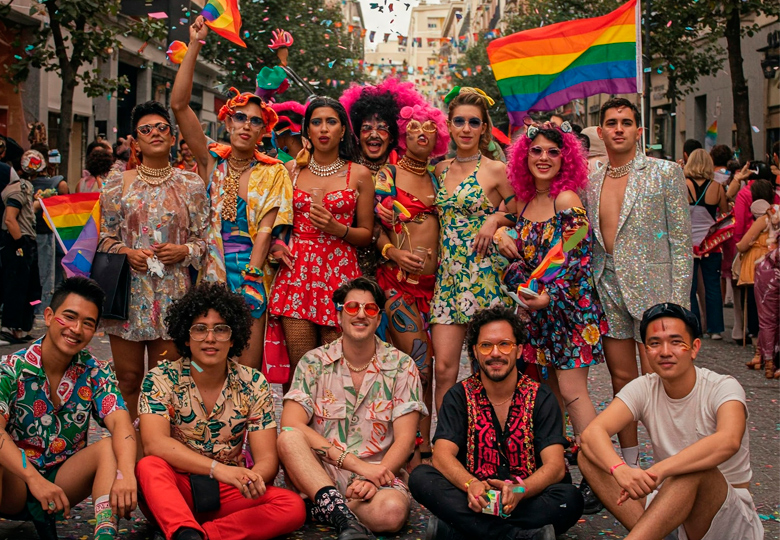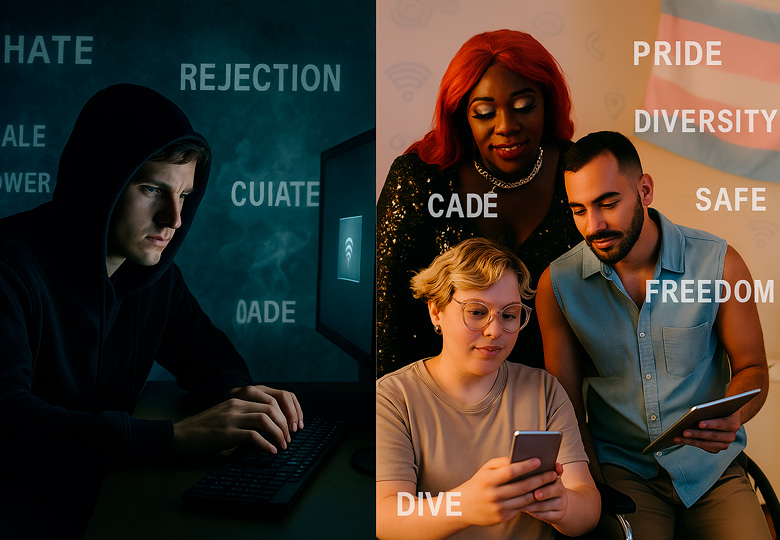


Yes, we know. You get a notification, you open Instagram, you try a filter that turns your face into a Studio Ghibli-style princess or a queer anime hero, and the result is so magical that you share it without a second thought. But what happens behind that moment of fantasy? At what cost are we creating these images that feel so harmless?
The rise of generative artificial intelligence—that which creates images, voices or videos from text or photos—is revolutionizing social networks. But while we play at becoming movie characters, we ignore a big little detail: each image generated by AI consumes energy. Much more than we imagine.
The hidden side of digital fantasy
It is no secret that training AI models requires enormous energy expenditure. Companies like OpenAI or Google use supercomputers powered by thousands of graphics cards that run for weeks (or months) to “teach” an AI how to create content. Up to this point, everything seems very techie. But that energy expenditure translates into a real environmental impact.
While generating a single Ghibli-like image may seem trivial, when millions of people use the same filter several times a day, the effect is multiplied. According to some studies, a single query to a generative AI model can consume the same energy as charging an entire mobile phone. Now imagine that millions of times a day, every day.
Why should we care about this?
Because climate change affects us all. And because in a community like the LGTBIQ+, which has historically fought for social justice, environmental justice cannot be left out of the discourse. Queer is also ecological, or should be.
In addition, most of the data centers where these AIs are trained and run run on electricity generated from fossil sources. That is, coal, gas, oil… the usual. This means more CO₂ emissions, more climate crisis, more problems for the planet.
The paradox: inclusive technology, unsustainable footprint
It is true that many of these applications and filters allow queer people to experiment with their image, explore diverse identities, and play with genders without having to expose themselves to the judgment of the physical world. That’s valuable. Sometimes a filter isn’t just a game: it can be an avenue for personal exploration or gender affirmation.
So what do we do with this contradiction? Should we stop using AI? Are we back to unedited selfies?
Are there sustainable alternatives?
Luckily, all is not lost. There are more responsible ways to enjoy technology without putting all the burden on the planet:
-
Use filters that run locally (on your own device, without resorting to external servers).
- Advertisement - -
Avoid digital overexposure: you don’t need to post ten images with the same filter, perhaps one will be enough.
-
Choose apps committed to renewable energy: some platforms are already migrating their data centers to more sustainable systems.
- Publicidad-
-
Get informed before joining a viral trend. Not everything that shines is an echo.
In addition, more conscious technology proposals are emerging from queer, artistic and ecological groups. Can you imagine a filter app developed by a feminist cooperative that uses only green servers? There are people working on it, although it is not yet in the mainstream.
An industry with shared responsibility
It is important not to put the entire burden on the user. Big tech companies must play their part. It is not enough to allow ourselves to play at being fantasy otakus for a few seconds. If they really want to talk about inclusion, they should also commit to sustainability.
We need more transparency: how much energy does a filter use? What real impact does it have on the environment? How do they offset emissions? At this time, these questions do not have clear answers. And that is already a problem in itself.
And if you’re wondering…
Is it really that serious? Isn’t it worse to travel by plane or eat meat every day?
Yes, of course. But this is not about finding culprits or entering into competitions of who pollutes the most. It’s about being aware of how each gesture, no matter how small it may seem, is part of a larger system. It is not about eliminating digital pleasures, but about integrating them with awareness. Use less, use better, and push for the industry to change.
Not everyone agrees
Some voices argue that exaggerating the environmental impact of AI filters can distract us from much more pressing problems. There are even those who suggest that these technologies, well managed, could help reduce other forms of pollution: from improving energy efficiency to generating art without physical materials. Furthermore, prohibiting or limiting their use without real alternatives could make invisible part of the LGTBIQ+ group that finds a safe form of expression in these tools. Is it possible to balance expression and impact?
Now what?
Maybe next time you use a Ghibli-style filter you’ll think twice. Not to stop using it, but to do it from another place. With conscience. With intention. Because, yes, the world needs more magic, but also more responsibility.
Can we imagine a queer digital aesthetic that leaves no mark on the planet? We may not have the answer right now, but the first step is to start asking the question.