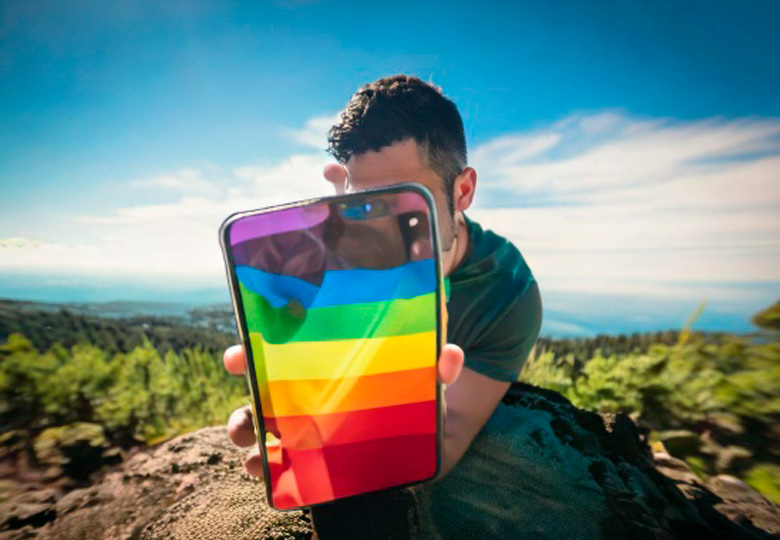


Talking about mental health is never easy. But if you are part of the LGTBIQ+ community, you probably know that there are extra challenges along the way. Discrimination, rejection or the simple feeling of not fitting in can make anxiety, depression or stress become unwanted companions. So what can we do? The first thing is to know that you are not alone, and the second is to know where to find support.
The impact of mental health on the LGTBIQ+ community
It’s no secret: LGTBIQ+ people face higher rates of mental health problems compared to the general population. Homophobia, transphobia, biphobia and LGTBIphobia in general continue to exist, and although society has made great progress, there are still daily battles that affect emotional well-being.
Studies have shown that 40% of trans people have attempted suicide at some point in their lives, and that anxiety and depression are much more common among LGTBIQ+ people than among cisgender heterosexuals. It is strong, yes, but it is also a wake-up call: we need to talk about this and, above all, we need to seek help without fear.

Find support: You are not alone
The first thing to be clear about is that asking for help is not a weakness, but an act of courage. And in Spain, fortunately, there are many resources available for the LGTBIQ+ community. Let’s look at some.
Associations specialized in LGTBIQ+ mental health
If you are looking for a safe space to talk, share experiences and receive psychological help, these associations can be a good starting point:
- Daniela Foundation: Focused on gender diversity in childhood and adolescence.
- COGAM: Offers support groups and psychological advice in Madrid.
- FELGTBIQ+: State federation with mental health and social support programs.
- Lambda Valencia: Provides psychological care and support in situations of discrimination.
- Casal Lambda (Barcelona): Information and resource center for the LGTBIQ+ community.
Psychology professionals and specialty therapists
Not all mental health professionals are prepared to care for LGTBIQ+ people. Seeking therapists who understand the specific experiences and difficulties of the community can make a big difference.
There are directories such as LGTBIQ+ Psychology, where you can find professionals in your area who offer affirmative therapy free of prejudice.
Support Groups: Sharing to Heal
Sometimes talking to someone who has been through the same thing helps more than any individual therapy. In cities like Madrid, Barcelona or Valencia there are numerous support groups for trans, lesbian, bisexual and gay people. There are also specific spaces for young people, seniors and families.
If you don’t feel up to attending a group in person, many of these organizations offer online forums or virtual meetings.
Take care of yourself on a daily basis
Beyond professional help, there are small changes that can make a difference in your emotional well-being.
Surround yourself with people who support you
Having a support network of friends, family or colleagues who accept you as you are can make a big difference. And if you feel that your environment is not right, remember that you can always build a “chosen family” with people who understand and support you.
Learn to set limits
You don’t have to put up with offensive comments or situations that make you feel bad. Learning to say “no” and staying away from toxic environments is a form of self-care.

Take care of your body, take care of your mind
Sleeping well, doing some exercise and maintaining a balanced diet not only benefit your physical health, but also help regulate emotions. Small changes in your routine can greatly improve your mood.
Disconnect from time to time
Social networks can be a double-edged sword. If you feel like you are being negatively affected, take a break. Instead, spend time doing activities that make you feel good: reading, listening to music, painting, playing sports…
There is no magic formula to take care of mental health, but there are many options that can help. The important thing is to take the first step.
So, I ask you: What strategies do you use to take care of your emotional well-being? Have you tried any of these options or do you know of any others that could be useful? The conversation is open.