



- The document adapts assistance to Law 4/2024, reinforcing the role of Primary Care and guaranteeing equity in the three territories.
- Primary Care Services for Trans People (SAPT) are created with the hiring of new psychologists and specialist nurses.
- The Osakidetza trans people care guide has been prepared in collaboration with associations such as Naizen, Errespetuz, Loratuz Lotu and Lumagorri.
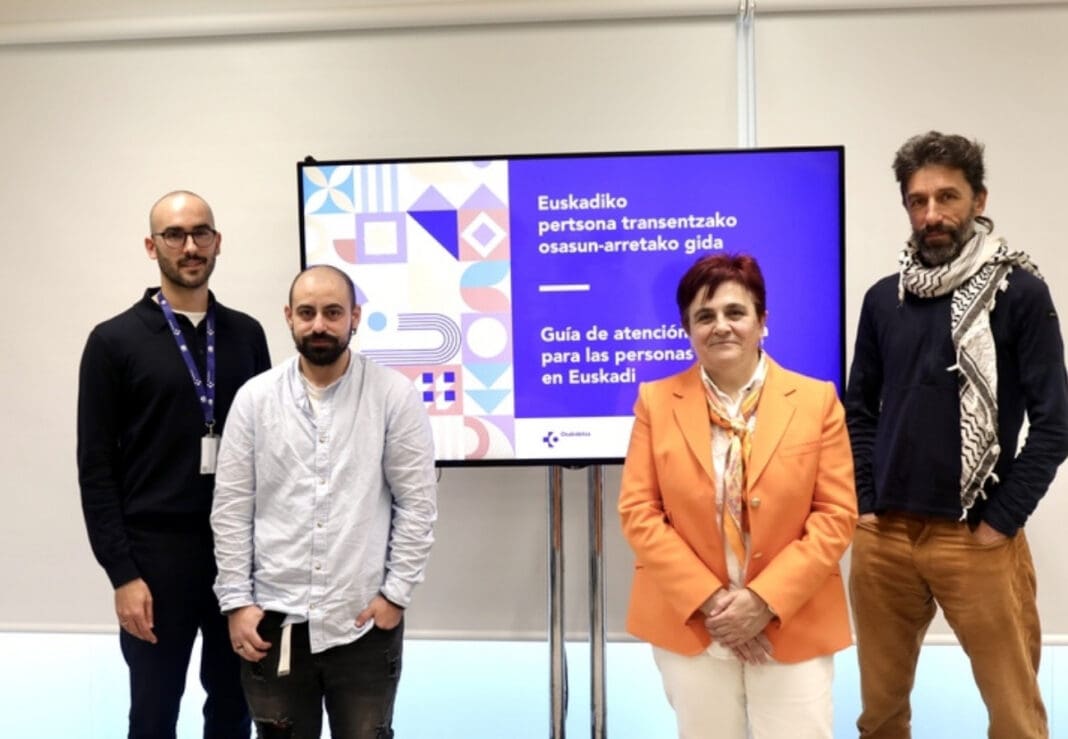
Coinciding with the International Day of Trans Visibility, the Basque Health Service has marked a milestone in its healthcare model. The general director of Osakidetza, Lore Bilbao, today presented the new Osakidetza trans people care guide, a strategic document that seeks to transform the relationship between the health system and the group. This initiative, aligned with the Basque Health Pact, is committed to an environment where each person feels “listened to, respected and safe”, eliminating bureaucratic barriers and stigmas.
Decentralization and new SAPT services
One of the great novelties of the Osakidetza trans people care guide is the creation of the Primary Care Services for Trans People (SAPT). These centers, located in the three historic territories (such as C.S. Alde Zaharra in Donostia), will act as a gateway and personalized support. To strengthen this deployment, Osakidetza will incorporate three new psychologists and three nurses who will network with the Gender Identity Unit (UIG) of the Cruces University Hospital.
The new model is committed to progressive decentralization. This means that procedures as part of hormone therapy, less complex surgical interventions and assisted reproduction processes can be performed closer to the patient’s home. The Cruces UIG will remain the reference center for the most complex processes, always ensuring care based on informed and personalized decisions.

A participatory process with the collective
The preparation of the Trans People Care Guide would not have been possible without the direct involvement of families and trans people. During the presentation, the work of the associations defending the rights of the collective was valued, whose experience has been vital to construct a “more humane and realistic” manual.
With this step, Euskadi is at the forefront of inclusive healthcare, recognizing that not all transitions are the same and that the system must adapt to the diversity of each life experience. The guide not only updates clinical protocols, but also consolidates an ethical commitment to the comprehensive well-being and dignity of all people in all their diversity.