
- The organization’s first study, based on 295 valid responses, places the Global Emotional Well-being Index at a pass: 50 out of 100.
- 73% of gay and bisexual men surveyed confess that they do not feel like they are part of a community where they truly fit in.
- In the face of isolation, taking care of one’s physical appearance is the only positive dimension, supported by 61% of the participants.
The psychological well-being of gay and bisexual men in Spain faces a silent structural crisis that official metrics fail to register. The organization Orlander has publicly presented the results of its first report on affective health, prepared from data extracted from its Orlander Emotional Well-being Test. The conclusions of the document, collected between January 11 and May 29, 2026, draw a contradictory and uncomfortable social scenario: a community that invests weekly resources in aesthetics and body façade, but that suffers from an alarming deficit in the construction of deep support networks and spaces of real belonging.
The body as the only refuge against the community void
The numerical results of the self-selection test — which consisted of 10 Likert frequency items completed anonymously by 295 unique people — show that isolation does not respond to a lack of social activity, but rather to the absence of honest codes. The general indicator of emotional health stands at a strict 50 out of 100. Within this ecosystem, the dimension dedicated to “spending time each week to take care of the body” is the only one that shows a clearly favorable balance, with 61% of affirmative responses.
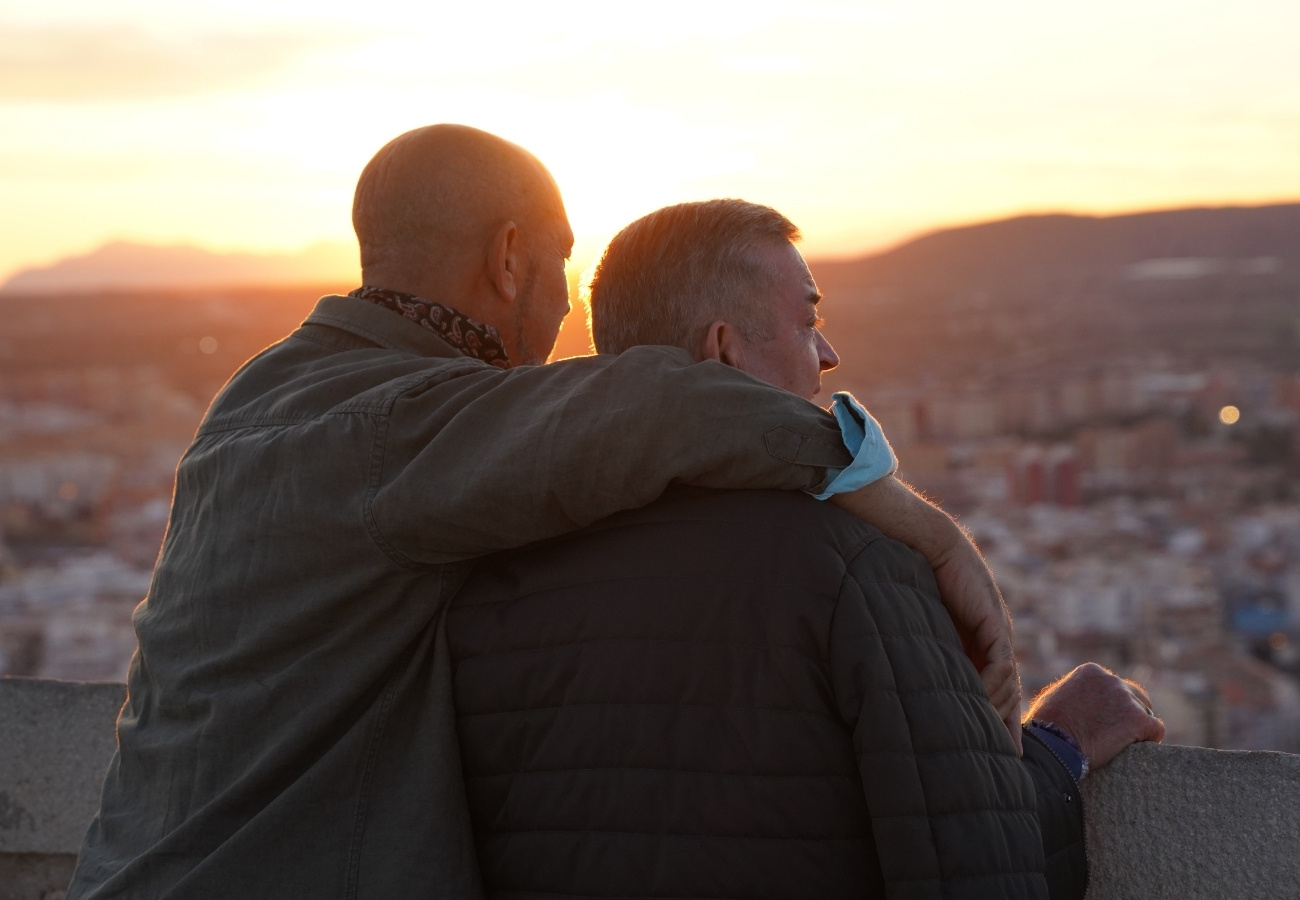
This investment in appearance contrasts drastically with the collapse of community indicators. 73% of the participants categorically affirm that they do not feel belonging to a human environment where they truly fit in, emerging as the greatest deficiency of the entire research. The founder of the entity, Fabri Orlandi, defines this reality forcefully: the most harmful loneliness is not that experienced in physical isolation, but rather that of becoming an invisible subject within a room full of people with whom one interacts superficially.
Chronic loneliness in hyperconnected leisure environments
The report delves into the inability of current dynamics to safely channel vulnerability. 57% of gay and bisexual men tested acknowledge that they do not have anyone in their immediate environment with whom they can openly talk about their feelings without being exposed to the judgment of others. Likewise, 54% admit that they lack a stable group of friends where they can show themselves as they are, being forced to operate through masks of external validation and competitive dynamics.
This disconnection coexists with saturated social agendas and high digital exposure. When asked about their exact life situation, 32% define their state under the premise of “I have people around me but few deep relationships”, while 20% identify themselves in a situation of isolation and absolute disconnection. The data also show that 51% experience serious difficulties in maintaining a healthy balance with dating apps and the dynamics of conventional nightlife, which chronicles the feeling of emotional emptiness.
A problem of social offer, not of lack of will
The strategic reading of the organization rules out that isolation responds to a character trait or an intrinsic social phobia of the users. 49% of those surveyed explicitly point out that the biggest obstacle that slows down their emotional development is that they literally do not find spaces or like-minded people in their daily lives. This figure far exceeds factors such as lack of time (21%) or fear of rejection (15%), which places the problem in a design failure in the leisure offer of the social fabric, and not in a lack of individual will.
On the other hand, the fact that 59% of men say they “still do not know” what type of support they prefer to mitigate their situation reveals that, although the discomfort is identified, the healthcare market does not offer clear solutions. Among those who do choose a specific methodology, the priority option is group workshops and community life (24%), far above the consumption of individual content at their own pace (14%).
| Dimension Analyzed in the Test | Percentage of Deprivation (Low Score) |
| Sense of community belonging |
73% - Advertisement -
|
| Anxiety and stress management |
58% |
| Absence of judgment when talking about feelings |
57% - Publicidad-
 |
| Group of friends without social masks |
54% |
| Balance with dating and dating apps |
51% |
The void in the Soledades State Strategic Framework
The launch of the Orlander Wellbeing Test occurs in a state regulatory framework that ignores the particularities of the LGTBIQ+ group. The current State Strategic Framework for Loneliness 2026-2030, validated by the Council of Ministers in February 2026, stipulates that 20% of the Spanish population suffers from unwanted loneliness; However, said public document does not disaggregate or cross-reference its data with sexual orientation or gender identity variables. This community-based study provides, in a qualitative way, the measurement that public institutions omit.
The panorama worsens when contrasted with other state mental health indicators. According to the FELGTBI+ State of LGTBI+ Hate 2026 report, 44% of people in the group suffered some hate incident in the last year. This external hostility explains why 55.4% of the community has suffered from depression and 32.1% has experienced suicidal ideation, doubling the rates of the general population.
Faced with this reality, Orlander — who since 2018 has supported more than 1,500 users in his club and has coordinated 25 health retreats throughout Spain — defends the urgency of building adult environments where vulnerability is the starting point and emotional connection is the norm, consolidating the intermediate link that rescues gay men from mandatory loneliness once they overcome youth.