
The Naghoi and Facialteam team explains how medical, psychological and community support is addressed in gender affirmation processes
In gender affirmation processes, care does not begin or end in the operating room. More and more professionals insist that the transition is a complex path where medical, emotional and social factors intervene that require comprehensive support. We spoke with the team of Naghoiand Facialteam, a project specialized in recovery and support for trans people after facial affirmation surgeries, to understand how this support is articulated beyond the surgical intervention. From expectation management and mental health to the debate on cispassing or the medicalization of transition, this conversation addresses the current challenges of healthcare for trans people in an international context where their rights are once again at the center of the debate.

Rainbow Magazine: Naghoi was born as a postoperative recovery center, but in gender affirmation processes the “after” does not always begin after surgery. We want to understand where they place the real beginning of Beyond the postoperative period: when does the support really begin?
Doctor Luis Capitán, co-founder and co-director of The Facialteam Group: Real support begins from the first contact with Facialteam, our multidisciplinary group specialized in facial gender affirmation surgery. Our dedication to the LGBT community motivates us to share scientific and educational information. With more than 15 years of experience listening to our patients, we have deepened our connection with them. This includes offering 3D procedure videos, hundreds of testimonials, and detailed analysis of each case, cementing our clinician-patient relationship. From the first exchange with our coordinators to the evaluation, consultation and postoperative care, we practice active listening.

Rainbow Magazine: Do you work with trans people only after surgery or is there some type of contact, guidance or prior support before they undergo surgery?
Dr. Daniel Simon, co-founder and co-director of The Facialteam Group:We work with trans people interested in facial surgery. In fact, our work begins long before the operating room. From the first contact, we begin a completely personalized guidance and advice process. We spend time adjusting expectations, resolving doubts and evaluating each case in depth.
This prior phase is essential and may include several consultations, diagnostic tests such as a 3D CT scan, and the use of anatomical models to study different surgical approaches. All of this provides the patient with clear and rigorous information to make conscious decisions.
The most important thing is that they feel heard, understood and safe before taking any steps towards surgery.
Rainbow Magazine: Talking about comprehensive recovery means talking about more than scalpels and stitches: mental health, emotions, expectations and fears are also part of the process. What professional profiles does the Naghoi team have and how is this multidisciplinary support articulated during the patients’ stay?
Dr Daniel Simon: Both Facialteam and Naghoi have various socio-health professionals, always working as a team. On the medical side, there are 12 surgeons, three anesthetists and a family doctor on staff who measure every clinical detail throughout the perioperative stay.
In Naghoi, there is specialized nursing care for postoperative trans patients, available 24/7, day and night, which provides everything from routine check-ups to massages such as lymphatic drainage and pressotherapy, therapies with the aim of reducing inflammation and speeding up recovery. In addition, two psychologists provide a variety of services to care for the mental health of both patients and their companions, at an individual and group level.

Dr. Luis Capitán:Our team provides care and tranquility in the post-operative phase, and also encourages healthy eating and a shared community experience. We care about physical recovery but also mental and emotional recovery. Our care model is innovative not only in this sector but also within general healthcare.
Rainbow Magazine: In the current debate, more and more trans voices are questioning the idea that dysphoria is “solved” exclusively by modifying the From your experience, do you believe that surgery is always the solution to Gender dysphoria or is it just one more tool in a much broader process?

Dana Westermark, Head of the department. from psychology: Not at all, there is no magic wand. On the one hand, confirming that a person is trans is already an extremely complex process. Added to this are the challenges that a person goes through when they begin the path of transition: losing social relationships, fear of rejection, socio-political problems… And making the decision to undergo gender affirmation surgery is not an easy decision. Trans people may have been in psychological therapy or hormonal treatment for months and/or years before making this decision.
Many trans people seek health services to help them align their physique with their gender identity. Surgery can improve dysphoria, it is scientifically proven, but it cannot promise its elimination in all cases, but it does not mean that it is the radical solution to gender dysphoria. That is, surgery is likely to minimize dysphoria, but surgery does not have to be part of everyone’s transition. It would be wrong to say that you will never suffer from transphobia again, that you will always be spoken to with the correct pronouns, and that children will stop asking the awkward question, What are you, man or woman? Therefore, surgery is an option within a very wide range.

Rainbow Magazine: Operations can bring high expectations about how a person’s life will change, but the postoperative period can also bring moments of emotional vulnerability. How does Naghoi work on managing expectations to prevent surgery from being experienced as a promise of absolute happiness?
Dana Westermark, Head of Psychology at Naghoi and Facialteam: It is essential prior work, carried out jointly between psychologists and surgeons in consultations, to adjust realistic expectations for surgery. However, although patients say they understand the extent of the impact of surgery on their lives, it is a difficult factor to control since they come with great hope of finally being able to live a full life in congruence with their authentic gender identity. There is a lot of emotional burden with this surgery, and for this reason, we repeatedly warn about the possibility of a phase of ups and downs after the surgery, which is common in part due to the effects of general anesthesia, and on the other hand because of having surpassed the day that they have been anxiously awaiting for months. We have a specialized postoperative team, which includes coordinators and specialized mental health nurses, who accompany the patient remotely throughout the months and years after surgery, in case questions and doubts arise. Care continues in the long term, and at no time do we promise absolute happiness, although it gives us satisfaction to hear patients admit that thanks to surgery they are happier and that our team has “saved their life.”
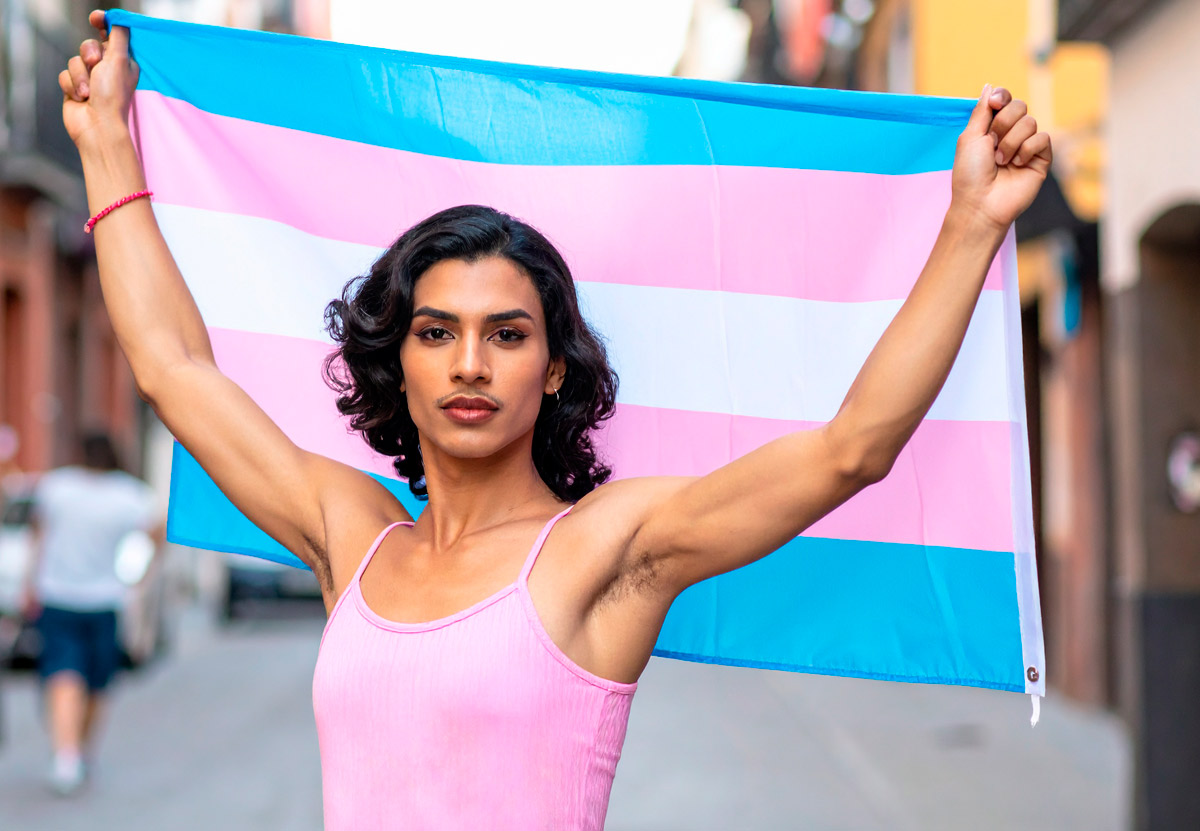
Rainbow Magazine: Cispassing continues to be a central issue within the trans community, both as a source of security and pressure What weight do you think cispassing has on the well-being of trans people and how do you approach this issue from a critical and non-normative perspective?
Victoria, communications executive and patient: The so-called cispassing often appears frequently in the debate about trans people, sometimes as an ideal and other times as normative pressure. From our perspective, it is important to start by questioning the concept itself.
Passing is not an objective or measurable category, but rather a subjective construct that depends on cultural and personal perceptions about gender. Traits that are interpreted as masculine for some people, such as a more pronounced jawline, may be perceived as feminine by others. Which shows that there is no universal or stable standard for what it means to “look” masculine or feminine; this without mentioning non-binaryism.
For this reason, we believe that it is problematic to present cispassing as a central objective in the trans experience. Trans people do not seek to become what society expects of them or to comply with a certain aesthetic or normative ideal. In the vast majority of cases, what they are looking for is something much simpler and more human: to be themselves and reduce the dysphoria that may exist between their identity and certain physical traits. Well-being is usually more related to that personal congruence than to external validation.
It is true that for some people passing can provide a feeling of security or make everyday life easier, especially in contexts where trans visibility still carries risks. There are also those who prefer to live stealth and not have to constantly explain their personal history. But these decisions respond to individual circumstances and desires, not to a hierarchy of identities or a “correct” way to be trans.
In that sense, we believe that it is important to approach this issue from a perspective that recognizes the diversity of experiences. There is no single valid way to experience a transition. Each person has their own relationship with their body, their identity and their social environment. What may be an important goal for one person may not have any relevance for another. Reducing the conversation to the idea of passing as a measure of well-being simplifies a reality that is much more complex and deeply personal.

So transition is a necessity for your well-being to see yourself, and be seen, as the person you really are. Although for some cispassing is a privilege that they enjoy, realistically, there are others who find it difficult to benefit from the security that cispassing provides. Unfortunately, it is not always possible to move in spaces that are 100% free of transphobia. In the case of non-binary, or genderqueer, people, cispassing perhaps has less weight. Whether or not it is a key for our patient, it is our duty to listen to them and respect them since each person will have a unique vision of their own femininity. We know that the diversity of the feminine is as broad as the universe itself…which includes all women, including trans women, is a human right. Furthermore, it is understandable when they want to preserve certain cultural or family traits—in short, our purpose is to minimize masculine markers as much as possible, without sacrificing their naturalness, and that fits with their concept of feminine (which varies between cultures and countries).
Rainbow Magazine: Bodily transformation is not always accompanied by an immediate internal transformation, and that can generate unexpected emotional conflicts. Do you encounter patients who, even though they are satisfied with the physical result, continue to go through emotional discomfort? How is that accompanied?
Dana Westermark:Trans people really know who they are from a very young age. The most common thing is that they have already come a long way with mental health professionals, and with experts in endocrinology, before being able to access surgery. They are not usually sudden transformations: they can take months or even years just to remove the hair, for example, a somewhat expensive process.
The transition represents an enormous economic investment that requires careful financial planning, but almost no person has that purchasing power so immediately. There will be few exceptions, a number so small according to the studies published to date, that it is scientifically insignificant.
According to WPATH, the world association of trans health professionals, cases of regret are due more to the difficulty in managing continued social rejection than to the internal transformation itself. If emotional discomfort persists, despite having completed your transition, specialized psychological support is required, and if possible, with experience in gender identity. Supervised group accompaniment is also recommended, to support the group, identifying the common internal and external sources of discomfort, and learning to manage them supported by a community that understands.

Rainbow Magazine: Naghoi is committed to a recovery experienced in community, something unusual in medical processes What does living with other trans people in recovery contribute and why do you think it is so important not to live this process alone?
Dana Westermark: The benefit is so great that it almost cannot be measured. We are not experts (yet) on the impact of cohabitation during postoperative recovery–data will need to be collected! But conclusions from other studies on therapies and healing experiences in community can surely be extrapolated, and they have proven to be more effective than processes experienced alone.
Furthermore, you could say that Naghoi is a sanctuary built in honor of the trans community; and that is, in a way, coming home. We intend to recreate the safe paradise they dream of, where they can let go and be themselves, without fear. For some time now, Facialteam was already a kind of bubble from heaven for many who told us what a revelation it was to be under our care, where they felt surrounded by a large group of professionals who looked out for their comfort in all aspects.
Not only did the patients receive pampering, but also their companions, who also have their own parallel processes when their loved one undergoes surgery. For years we have had a “Low Stress” care protocol, which includes therapies, support groups and even a “Facialteam house” in the hotel we previously recommended, where they could share their experiences in shared rooms together, often making lifelong friendships.
Throughout our 15 years of experience, we have seen the empowerment that arises when a person feels part of a group, being surrounded by like-minded people. They have been asking us for a “reunion” of former patients for more than a decade, and now, an ideal space for it has finally materialized with Naghoi.
Rainbow Magazine: The tendency to convert vital and identity processes into strictly medical itineraries is increasingly being questioned. From your position, how do you prevent the transition from becoming an excessively medicalized or protocolized process?
Dr. Captain, founder and director: Facialteam is dedicated to facial gender affirmation surgery, with which it is inevitable, I would even say that it is necessary that there be a medical protocol with scientific bases that continues to evolve with experience to be able to offer increasingly better service, of the highest quality in everything relevant. This does not mean that the patient becomes just a code, far from it, quite the opposite.
The more the patient sees as a person, a human, who has the right to health services like everyone else, and deserves a 360º approach to her physical and mental well-being, the better results we will achieve in the health sector. As it is not part of our specialty, we cannot declare what the process should be like in other areas of the transition, but the concept of the multidisciplinary unit composed of professionals who are truly integrated—as we currently operate today at Facialteam—would be a model of care, based on informed consent, that favors processes that are increasingly less medicalized, more personalized and focused on the needs of the individuals at each stage.
Rainbow Magazine: Specialized clinics and centers occupy a place of symbolic power in the lives of trans people who come to them. What responsibility do you feel as a center when working with people who place so many emotional expectations on a medical process?
Facialteam’s Post-Operative Department: We are fully aware of the enormous responsibility that our work entails. We understand that, in the doctor-patient relationship, there is an asymmetry of power that can make the patient feel vulnerable. Therefore, our goal is to balance that balance from the first moment: we encourage open and fluid communication between the patient, her family and our team, we eliminate financial barriers in our consultations and we offer comprehensive support. This includes long-term post-operative care and surgical health insurance, in order to minimize concerns and provide the greatest possible peace of mind regarding the risks inherent in any surgery.
Regarding emotional expectations – as we have commented previously – advice from the surgeon is essential to align them. Our multidisciplinary team (psychology and general medicine) performs a detailed preoperative evaluation, where we review with the patient what she expects from the process. We not only talk about the physical results, but also the emotional impact, how your environment reacts and the possible changes in your personal and work life. We understand that ultimate satisfaction depends directly on these expectations, so our top priority is to work together to ensure they are realistic before we begin.
Rainbow Magazine: In an international context of setbacks in trans rights, health care models are also under review. If we look to the future, what changes do you think are necessary in the way people are accompanied? trans in gender affirmation processes?
Lilia Koss, Responsible for Institutional Relations:
First, we highlight that our experience is limited to the specific sector of facial surgery for trans women since 2010.
Regarding the future of the healthcare sector and its facial gender affirmation services, it is essential to invest in scientific research and the training of new generations of healthcare professionals, actions to which we already dedicate considerable effort. In the field of facial surgery, the shortage is notorious.
Additionally, the participation of trans young people in the health field must be encouraged to increase the percentage of professionals who provide a “lived experience”, which will allow us a deeper understanding of the needs and, consequently, improve support in the processes of a gender “transition”.
There is still a significant way to go, as this is a relatively nascent sector.
Only through greater knowledge, multidisciplinary integration (through collaboration with organizations such as EPATH and trans/LGBTIQ+ associations), and active listening to our more than 6,000 patients from 60 countries have we improved the technology, methods, results, care and, crucially, the satisfaction and well-being of the LGBTIQ+ patient.