
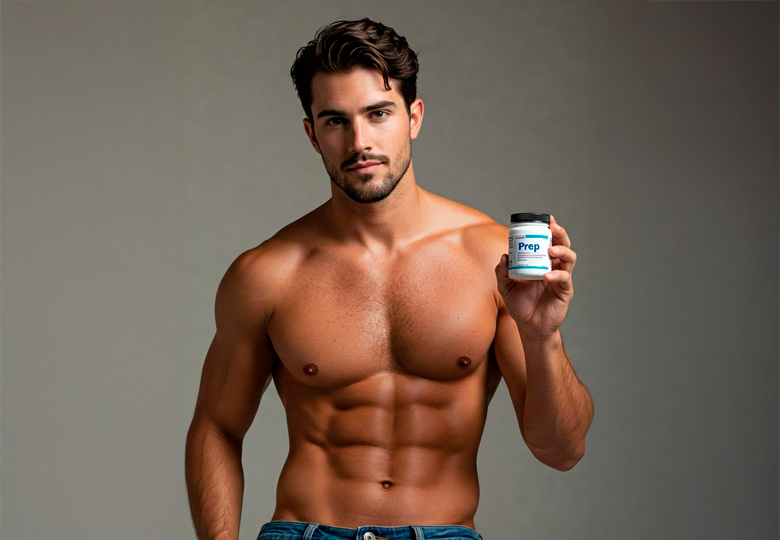
Prevention is key when we talk about sexual health. And when it comes to prevention, PrEP (Pre-Exposure Prophylaxis) has completely changed the landscape. It is a powerful tool in the fight against HIV, but there are still many people who don’t know exactly how it works or if it is the right option for them.
So let’s talk clearly, bluntly and with all the information you need to decide if PrEP is for you. Because knowing is power and, in this case, protection.
1. What is PrEP and how does it work?
PrEP is a medication that significantly reduces the risk of contracting HIV. It is taken before possible exposure to the virus and works by blocking it before it can establish itself in the body. It’s like a protective shield, but it only works if used correctly.

The effectiveness of PrEP is very high when taken consistently. It is estimated to reduce the risk of HIV transmission by more than 99% if the indicated regimen is followed. But, be careful, it does not protect against other sexually transmitted infections (STIs), so the condom is still a great ally.
2. Who should consider taking PrEP?
Good question. PrEP is recommended for people who are at higher risk of exposure to HIV. For example:
- Those who have HIV-positive partners who are not on treatment or have a detectable viral load.
- People who have multiple sexual partners and do not always use a condom.
- Sex workers.
- Men who have sex with men and trans people with high-risk sexual practices.
- Those who have recently had an STI, which may indicate increased exposure to HIV.
If you fit into any of these categories, you could benefit from PrEP. But at the end of the day, the decision is yours and it is always a good idea to speak with a health professional to resolve any questions.
3. How is PrEP taken?
There are two main ways to take PrEP:
- Daily: One pill a day, without fail. This is the most recommended method because it guarantees maximum protection.
- On demand: Also known as “PrEP 2+1+1”, which consists of taking two pills between 2 and 24 hours before risky sexual intercourse, another at 24 hours and another at 48 hours. This option is only validated for cisgender men who have sex with men. (Not recommended by many experts, it minimizes the risk but not completely, in addition to increasing the side effects of taking a double dose on the first day).
While the daily option is the safest and most effective, the decision depends on your lifestyle and specific needs. The important thing is that if you decide to use PrEP, you do it correctly.
4. Does it have side effects?
In general, PrEP is safe and well tolerated. But, as with any medication, there can be side effects. Some people experience headache, nausea, or an upset stomach in the first few days, but these symptoms usually go away over time.
In the long term, PrEP can affect kidney function and bone density, although these effects are not common. That’s why it’s important to have regular checkups if you decide to take it.
5. Where can you get it and how much does it cost in Spain?
In Spain, PrEP is free and covered by the public health system. You can access it through the National Health System (SNS) if you meet the established criteria. To obtain it, you must go to a center specialized in sexual health or infectious diseases, where you will receive regular medical follow-up.
If you have doubts about where to find it in your autonomous community, you can consult with LGTBIQ+ associations, sexual health clinics or directly with your nearest health center.

6. What happens if I forget to take it?
If you take it daily and you forget a pill, take it as soon as you remember. If it has been more than 24 hours, continue with your normal schedule without doubling the dose. If you use the on-demand method and did not follow the correct scheme, the protection may not be enough.
The key here is consistency. If you are someone who forgets things easily, set an alarm or use an app that reminds you to take your pill.
7. Does PrEP mean I can stop using condoms?
Here we enter into an interesting debate. PrEP protects against HIV, but not against other STIs such as gonorrhea, syphilis or chlamydia. So while it’s an amazing tool, it doesn’t mean you should throw condoms in the trash.
In the end, it all comes down to how you decide to manage your sexual health. Many people combine PrEP with condom use for more complete protection, while others prefer to use PrEP alone. There is no single correct answer, the important thing is to make informed decisions.
8. How do I know if PrEP is for me?
Every person lives their sexuality differently. Maybe PrEP is just what you need to feel safer in your sexual encounters, or maybe you prefer other prevention methods. The important thing is that you have complete information to make the best decision for you.
If you still have doubts, approach a sexual health specialist or LGTBIQ+ organizations that can guide you. Asking costs nothing and can change your entire perspective.
PrEP has revolutionized the way we protect ourselves from HIV, but it is not the only tool available. The most important thing is that you take control of your sexual health, inform yourself and choose what best suits your life.
And you, have you thought about trying PrEP? Or do you already use it? Whatever your answer, the essential thing is that you live your sexuality with confidence and security. Because taking care of yourself is an act of self-love.