


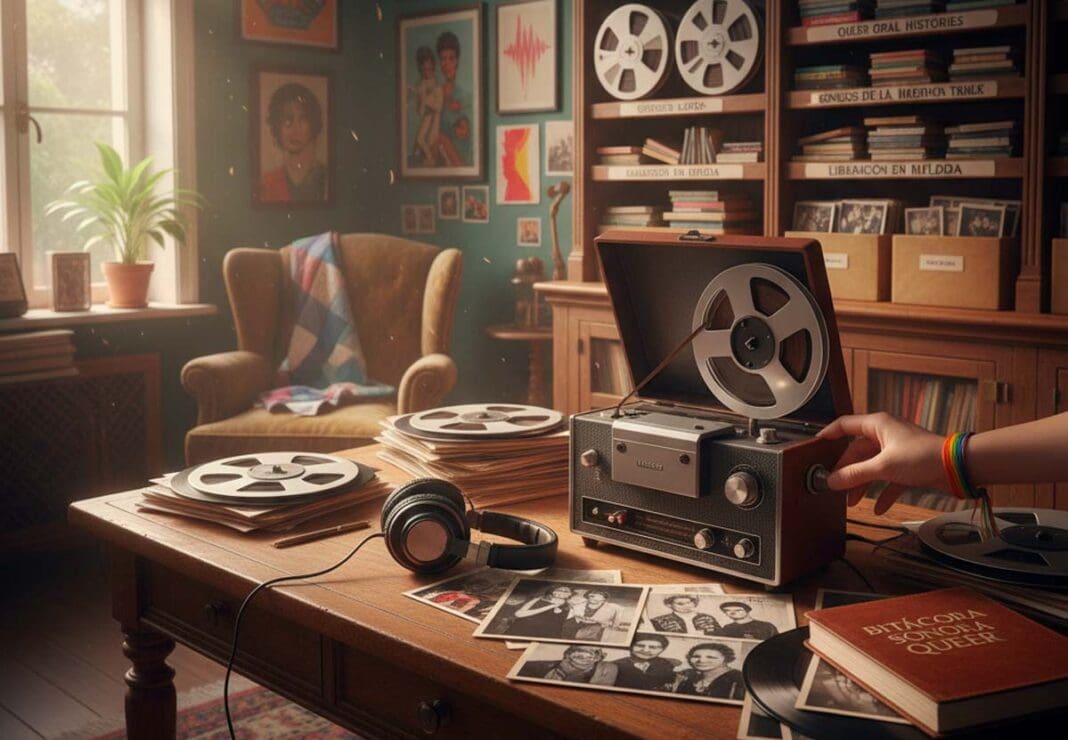
The queer sound archive has become a vital tool for the collection, preservation and dissemination of the voices, interviews and music of the LGTBIQ+ community. In a world where historical narratives have been predominantly heteronormative, these projects emerge as a way to reclaim the diversity, identity, and history of queer people.
The Importance of Sound Files
Sound archives serve as a bridge between the past and the present. Through recordings of interviews, speeches and music, they allow the voices of those who have been historically silenced to resonate today. Not only do they preserve a part of our history, but they also foster understanding and empathy, creating a space where new generations can learn about the struggles and triumphs of the LGTBIQ+ community.
Featured Initiatives
Several projects have emerged in different countries, each with a unique approach on how to collect and share these recordings. Here some examples:
1. Queer Archive: This project focuses on collecting testimonies from LGTBIQ+ people of various ages and origins. Interviews are conducted in a safe and trusting environment, where participants can share their personal stories without fear of being judged. The recordings are archived online, making it easy to access for anyone interested in queer history.
2. Sounding Queer: This archive specializes in queer music, collecting songs and performances by LGTBIQ+ artists. In addition to preserving the music, the project also conducts interviews with the artists, providing context to the works and exploring how their identity influences their art.
3. Voices of Pride: Focused on the history of the LGTBIQ+ pride movement, this archive collects speeches and testimonies from activists. Through these recordings, important milestones are documented and the struggles the community has faced over the decades are analyzed.
The Power of Narrative
One of the most powerful features of sound files is their ability to tell stories. Each recording is a slice of life, an experience that can resonate with many others. For example, listening to the story of a person who has lived in a hostile context can generate empathy and reflections on the difficulties faced by the community. These narratives not only make LGTBIQ+ history visible, but also invite us to question and challenge established social norms.
Challenges in Preservation
Despite the importance of these archives, there are several challenges in their preservation. Lack of funding, access to appropriate technology, and the need for specialized training are just some of the obstacles that sound archiving projects face. Additionally, digitizing recordings is an expensive and laborious process, which can limit the amount of material that can be preserved.
Although queer sound archives are fundamental to the preservation of LGTBIQ+ history, it is also important to question who has the power to decide which voices are represented. There are concerns about representation and inclusion within archival projects themselves. Some voices, especially those from more marginalized groups within the community, may not be as well represented. Are we really capturing the diversity of experiences within the LGTBIQ+ community? This is a question that deserves deep reflection.
Quee sound archives are a crucial tool for the preservation of LGTBIQ+ history. Through the collection of voices, interviews and music, a legacy is built that not only documents the past, but also inspires future generations. However, it is vital that these projects are developed in an inclusive way, ensuring that all voices are heard and preserved.
Queer history is not only part of human history, but it is also an integral part of the rich diversity that makes up our societies. By supporting and participating in sound archiving initiatives, each of us can contribute to the construction of a more complete and fair narrative.