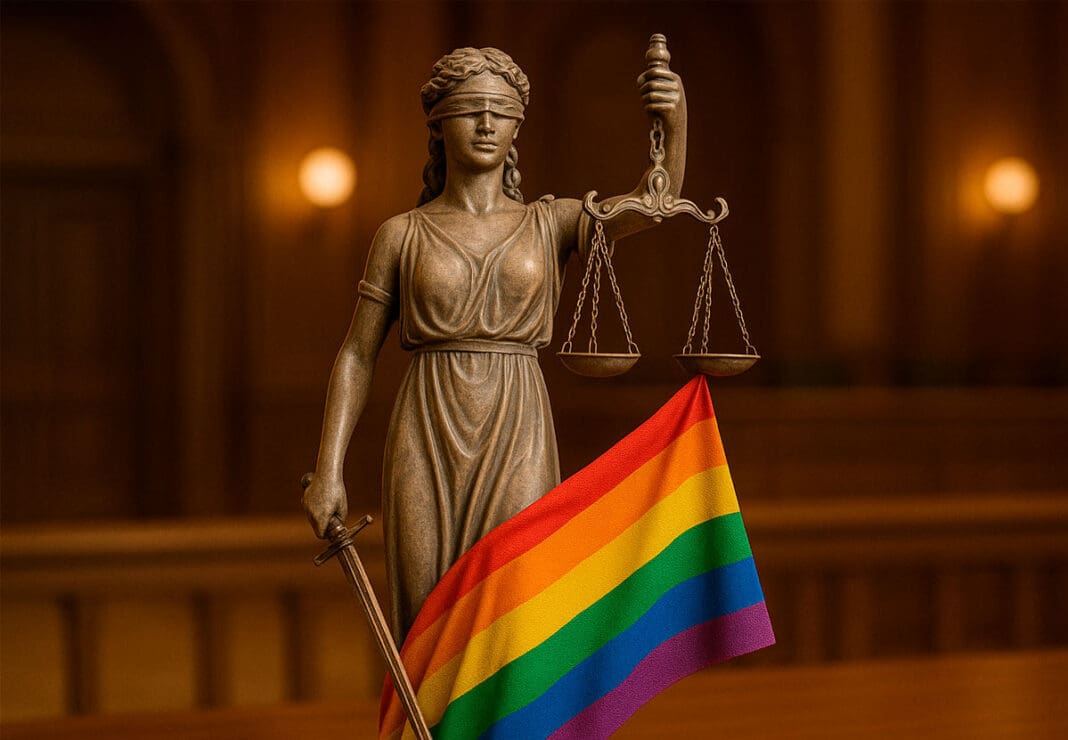

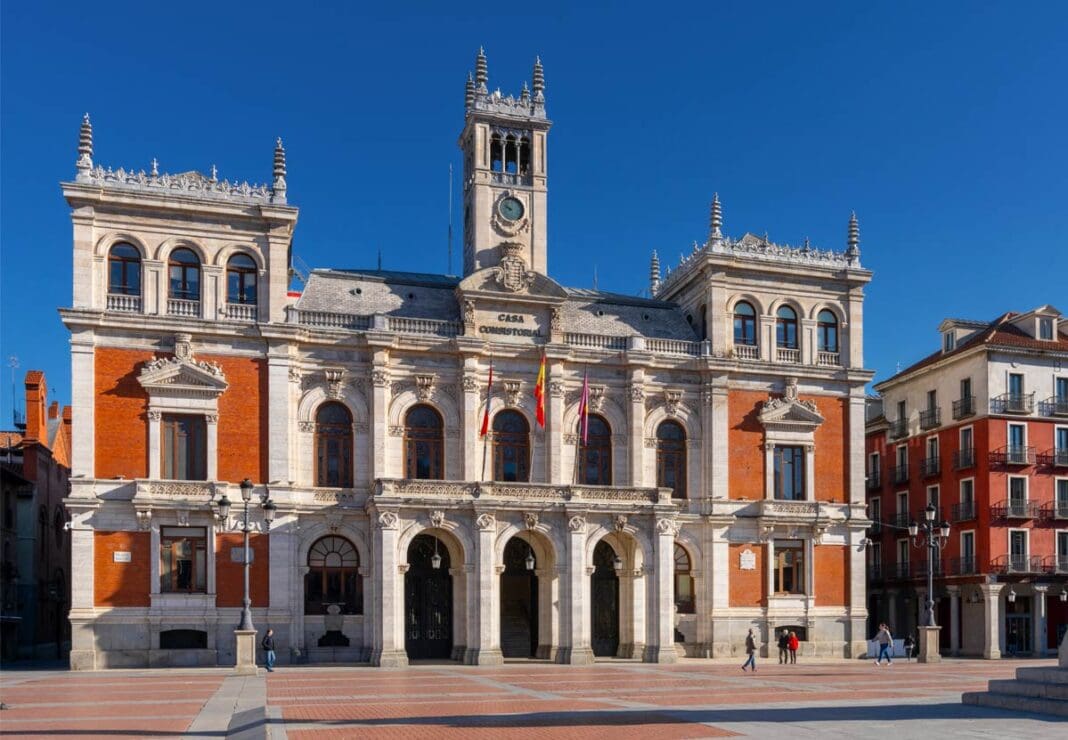
The mayor of Valladolid maintains his position: only official flags will fly on the balconies of the City Hall, even after a ruling that endorses the legality of displaying flags such as the LGTBIQ+.
The mayor of Valladolid, Jesús Julio Carnero, has reaffirmed his decision to keep only the official flags on the balcony of the City Hall, thus ruling out the possibility of hanging any other symbol, including the LGTBIQ+ flag. The statement comes just after the Supreme Court endorsed that public institutions can display unofficial flags, without violating the principle of institutional neutrality.
“There will be no type of banners in any sense,” Carnero insisted, when asked about the subject. And he said it clearly: his policy will apply “equally to the LGTBI movement as to Holy Week.”
The court ruling opens the door, but the City Council does not cross it
The resolution of the Supreme Court is added to the previous decisions of the Administrative Litigation Court number 3 of Valladolid and the Superior Court of Justice of Castilla y León (TSJCyL). They all agree that placing flags like the LGTBIQ+ on official balconies does not contravene institutional neutrality. However, from the Valladolid council, the answer is still no.
The mayor’s position is presented as a strict interpretation of that “neutrality”, limiting the institutional public space to official symbols. But not all people see it the same.
Symbolic vs. symbolic commitment political commitment
According to Carnero, the LGTBIQ+ movement “knows the commitment of the mayor and the government team” to Pride Day. However, symbolic gestures often carry as much weight as concrete policies. Placing a flag can be a powerful way to recognize a part of the citizenry that has historically been marginalized.
Is it enough to say there is commitment without visibly showing it? Or are we facing a lost opportunity to claim, from institutions, the diversity that is already part of our society?
It’s not just a flag
For many, the rainbow flag represents much more than a sexual orientation or gender identity. It is a symbol of struggle, memory and pride. Therefore, its presence—or absence—in official places can be interpreted as a clear signal of the place that diversity occupies in the political priorities of each administration.
In cities like Madrid, Barcelona or Seville, public buildings have been filled with color on specific dates, sending a direct message of support to the LGTBIQ+ community. In others, such as Valladolid, the debate is still open.
Neutrality or invisibility?
This is where we enter delicate territory. Because, while it is legitimate for a government to choose which symbols to display, it is also necessary to ask: who is left out with these decisions?
Institutional neutrality should not mean denying social reality. And, in that sense, excluding the visibility of emotional-sexual diversity can be interpreted as a step backwards. There are those who wonder if this supposed “neutrality” does not end up being, in practice, a form of invisibility.
What if the problem is something else?
Some critics point out that these types of decisions do not always respond to a pure defense of legality or neutrality, but rather to deeper political strategies. Is it possible that avoiding symbols like the LGTBIQ+ flag is a way of not bothering certain more conservative sectors of the electorate? Or is it simply a fear of opening a debate that goes beyond the symbolic?

Be that as it may, the truth is that we are facing a conversation that still has many edges to explore. Because making visible is not imposing. And respecting diversity shouldn’t be optional either.