
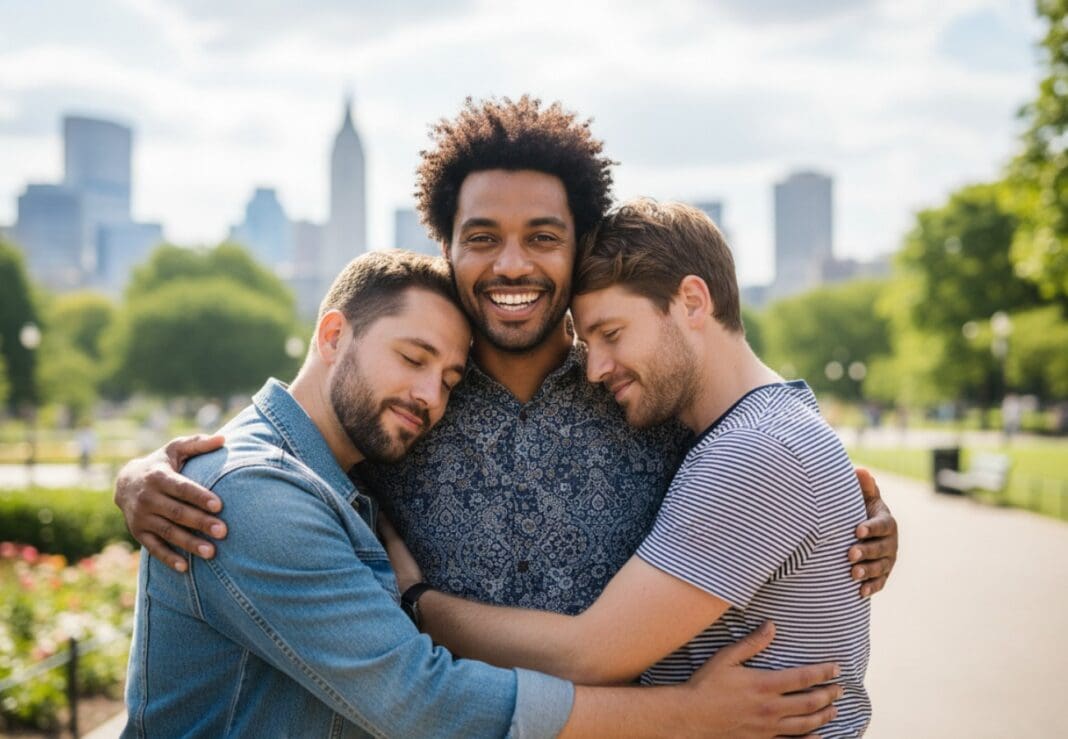
PYou are with someone you love, you share complicities, affection, maybe even a home. Suddenly, in a conversation that seemed harmless, the proposal arises: “What if we open the relationship?” The world is shaking a little. What you took for granted until now is no longer so. And then the big question appears: What do I do with this?
The desire to open a monogamous relationship is not, in and of itself, a betrayal or a sign that something is wrong. But it is an important change. Accept it or not it can transform everything. Therefore, before deciding, it is advisable to stop, listen and analyze honestly.
What does an open relationship really mean?
Although it may seem obvious, it is not always so. An open relationship can take many forms: from sexual ties with other people, without emotional involvement, to explicit polyamory, where affections multiply.
There is no single valid definition. Therefore, if your partner raises this possibility, the first thing is to clarify what exactly he or she means by “opening the relationship.” Is it about exploring sexual desires? Of living multiple loves? Are there limits? Rules? Mutual consents?
It is not about signing a contract, but about having a mature and clear conversation. Informed consent is the foundation of any ethical relationship, monogamous or not.
Your desire matters too
It is easy to get lost in the desire of another, especially if there is love. But just as important as what your partner wants is what you feel. Does the idea appeal to you? Does it bother you? Are you curious or afraid? Are you willing to try it, or is it not for you?
There are no right or wrong answers. What there is is the need for honesty with yourself. Forcing yourself to accept something that is not your nature can end up eroding the relationship and your self-esteem.
Sometimes, we feel that saying “no” is rejecting the other person. But it is not like that. Saying what we need is also a way of taking care of ourselves. Maybe you want to continue monogamy, and that is as valid as someone who chooses non-exclusivity.
Why now?
Another question that can help you navigate this situation is to ask yourself—and ask—why this desire arises now.
Is it a personal quest for growth or exploration? Is there any emotional or sexual void in the relationship? Is there external influence? A crisis or a stage of change?
Knowing the reason is not for judging or finding blame. But understanding the context allows you to make more informed decisions. Sometimes, the proposal to open does not come from a lack, but from growth. Other times, however, it may be covering other wounds.
The challenge of jealousy, security and agreements
One of the most common concerns when considering an open relationship is how to handle jealousy. It’s normal to feel them. They are not a sign of weakness or irrational possessiveness. They are humans.

In ethical non-monogamous models, jealousy is not denied, it is managed. They are talked about, their origin is dismantled, fears are named. This requires emotional maturity, constant communication and a listening capacity that, sometimes, is not learned overnight.
In addition, it will be necessary to talk about agreements. What is allowed and what is not? With who? How often? Are experiences told or kept private? These questions are not resolved at once. They involve constant dialogue and continuous review.
What happens if I don’t want to?
Saying no to an open relationship doesn’t make you old-fashioned, insecure, or any less queer. Many LGTBIQ+ people choose monogamy because they feel that way, not because of cultural pressure.
If after reflecting, talking and analyzing your emotions you come to the conclusion that you do not want to open your relationship, that is also a valid decision. At this point, it’s important for both people to be honest about their boundaries.
Love can’t always do everything. Sometimes loving someone is not enough if your life plans are radically different. And yes, that can hurt. But it can also be the door to new forms of self-love and relationships more aligned with who we are.
A critical look: is non-monogamous really freer?
In recent years, the idea that open relationships are “freer”, “more conscious”, even “more evolved” has gained strength. However, there are also critical voices. Some people feel that the non-monogamy discourse has generated new pressures within the LGTBIQ+ community. That now, instead of imposing monogamy, its opposite is imposed (or idealized).
In addition, there are those who point out that, in some cases, open relationships can disguise power imbalances, avoid uncomfortable conversations, or generate unhealthy dynamics under the appearance of freedom. Therefore, each relational model must be built with ethics, care and without forgetting that the important thing is not whether it is closed or open, but whether it is fair, respectful and consensual.
Keys to decide whether to open the relationship or not
If you are in this dilemma, here are some questions that could help you make a decision:
-
How does the idea of my partner being with others make me feel?
-
Do I want to explore links beyond this relationship?
-
What do I need to feel safe and respected?
-
Can we communicate openly and empathetically?
-
What agreements would be essential for me?
Answering them will not give you all the answers, but it can serve as an emotional compass. Remember: the important thing is not to adapt to the desire of the other, but to build a path that makes sense for both of you (or everyone, if there are more people involved).
Your relationship, your rules
Relationships are not universal recipes. What works for one may not work for another. The key is consent, mutual care, and brutal (and loving) honesty. Accepting an open relationship without wanting it can hurt just as much as rejecting it without having explored it. Whatever your decision, let it come from you. And don’t lose sight of what is essential: loving is also respecting your own limits.