
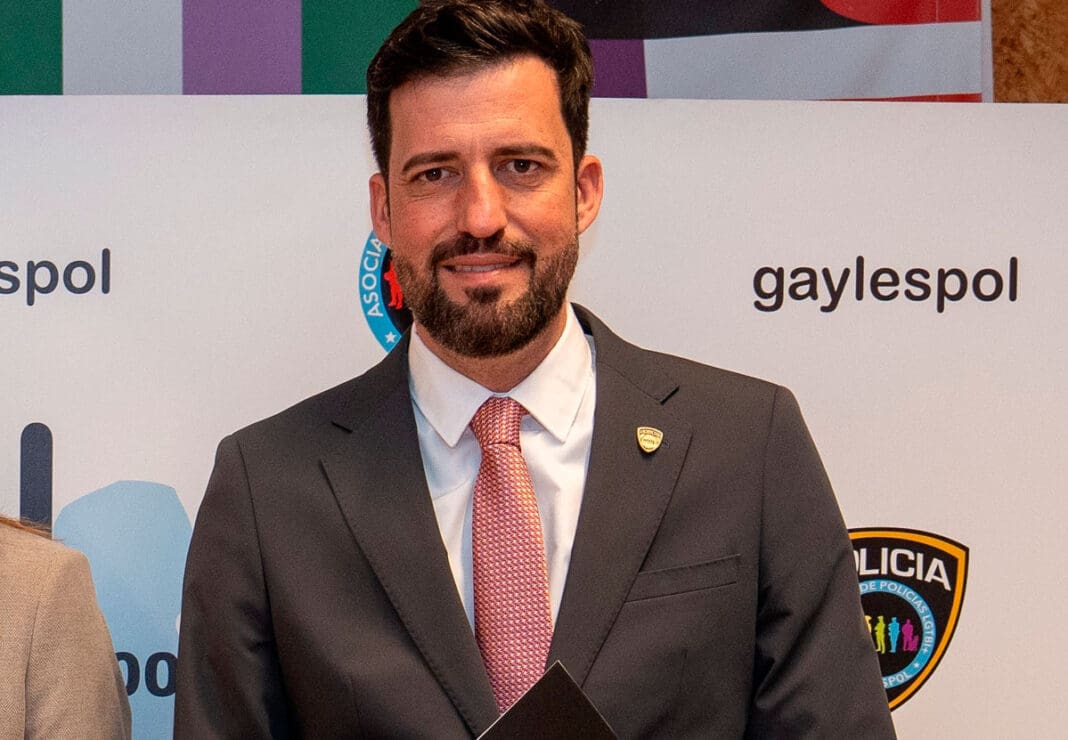
Founded in 2006, the Gaylespol association has been a pioneer in making visible and accompanying LGTBIQ+ people within the State security forces. Its president, Manuel Peinado, speaks with Rainbow Magazine about the challenges still present, the keys to institutional change and the power to transform from within. An honest, firm and deeply human conversation about pride, commitment and justice in uniform.
From the outside it may have seemed surprising in 2006 that an LGTBIQ+ association appeared within the security forces, but many times change begins from within. What is the origin of Gaylespol and what specific need motivated its creation?
As you can imagine, in 2006 important advances had already been made in LGTBIQ+ rights, such as the approval of equal marriage in 2005. However, these advances did not always reach deeply hierarchical structures and historically marked by a culture with the same speed. heteropatriarchal, such as the police forces. Changing certain attitudes from within was, and continues to be, an important challenge.
At that time there were no internal protocols in police forces to prevent harassment or discrimination based on sexual orientation, gender identity or expression, or sexual characteristics. This created a vacuum that left many LGTBIQ+ people unprotected within their own work environments.
That is why Gaylespol was born, with a double objective: on the one hand, to protect and give visibility to LGTBIQ+ people within the police forces; and on the other hand, contribute to transforming the institution’s own view of diversity. We wanted to break stigmas from within and promote a more inclusive and respectful police culture, also through training in human rights and diversity.
Our work in those beginnings was very political, in the sense of having to influence rigid structures, in spaces where talking openly about discrimination or gender identity was not well received. But we knew that only from within could we drive real and lasting change.
Over time, associations evolve and adapt to new realities. We want to know what is the vision that guides your work and what are now the main fronts that you are addressing. What is Gaylespol’s main mission and what specific objectives does it pursue today?
Gaylespol’s mission continues to be closely linked to its origins, because, unfortunately, situations of discrimination and harassment towards LGTBIQ+ people within police forces have not disappeared. What has changed is the form: today this harassment can present itself in a more subtle way, in the form of constant jokes, microaggressions or invisible barriers that make it difficult, for example, to access training opportunities or professional promotion. These are situations that are difficult to prove, but they continue to exist, and that is why our presence is still necessary.
Over time, we have evolved seeking strategic alliances. A clear example is the signing of collaboration agreements with the main police unions. We know that real change can only be achieved if we work together, joining efforts to move towards real and effective equality within police institutions.
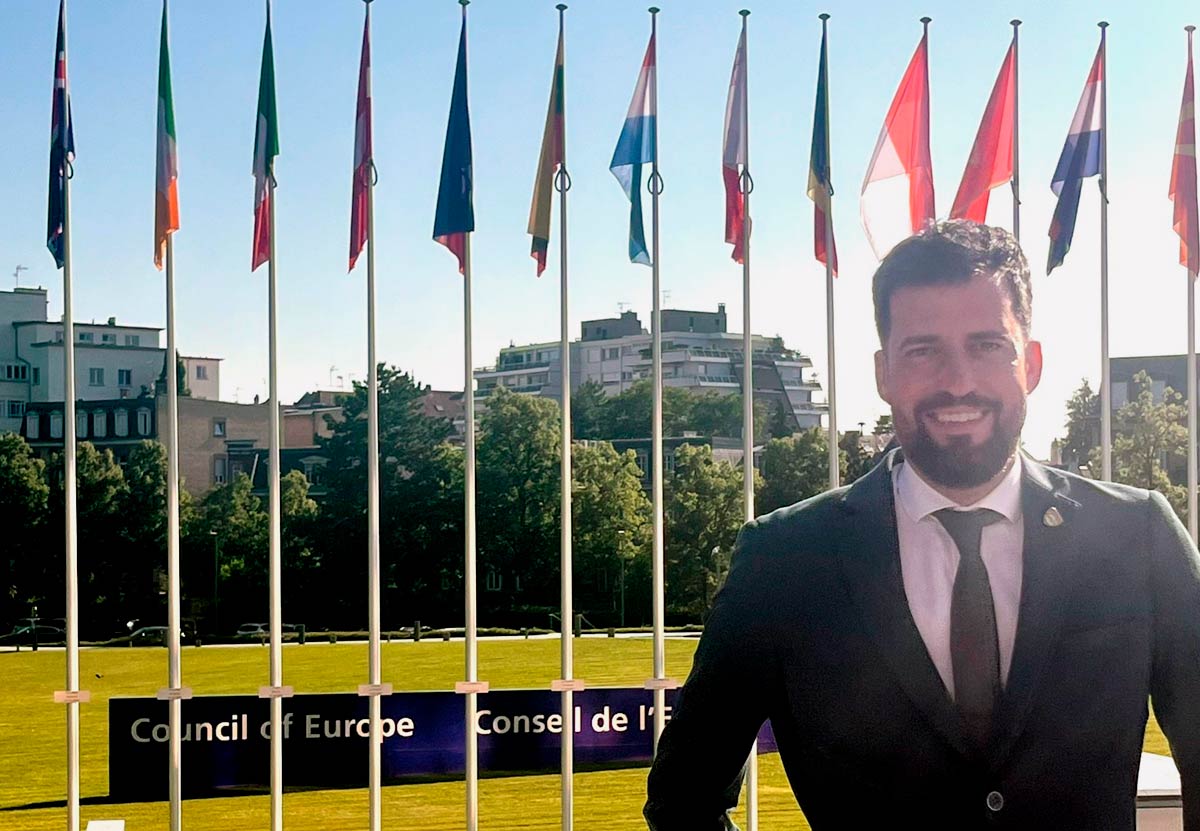
“In this area, Gaylespol is currently the only association in Spain accredited by the Council of Europe to train police in hate crimes and discrimination against LGTBIQ+ people.”
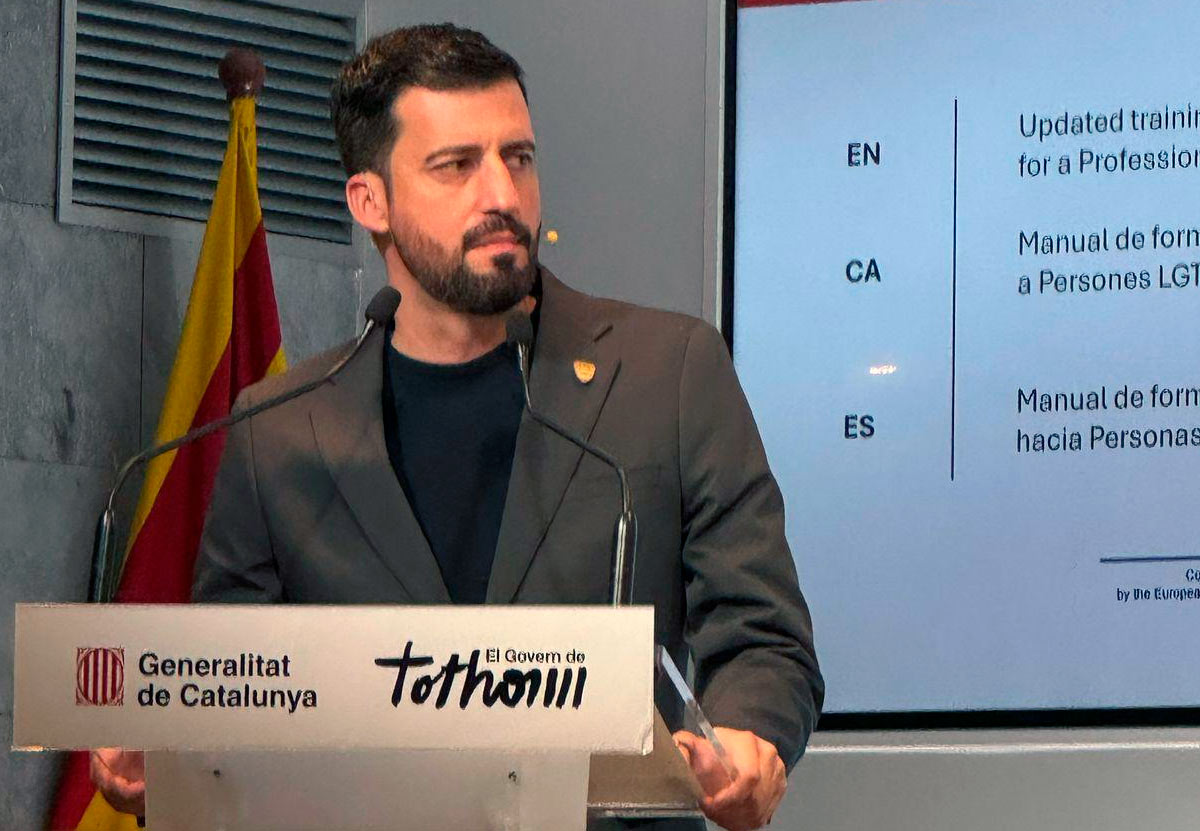
Another fundamental line of our current work is training. Not only in raising awareness of sexual, gender and family diversity, but also in addressing hate crimes: how to identify them, how to recognize the signs, and how to guarantee that victims receive a professional, empathetic and appropriate response. In this area, Gaylespol is currently the only association in Spain accredited by the Council of Europe to train police in hate crimes and discrimination against LGTBIQ+ people. Furthermore, we have had the honor of participating as co-authors in updating the European police training manual on this subject.
And finally, we also work to transform the image that the LGTBIQ+ community has of the police. Because, although there is still a long way to go, we are not the same police force as we were 40 years ago, and it is important to recognize and make progress visible. We need the people of the group to trust their police forces, report any act of hate or discrimination, and know that they are not alone. Only in this way can we eradicate LGTBIphobia from our streets and also from our institutions.
Talking about accompaniment can sound very broad. That is why we want to specify: how is this help materialized? Is there legal advice? Emotional support? Training? What type of support do you offer to people in the group who work in security forces?

Gaylespol is a non-profit association, and all the work we do is done completely voluntarily. We do not apply for public subsidies, which reinforces our commitment to independent and collaborative work.
That said, when an LGTBIQ+ person who is part of a police force comes to us as a victim, whether due to harassment, discrimination or another related situation, we activate the resources we have at our disposal. Thanks to the agreements we have signed with the main police unions, we can offer professional support in different areas, such as legal advice or psychological support.
In recent years, one of the most significant advances has been precisely that: professionalizing the response we give to people who come to Gaylespol. We no longer only listen and accompany, which is also essential, but we offer a real and effective support network.
Sometimes what a person needs is simply to feel understood by someone who has experienced similar situations. Knowing that you are not alone, that someone understands your context, your fears and your doubts, has enormous value. And that is also accompanying.
On the other hand, we also receive many queries from LGTBIQ+ people who do not belong to the police forces, but who have experienced situations of discrimination or hate crimes, or who have had a bad experience when trying to file a complaint. In these cases, we offer guidance on how to proceed, and in many cases we facilitate direct contact with specific police units. We do this to avoid what we call a “cold door”, that is, that difficult or unsafe first contact with a police station, which can make the difference between reporting or not.
Our goal is to be that bridge of trust between victims and police forces, and to do so from a human, professional and committed approach.
Beyond the accompaniment, many people do not know that you also carry out training and awareness. Could you tell us what type of activities you have developed in recent years and what audiences you usually target? What type of actions do you carry out at a training, advocacy or institutional level?
At Gaylespol, training and awareness are two fundamental axes of our activity, because we are convinced that only through knowledge and direct contact can prejudices be transformed, stereotypes dismantled and a culture of respect and rights promoted.
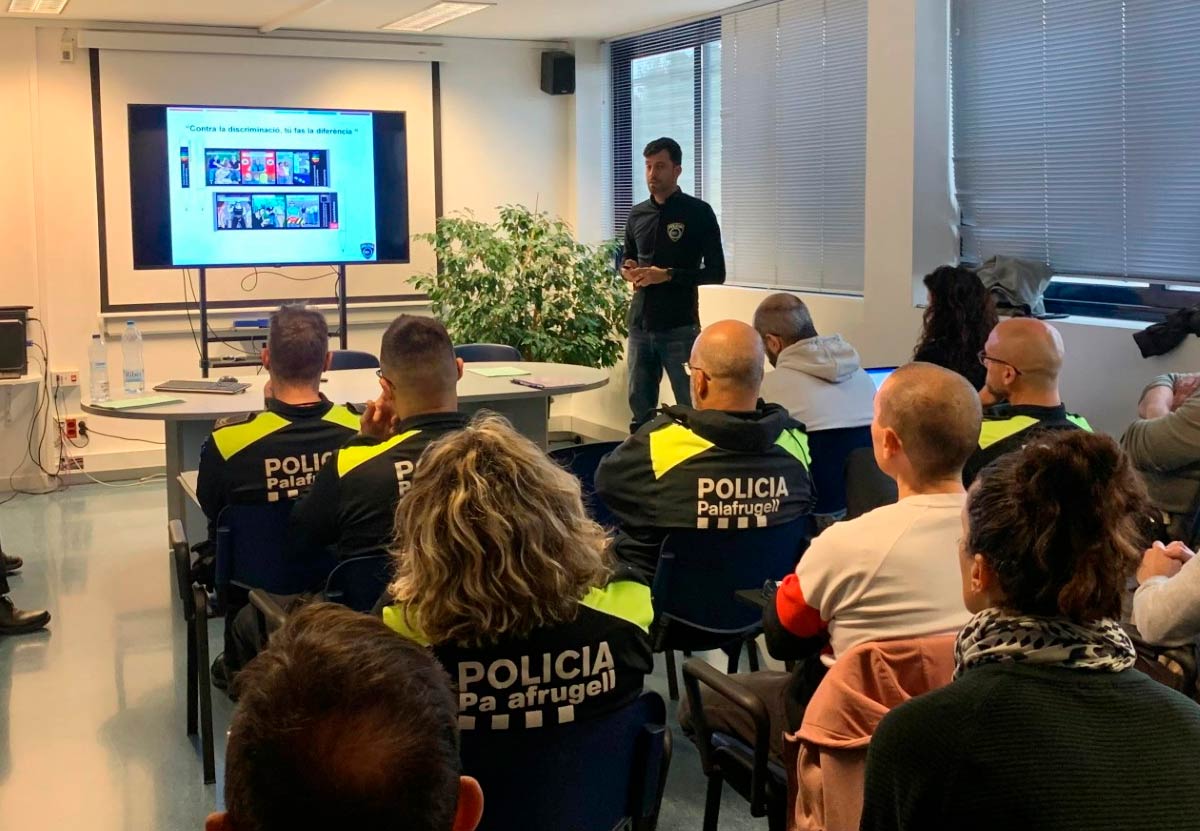
An essential part of our work focuses on training police forces. We carry out awareness sessions on emotional, sexual, gender and sexual characteristics diversity, as well as specialized training in addressing hate crimes and discrimination against LGTBIQ+ people. We provide these trainings both in police academies and in operational units, and in collaboration with local, regional or state administrations. We also collaborate with European institutions, such as the Council of Europe, of which we are an accredited training entity in this matter. In fact, Gaylespol has participated as co-author in updating the Council of Europe manual “Policing Hate Crime against LGBTI persons: Training for a Professional Police Response”, which reinforces our commitment and experience in this field.
In addition, we provide training on the phenomenon of hate speech, especially those that spread on social networks or in institutional contexts, with the aim of identifying, preventing and counteracting narratives that promote LGTBIphobia.
Another key area in which we work is community safety. We have developed and energized specific security tips for the LGTBIQ+ community, generating meeting spaces between citizens, LGTBIQ+ entities and police forces, with the aim of improving trust, communication and the prevention of violence. These tips allow us to bring specific needs to the table, identify risks and promote truly inclusive security.
At the institutional level, we actively participate in conferences, round tables and inter-institutional work spaces, both nationally and internationally. We are present in European networks such as the European LGBTI Police Association (EGPA), and we collaborate with unions, public administrations and social entities to move towards more representative, egalitarian public security forces committed to human rights.
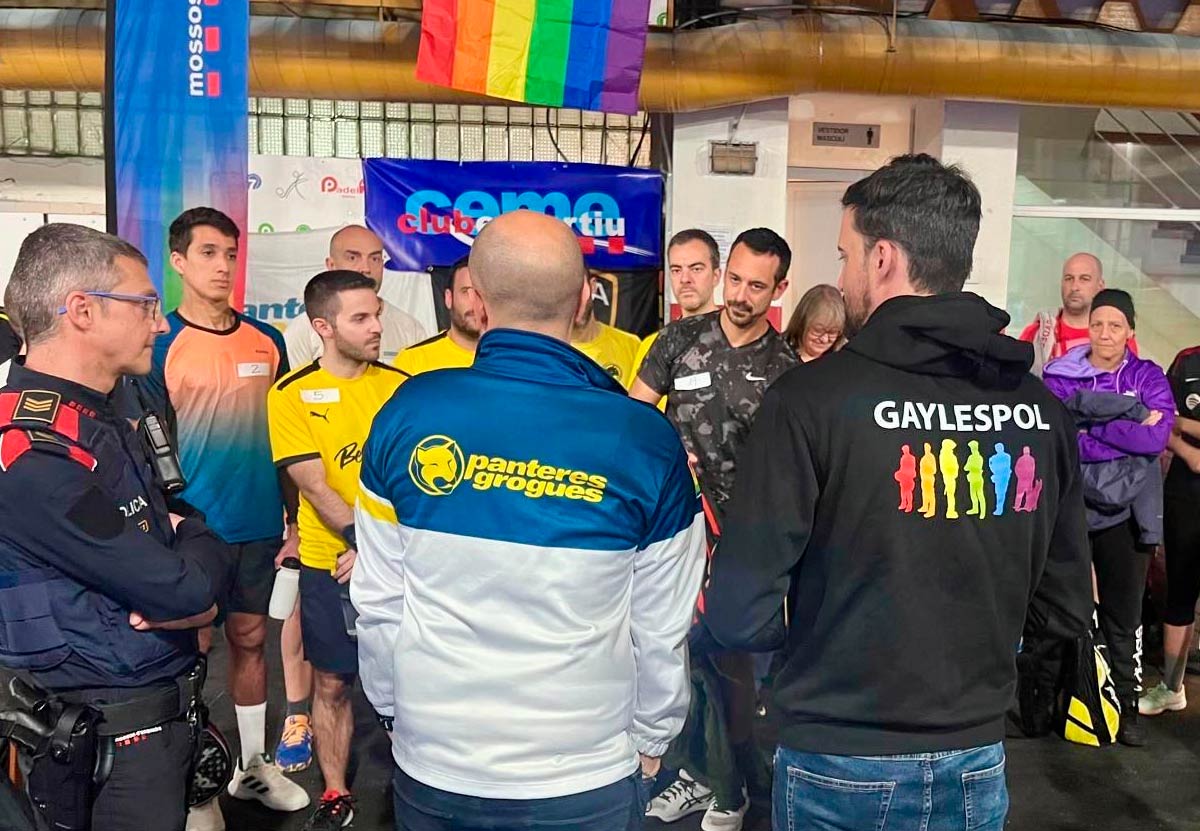
We also carry out protest actions, especially on designated dates such as May 17 (International Day against LGTBIphobia) or Pride month, in which we make visible both the diversity within the police forces and the commitment of a part of the institution to the defense of the rights of the LGTBIQ+ collective. For us, being in these spaces is also a form of symbolic reparation and a way to build positive references within the police field.
In summary, Gaylespol acts as a bridge between the LGTBIQ+ community and police institutions, and does so through a combination of rigorous training, political advocacy, community work and public visibility. All of this from a professional, committed and deeply human perspective.
We know that there are still structural resistances, prejudices and silences. What are the main barriers to real and respectful integration today? What challenges continue to exist within the State security forces for full LGTBIQ+ inclusion?
Although there have been important advances in recent years, the truth is that structural resistance still persists within the security forces and bodies that hinder a real and respectful integration of LGTBIQ+ people. These barriers are not always visible or explicit; They often manifest themselves through silence, indifference or a lack of real will to transform deeply rooted dynamics.
One of the main difficulties continues to be the weight of a traditionally heteropatriarchal organizational culture, very hierarchical, where diversity has been experienced for years as something that should be hidden or silenced. This creates a climate in which many people from the LGTBIQ+ community within the police forces do not feel free to express themselves as they are, for fear of reprisals, ridicule or professional stagnation.
Nowadays, harassment can take a more subtle form: microaggressions, constant jokes, rumors, or exclusion from certain professional opportunities. We also find obstacles when we talk about access to specific training, or resistance to implementing clear protocols against discrimination based on sexual orientation, gender identity or expression, or sexual characteristics.
Another important challenge is the lack of visible references within the police forces. We know that representation matters, and that having LGTBIQ+ leaders in positions of responsibility can make a big difference, but for that to be possible we need safe environments where coming out is not a risk.
At Gaylespol we believe that continuous and mandatory training in human rights, hate crimes and LGTBIQ+ diversity is a key tool to transform this reality. But so is the political will and institutional commitment to promote structural changes: from incorporating specific clauses in internal protocols against harassment, to guaranteeing spaces for support and reparation when violations occur.
In short, the great challenge is to stop talking about inclusion as something “symbolic” or “decorative” and understand it as a right and a need within truly democratic security forces at the service of all citizens.
“An internal LGTBIQ+ group cannot limit itself to organizing specific events or being present only on designated dates such as Pride.”
More and more companies and entities are creating internal LGTBIQ+ groups, but they don’t always know where to start. What learnings could you share from your experience? What advice would you give to groups that are starting to organize internal support groups in large companies or institutions?
The first thing I would say to those who are thinking about creating LGTBIQ+ groups within their companies or institutions is that they do it with determination and with a real commitment. This is not an aesthetic action or an image strategy: if a group is created, it must be provided with content, resources and, above all, real space to influence.
An internal LGTBIQ+ group cannot limit itself to organizing specific events or being present only on designated dates such as Pride. It must have its own voice within the structure, a place at the table where decisions are made, where needs can be raised, proposals made and situations of discrimination or improvement in the work environment detected.
From our experience in Gaylespol, we know that these spaces can be very powerful engines of change, as long as they are not marginalized or emptied of content. It is important that the people who make up them are trained and accompanied, and that there is a real dialogue with human resources, management and other key areas. If not, we run the risk of them becoming a simple institutional make-up action.
I would also encourage them to build alliances, both internal and external. Having the support of unions, expert associations or referents can give strength and projection to the group. And, of course, always listen to the LGTBIQ+ people themselves within the organization: they are the ones who know first-hand the barriers, fears and opportunities for improvement.
At the end of the day, it is not about creating a group to look good, but rather about generating a useful space, with real impact, that contributes to transforming the internal culture of the organization towards one that is more diverse, fair and safe for everyone.
Keeping an association active requires resources. It is important to make visible how you support yourself financially and if there are open avenues for collaboration, donations or volunteering. How is Gaylespol financed and in what way can citizens collaborate with your work?
Gaylespol is supported mainly by the dues of its members. Although they are symbolic, they have enormous value, not so much because of the financial amount itself, but because of what they represent: a collective commitment to our mission. Members do not expect to receive anything material in return; What they receive is something much more important: knowing that they are contributing to real change in police, legislative and social structures through our advocacy work.
In addition, we have specific donations. A clear example is our participation in Barcelona Pride, where we set up a stand for two days. There we offer information about our association, we publicize our work and, in exchange for a donation, we give collaborators t-shirts, bracelets or other symbolic materials that also help us make our cause visible.
On the other hand, given that our training is officially recognized by the Council of Europe, when town councils or public administrations request training from us for their local police, we usually issue a symbolic invoice. This small contribution allows us to cover the travel and stay expenses of the volunteers who provide the training. This is not about business, but about ensuring that we can continue to carry out our mission without putting our sustainability at risk. Even so, when an administration cannot assume that cost, in many cases we still carry out training, because our priority is always to get where we are needed.
Citizens can collaborate by becoming members, making donations, helping with dissemination tasks or joining as a volunteer. Every support, no matter how small it may seem, adds up. Our work is collective, and each gesture helps us continue building a more inclusive, professional police force at the service of all people, without exceptions.
Many cases are not reported due to fear or not knowing how to act. It is essential that those who find themselves in this situation have a clear roadmap and feel supported. What should an LGTBIQ+ person do if they suffer microaggressions or discrimination in their work environment within the security forces?
The first thing we want to say to any LGTBIQ+ person who is experiencing a situation of discrimination, harassment or microaggressions within a police force is that they are not alone. At Gaylespol we are here to listen, accompany and guide at all times, with total confidentiality and without judgement.
In a situation like this, the most important thing is not to normalize or minimize it. Repeated microaggressions, offensive jokes, isolation or denial of opportunities for reasons related to sexual orientation, gender identity or expression, or sexual characteristics are forms of structural violence that must be pointed out.
The first step would be to document everything that happens: dates, situations, possible witnesses, emails or messages, etc. This information can be very useful if you ever want to file a formal complaint or take legal action.
The second step is to seek support. At Gaylespol we can offer initial guidance and, if the person wishes, put them in contact with legal or psychological services through our agreements with collaborating unions. Not all people want or can formally report, and we understand it: we accompany each case with respect for the time and decisions of the victim. Sometimes just talking to someone who understands what you’re going through is a huge relief.
We also recommend contacting union representatives who are aware of LGTBIQ+ rights, if there are any, or with equality units or internal protocols if they exist in the specific institution. Although we know that they do not always work as they should, they are tools that are worth activating when the conditions are right.
And above all, we insist: reporting does not always mean going to trial. Sometimes it means making visible, asserting our rights within the institution, or simply stopping an unfair situation. At Gaylespol we work precisely so that no person has to choose between their identity and their professional vocation. We are here to accompany you, to give you tools and to let you know that, in this fight, you are not alone.
Being LGTBIQ+ within the security forces is only part of the story. There are also factors such as origin, social class, religion or disability that influence experiences. How do you address these intersections of identities in your association? What role does intersectionality play in your work?
At Gaylespol we are very aware that the experience of being an LGTBIQ+ person within the security forces is not homogeneous. Sexual orientation, gender identity or expression, or sexual characteristics are only part of the story. Factors such as ethnic or national origin, religion, social class, disability or even age intersect and deeply condition how belonging to the group and the police institution is experienced.
From our association we understand intersectionality not as a theoretical concept, but as a practical and necessary tool to analyze complex inequalities and propose more fair and effective responses. We see it, for example, in how a racialized and trans person can face multiple layers of discrimination simultaneously: for being LGTBIQ+, for their skin color, for their gender identity, and for the stereotypes that still exist inside and outside of police structures.
We have integrated this approach both in our training action and in our advocacy. The training we carry out, especially those developed within the framework of the Council of Europe, explicitly include the need to analyze hate crimes and discrimination from an intersectional perspective, and to train agents in the identification of multiple vulnerability factors. It is not only about recognizing explicit violence, but also institutional barriers, lack of access to resources, or the invisibility that many people suffer from belonging to more than one oppressed group.
In our daily work we also apply it when accompanying victims within the police forces: not all of them start from the same point, nor do they have the same networks, nor do they face the same type of obstacles. Therefore, support must be flexible, empathetic and adapted to each reality.
The challenge, and also our commitment, is to build safe and representative spaces within the security forces, that do not reproduce the same logic of exclusion that many people have already experienced outside of them. Intersectionality forces us to listen better, to assume nothing, and to act with a broad, inclusive and deeply human perspective.
“We dream of a police force where no LGTBIQ+ person has to go back into the closet to be able to work.”
Not everything is obstacles. There are also small (and big) triumphs. We want to close with hope: what has made you feel that you are on the right path and what does Gaylespol dream of for the coming years? What achievements have particularly excited you as a team and what would you like to see in the near future?
Despite resistance and obstacles, there are also reasons for hope. And at Gaylespol we are excited to see how, little by little, constant work begins to bear real fruit. It makes us feel that we are on the right path when we see how, in different parts of the State, specialized units are being created within the police forces to address hate crimes and discrimination. Trained, committed teams with a professional outlook that understand that diversity is not a problem, but rather a wealth that must be protected.
We also highly value the creation of diversity units in different police forces, spaces that were unthinkable years ago and that today are a growing reality. That these units exist means that institutions are beginning to recognize that they cannot provide an effective response without first understanding the reality of the people they serve.
And, of course, it fills us with pride to see how more and more local police officers ask us for training in awareness towards the LGTBIQ+ community. That they do it proactively, that they want to improve their relationship with the community, that they are interested in learning, in reviewing protocols and attitudes… All of this tells us that something is changing. That we are not an exception, nor a rarity, but part of a necessary and increasingly accepted process.
As a team, one of the achievements that has made us most excited has been being able to be part of the update of the Council of Europe manual “Policing Hate Crime against LGBTI persons” as co-authors. That an association made up of volunteer police officers is recognized at the European level as a reference in this matter is an immense pride, but also a responsibility that we assume with dedication.
What do we dream of for the coming years? We dream of a police force where no LGTBIQ+ person has to go back into the closet to be able to work. With police forces that are trained, diverse, sensitive and at the real service of all citizens. We dream that victims of hate crimes trust the police because they know that they will be listened to, respected and protected. And above all, we dream that one day there will no longer be a need for associations like ours, because equality, respect and dignity are already fully integrated into all institutions.
🌈 Rainbow Questions
- If your life had an activist motto embroidered on a t-shirt, what would it be? (That phrase that represents you and that you would repeat with pride.) Diversity also wears a uniform. It claims that LGTBIQ+ people exist within the police forces and have the right to be visible, respected and recognized.
- When did you feel freest in your skin? (That anecdote or experience that symbolizes your connection with yourself without masks.)
I felt truly free the day I decided to take the step towards public visibility. When I started giving interviews, meeting with political leaders to advocate, or sitting with police officers to talk, face to face, about diversity within the forces. That moment marked a before and after, because there was no turning back.
I was aware that by making myself visible I was putting my body, literally and symbolically, in a space where we had not always been loved. But I also understood that, if we wanted to change something, someone had to take the step. That freedom was also that: daring to be yourself in the spaces where silence had traditionally been asked of us.
That moment was an act of coherence with myself. Because I couldn’t ask others to be brave if I wasn’t. And because I understood that making myself visible was not only for me, but also for those who could not yet do so. From there, I understood that being visible was a tool of transformation, and that there was no longer any point in hiding. Because living with pride, also in uniform, is a way to do justice.
Gaylespol not only accompanies those who live their identity within rigid structures, but also proposes a new security model: more humane, fairer and more diverse. In the words of its president, the dream is clear: a police force where no one has to go back into the closet to be able to serve. While that day arrives, they will continue to be there, making visible, training, and reminding us that diversity also lies beneath the uniform.