

The high court supports that official documents only reflect the sex assigned at birth, deleting the “X” marker option.
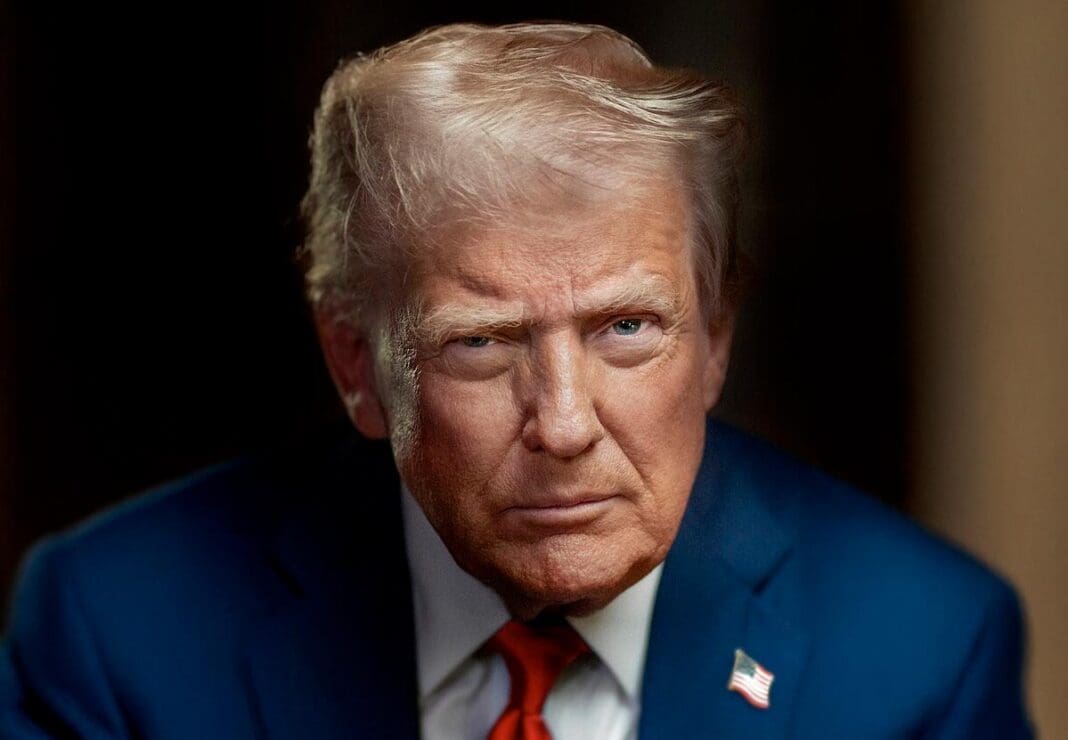
The Supreme Court of the United States has given the green light to the policy promoted by Donald Trump that eliminates the possibility of including gender identity in passports. From now on, all people must mark the sex they were assigned at birth, with no option to choose the “X” marker for those who do not identify with binary genders.
The decision, approved by six votes in favor and three against, represents a new setback for the LGTBIQ+ community and, especially, for trans, non-binary and intersex people.
A step back in the recognition of diverse identities
The conservative majority of the court considers that reflecting the sex assigned at birth “does not violate the principles of equality before the law any more than indicating the country of birth.” In other words, the Supreme Court understands that the sex marker is “historical” data, not an expression of identity.
However, dissenting voices within the court itself describe the ruling as “useless but painful.” Judge Ketanji Brown Jackson, accompanied by Elena Kagan and Sonia Sotomayor, lamented that the court “paves the way for inflicting immediate harm without any justification,” recalling that justice cannot be neutral when the rights of a minority are discarded.
What does the measure imply
With this resolution, the US State Department must immediately apply the policy that eliminates the “X” category in passports and requires indicating biological sex. This directly affects all trans, non-binary and intersex people, who will no longer be able to have documents that reflect their real identity.
Civil rights organizations, such as the ACLU, warn that this policy “endangers” those who carry documents incongruent with their identity, especially at borders or in contexts where discrimination remains frequent.
A pattern of restrictive policies
This is not the first time that the Trump Administration has tried to limit the rights of trans people. His administration has already banned their participation in the military and restricted health grants linked to diversity. Now, the passport veto joins a series of decisions that, according to activists, seek to “erase” dissident identities from the US legal framework.
In parallel, the Republican Party has promoted state laws that prevent trans people from participating in female sports competitions or accessing gender-affirming treatments, consolidating an agenda that prioritizes biology over identity.
A question that remains open
Beyond the legal aspect, this ruling leaves a profound question on the table: To what extent can an official document define who we are?
A passport not only certifies the nationality, but also the legal existence of a person. To deny the recognition of gender identity is to deny, in a certain way, its right to be recognized in its entirety.
Can a State boast of equality when it forces part of its population to lie about who they are?

The decision of the US Supreme Court represents a step backwards in the progress made in terms of diversity and human rights. Although the ruling is based on arguments of “administrative neutrality”, its impact is deeply human: thousands of people will once again feel invisible in their own country.
Recent history shows that conquered rights are never guaranteed. Perhaps that is why, more than ever, it is time to continue asking ourselves what type of society we want to build: one that documents bodies, or one that recognizes lives.