
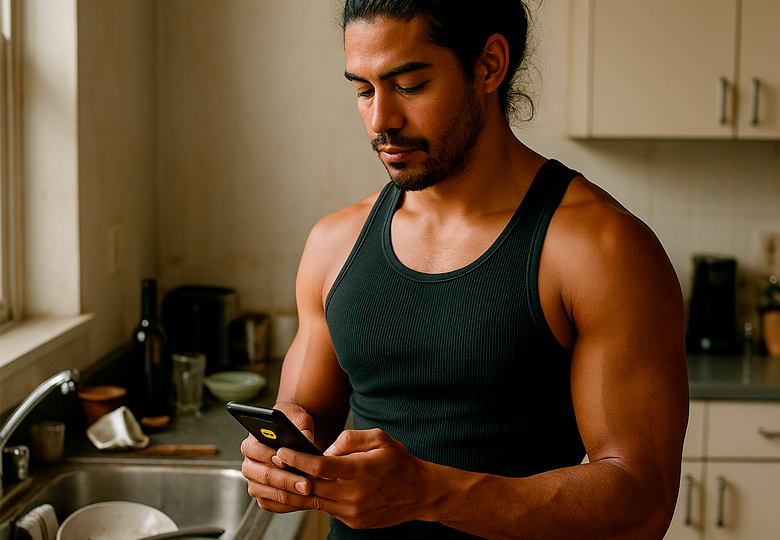

Dating apps have revolutionized the way LGTBIQ+ people connect with others. From casual hookups to serious relationships, platforms like Grindr and Tinder have become a part of everyday life. But here comes the big question: have you thought about what happens to your personal data when you use these applications? Not everything is as innocent as swiping right or left!
In this article, we explain in detail what Grindr and Tinder do with your information, the privacy risks you could face, and how to protect yourself in 2025.
Grindr: A history of controversy and security risks
Grindr, one of the most popular dating apps within the LGTBIQ+ community, handles a large amount of personal data: from your exact location to details such as your HIV status if you decide to share it. But what really happens with all this information?

1. Data collection
Grindr collects multiple types of data, including:
- Your location in real time.
- Photos and profile content.
- Messages sent and received.
- Information about your gender identity and sexual orientation.
- Usage data, such as the time you spend in the app.
2. Sharing with third parties
Grindr has been criticized for sharing personal data with advertisers and technology companies. In 2021, the company was fined in Europe for not asking for explicit consent when sharing sensitive data with third parties. Despite having updated its privacy policy since then, in 2024 it was revealed that some user data was still being leaked to advertisers through opaque methods.
3. Security risks
In 2025, Grindr has implemented security improvements, such as the option to hide your location and strengthen message encryption. However, risks remain:
- In countries where being LGTBIQ+ is illegal, the leaked location has put users in danger.
- Hackers have exploited vulnerabilities to track locations and expose identities.
- Medical information shared in profiles (such as HIV status) may be used without the user’s consent.
4. Options to protect yourself
- Check your privacy settings: Turn off location tracking when you don’t need it.
- Avoid sharing sensitive information on your profile.
- Use a VPN to hide your real location if you live in a risk area.
- Delete your account if you stop using the app to ensure that your information is not stored.
Tinder: A data network that goes beyond what you think
Tinder, with its famous “swipe”, is one of the most used dating apps in the world, but it also collects a considerable amount of data about its users.
1. Data collected
Tinder collects:
- Your profile information (name, age, gender, sexual orientation, photos).
- Your preferences and behavior within the app (who you like, how much time you spend on each profile).
- Geographic location in real time.
- Data about your interactions and messages.
- Social media information if you link your account.
2. Tinder and personalized advertising
As part of Match Group (which also owns OKCupid, Hinge and Plenty of Fish), Tinder shares data with other companies in the group. This means that the information you provide on Tinder can be used on other apps without you knowing.
Additionally, Tinder sells information to third parties for personalized advertising. For example, if you search for travel on Google and then open Tinder, you might start seeing ads for hotels or airlines.
3. Data retention: what happens when you delete your account?
Tinder has been criticized for retaining data even after users delete their account. In 2025, although they have implemented more transparency in this process, the reality is that data can remain on their servers for years.
To ensure that your information is completely gone, it is advisable to submit a formal data deletion request in accordance with your country’s data protection laws.

4. How to protect your privacy on Tinder?
- Turn off geolocation when not in use.
- Avoid linking Tinder with social networks like Instagram or Facebook.
- Do not share sensitive data in chat.
- Periodically review your privacy settings.
You decide what you share and what you don’t!
Dating apps have changed the way we interact and meet people, but they have also created new challenges in terms of privacy. Grindr and Tinder have implemented security improvements in 2025, but there are still significant risks.
The key is to inform yourself and take measures to protect your information. In the end, the decision is yours: is it worth exposing certain data for the possibility of finding a connection?