


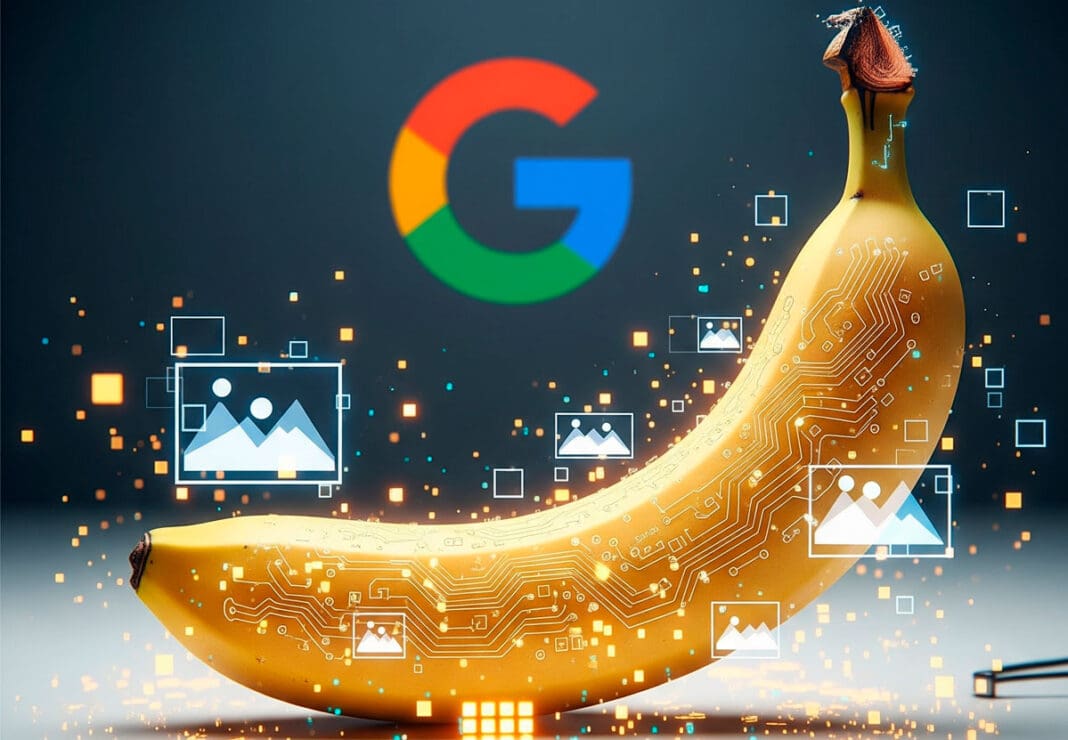
In the dizzying universe of technology, where artificial intelligence and nanotechnology surprise us at every step, Google once again positions itself at the forefront with an innovation that is capturing everyone’s imagination: “Nano Banana”. This term, which sounded almost like science fiction, has ceased to be speculation and has become a tangible reality: Google’s new and powerful image editing model, integrated into Gemini 2.5 Flash Image. But what exactly is “Nano Banana” and how is it redefining the future of visual editing?
Unraveling the Enigma: What is “Nano Banana”?
Contrary to what was initially thought, “Nano Banana” is not a rumor or a hypothetical concept. It is a state-of-the-art artificial intelligence model from Google, designed specifically for image editing and generation. Its peculiar name has made it a viral topic and has generated great expectations, especially after its outstanding appearance on the LMArena competitive table, where it has demonstrated its superiority in editing capabilities.
The magic of “Nano Banana” lies in its integration with Gemini 2.5 Flash Image, an optimized version of Gemini that benefits from its global knowledge and processing speed. This allows “Nano Banana” to not only generate aesthetic images, but also visually understand and manipulate content with astonishing precision, all from simple natural language cues.
The Fusion of Concepts: AI and Intuitive Editing
If before we talked about nanotechnology and concepts at the atomic scale, now we focus on the nanoprecision of AI in image editing. “Nano Banana” represents a qualitative leap in the interaction with artificial intelligence, making photo editing accessible to anyone, without the need for complex technical knowledge.
Subject Coherence: One of the fundamental challenges in image generation has been maintaining the identity of a character or object across multiple prompts and edits. “Nano Banana” excels at this, allowing you to place the same character in different scenarios, display a product from multiple angles, or generate coherent brand assets, while always maintaining the integrity of the theme.
Cue-Based Editing: Imagine being able to ask an AI to blur the background of a photo, remove a specific object, change a person’s pose, or even add color to a black and white image, all with one simple phrase. “Nano Banana” makes this possible, offering targeted transformations and precise local edits with natural language, without complicated manual selection tools.
Native Knowledge of the World: Unlike previous models that prioritized aesthetics, “Nano Banana” benefits from Gemini’s vast knowledge, allowing it to understand the real context of the images. This opens doors to new applications, such as the ability to interpret hand-drawn diagrams, answer real-world questions, or follow complex editing instructions in a single step.
Multiple Image Fusion: Another of its strengths is the ability to understand and combine several input images. You can drag objects into a new scene, redesign a room with a specific color scheme and textures, or merge images to create photorealistic compositions with a single prompt.
The Impact and Open Questions
The arrival of “Nano Banana” democratizes image editing and raises fascinating questions about the future of creativity and digital interaction. How will this affect the creative industries? Are we seeing the end of the need for complex editing software for the average user?
For readers of the LGTBIQ+ community, the accessibility of tools like “Nano Banana” is an opportunity. By removing technical barriers, it allows more voices and visual perspectives to be expressed. However, the reflection also arises: How do we ensure that these powerful tools are used ethically and responsibly? How do we prevent misinformation or malicious manipulation of images? Inclusion and diversity in the development and use of AI are crucial to ensure that its benefits reach everyone and that bias is not reproduced.
The debate about AI is constant, and it is essential that we continue to question, inform ourselves and participate in building a technological future that is equitable and beneficial for all. “Nano Banana” is not just a tool, it is a catalyst for creativity and an invitation to explore the limits of the possible.
“Google Nano Banana” is a reality that is transforming the way we interact with images. It is a clear example of how AI, when intelligently integrated, can simplify complex processes and empower users. This model not only allows us to edit photos intuitively, but also invites us to reflect on the unlimited potential of artificial intelligence and its impact on our lives. What unimaginable creations will the future bring us with tools like “Nano Banana”?