

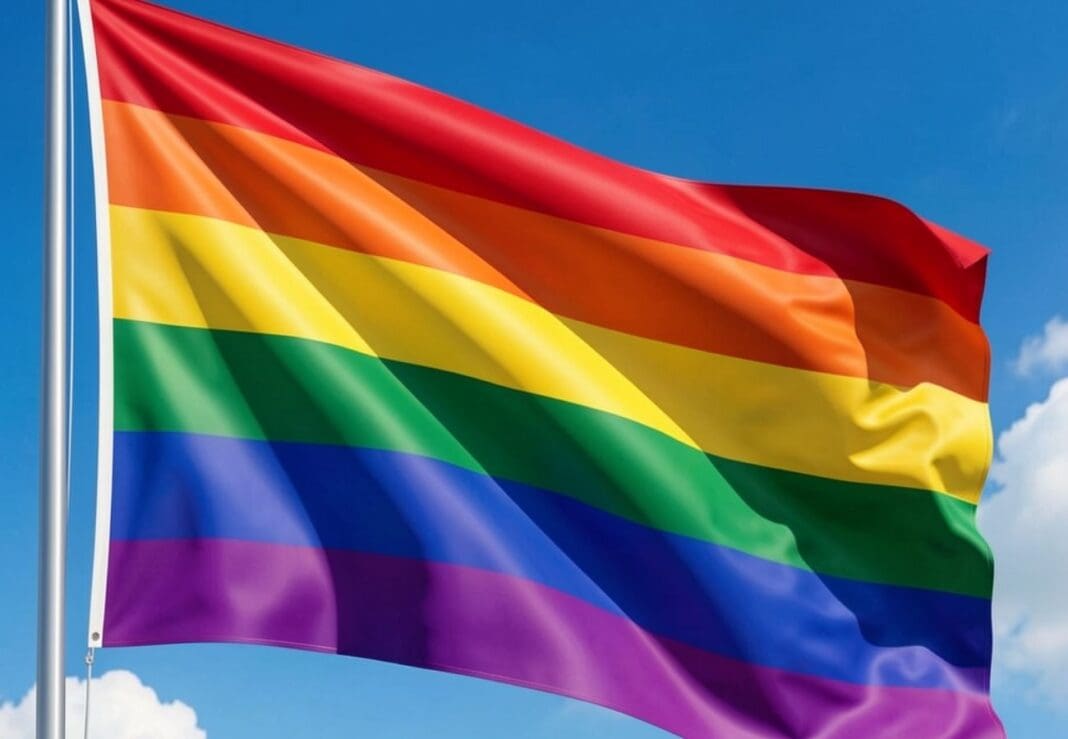
The LGTBIQ+ flag no longer flies at the Stonewall National Monument, in the heart of Greenwich Village (New York). The withdrawal, carried out by the National Park Service during the early hours of the morning, has generated outrage and deep debate inside and outside the United States. We’re not just talking about a multicolored fabric. We talk about memory, rights and a symbol that marked a before and after in the contemporary history of the LGTBIQ+ collective.
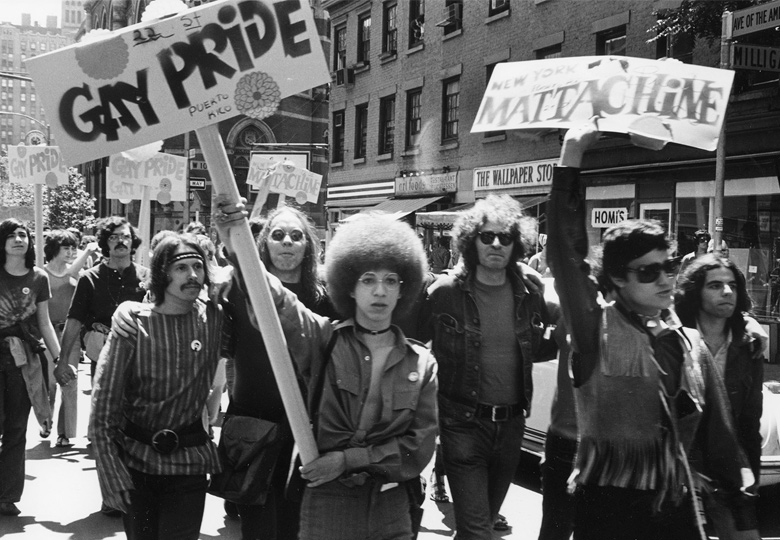
Stonewall is not just any park. It is the place where, on June 28, 1969, a police raid on the Stonewall Inn sparked a series of protests that gave rise to the modern movement for LGTBIQ+ rights. Hence, every June 28 we celebrate International Pride Day. And therefore, each gesture in that space has a political and emotional dimension that is difficult to ignore.
What exactly happened?
The decision is supported by a memo recently issued by the National Park Service that establishes new guidelines on which flags can be displayed in federal spaces. According to that document, only the flag of the United States, that of the Department of the Interior and some exceptions of a historical or indigenous nature are authorized.
Paradoxically, Stonewall is, precisely, a historical place. It was designated a National Monument in 2016 during the presidency of Barack Obama, recognizing its key role in the fight for civil rights. However, the Pride flag has been retired under the argument of institutional uniformity.
Can a decision that directly affects the memory of a group be considered neutral? Where does administrative regulation end and where does symbolic erasure begin?
Political reactions and citizen mobilization
The response has not been long in coming. The mayor of New York, Zohran Mamdani, has publicly expressed his indignation and has recalled that the city is the cradle of the modern LGTBIQ+ movement. Along the same lines, the president of the Manhattan borough, Brad Hoylman-Sigal, has described the measure as a deliberate attack against the community and has announced that a new flag will be installed, although this may imply institutional confrontation.
I am outraged by the removal of the Rainbow Pride Flag from Stonewall National Monument. New York is the birthplace of the modern LGBTQ+ rights movement, and no act of erasure will ever change, or silence, that history.
Our city has a duty not just to honor this legacy, but to…
— Mayor Zohran Kwame Mamdani (@NYCMayor) February 10, 2026
In addition, a hundred people gathered in front of the monument to protest the withdrawal. An image that connects directly with the spirit of resistance that was born in that same place more than half a century ago.
Because Stonewall is not just history: it is present. And it is also a warning.
A broader context of setbacks
This episode is not isolated. In February 2025, the Government had already removed explicit references to trans and queer identities in the monument’s official information and on its website. Also in 2024, the name of a Navy ship that honored activist Harvey Milk, a key figure in the fight for LGTBIQ+ rights, was changed.
These decisions are part of a broader political agenda. Since the beginning of Donald Trump’s second term, executive orders and legislative proposals have been promoted that restrict the rights and recognitions of the group. Among them, an executive order that recognizes only two genders—male and female—at the federal level.
According to data collected by legislative monitoring organizations, the number of initiatives that negatively affect LGTBIQ+ rights has multiplied at both the federal and state levels.
The impact on everyday life
Beyond the institutional level, the consequences are perceived in daily life. The Annual LGBTQ+ Community Survey prepared by the Human Rights Campaign indicates that more than half of LGTBIQ+ people in the United States have reduced their visibility in 2025 due to fear or insecurity. Many have hidden their orientation or identity in public spaces, at work, in medical consultations or even in school environments.

For decades, visibility was the most powerful tool to advance rights. Now, are we facing an attempt to retreat towards forced invisibility? What happens when the symbol that represents that visibility disappears from the place where it was born?
Stonewall as a living symbol
The removal of the flag does not erase history. But it does send a message. The question is what message we want to prevail.
Stonewall was resistance against the abuse of power. It was community in the face of violence. It was dignity in the face of silence. And today he reminds us again that rights are not immutable: they need constant defense.
Perhaps the real debate is not whether a flag can fly, but whether we are willing to defend what it represents.
Because, as the history of the LGTBIQ+ movement itself demonstrates, each attempt at invisibility has generated new forms of resistance.