

Elis Lundholm is already part of Olympic history. The 23-year-old Swedish skier this week became the first openly trans athlete to compete in the Winter Olympic Games, during the Milan-Cortina 2026 Winter Olympic Games.
Lundholm, who identifies as a man, participates in the women’s category of freestyle skiing, specifically in the bump modality. A detail that, predictably, has generated debate inside and outside the sporting environment. But before the noise, there is an objective fact: he has competed. And that, by itself, already marks a before and after.
A complicated classification in potholes
The bump test—one of the most technical and demanding in aerobatic skiing—combines speed, control, jumps and precision. A mistake pays dearly. And that’s what happened.

In the qualifying round held on February 10, Lundholm finished in last position after making a mistake on the course. The result forces him to play a second round to try to reach the final. Only the ten best classifieds obtain a direct pass to the fight for the medals.
Elite sport is like that: thousandths, nerves and minimal margin of error. Does that detract from the symbolic value of his presence? At all.
Beyond the scoreboard: representation and debate
Elis Lundholm’s participation inevitably opens a conversation that has been on the table for years: the presence of trans people in high-competition sport and the eligibility criteria in women’s categories.
The International Olympic Committee has been updating its guidelines in recent years, leaving more room for federations to establish specific rules. The debate is complex and crosses scientific, legal and social issues. But it also has a human dimension that should not be forgotten.
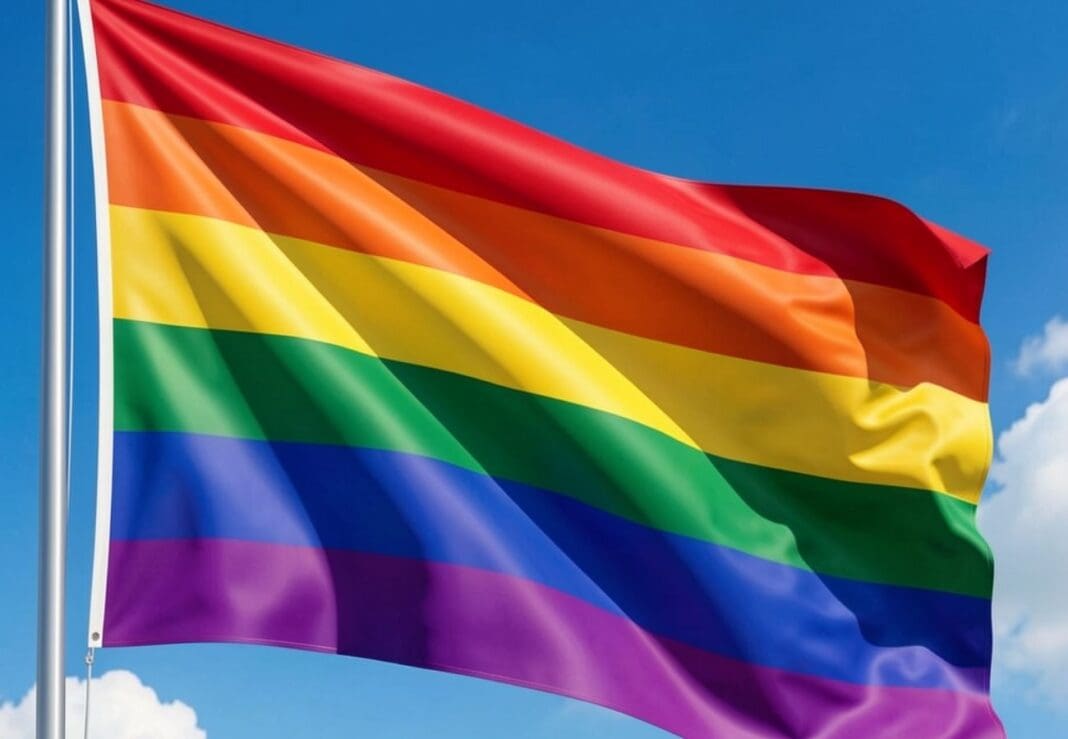
For the LGTBIQ+ community, each visible presence in a historically normative space represents progress. Not because you win a medal, but because you break a barrier.
Now, it is also worth asking:
- Is sport prepared to manage these realities with serenity and rigor?
- Is reporting responsibly or is polarization being fueled?
- How do you balance inclusion with the perception of competitive equity?
They are legitimate questions. And they need answers that are not based on inflammatory headlines, but on data and dialogue.
The weight of making history
Being “the first” is never easy. It involves media exposure, added pressure and constant scrutiny. Lundholm doesn’t just compete against stopwatches and judges; It also competes against the public spotlight.
Your sporting result may change in the second round. Its impact, no. Regardless of how his participation in Milan-Cortina ends, his name is already inscribed in Olympic history.

And maybe that’s the real news.
Because the Games don’t just celebrate records. They also reflect the social changes of their time. And sport, whether we like it or not, is a mirror of society.
What’s next?
Lundholm will have a new opportunity in the next qualifying round. A pass to the final is still at stake.
In the meantime, the debate will continue. And perhaps that conversation, if approached responsibly, will serve to build a more inclusive and fairer sports model at the same time.
The sport evolves. Society too. The question is: will we know how to do it without leaving anyone behind?