

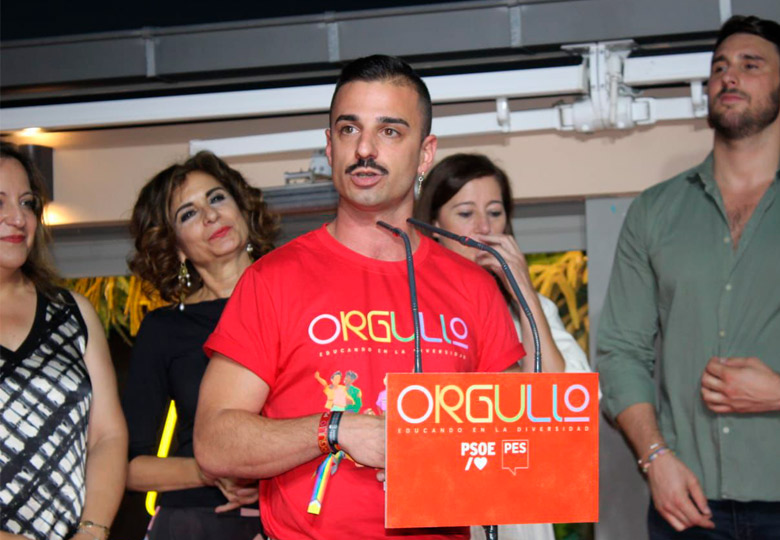
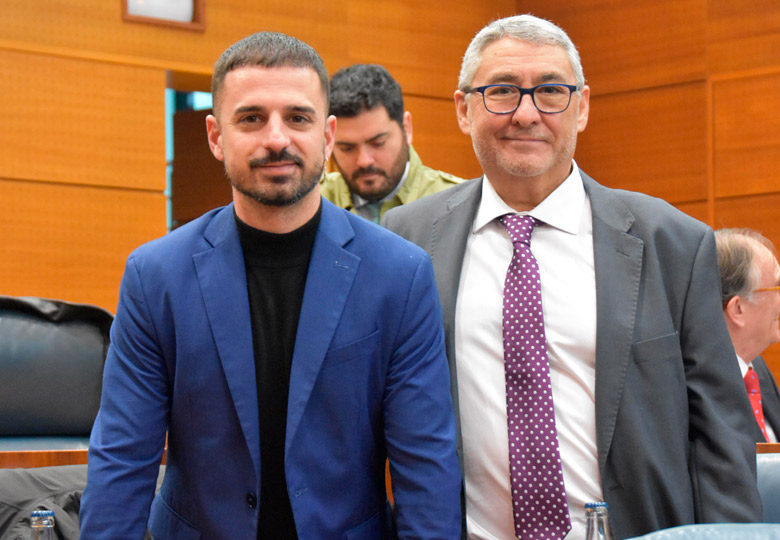
Santiago Rivero does not avoid the questions. Neither the empty headlines, nor the homophobic threats, nor the contradictions of doing politics in a system that often marginalizes those who dissent. We chatted with him about visibility, real alliances, social networks, activism and the future. A conversation with the heart—and eyes—on those who are still afraid of being visible. Because, as he himself says, diversity is normal.
I feel that it is worth it every day, every time I see that bullying continues to exist, or that there is a victim of aggression, or that a setback is being perpetrated in our rights as in Madrid, I feel that it is worth raising my voice and denouncing what the right and an LGTBIphobic part of society that believes itself to be superior to us is doing. The hardest moment was when I received death threats. I spent a few hard weeks being afraid to go out on the street, but it didn’t make me back down for a moment and in the end it gave me more strength to continue fighting.
I have never doubted. I believe that when you know that what you are defending is the right thing, there is no problem in raising your voice and speaking forcefully, always politely, but forcefully.
I believe that one of the successes of LGTBIQ+ activism is having known how to transform demands into rights and laws. Even so, there is an activism that is not so institutional and that is more alternative that I think is still very necessary, both on a theoretical and practical level. Questioning regulations and what is established is what makes us move forward, perhaps not always as fast as we want.
Evidently homophobia runs through the entire society, as does racism and machismo. People who are subject to discrimination are sometimes forced to prove twice as valuable to carry out the work we do. From the PP they have told me many times that I only talk about the LGTBIQ+ issue, but it could be that they don’t listen to me. I have been a spokesperson for Tourism and Sports, Education, Digitalization and now Culture, and I have tried to do intense work in all areas. What we are not going to do in my party is have someone who is not LGTBIQ+ talk about LGTBIQ+ issues when we have visible people, like they do, I don’t know if out of shame or complex.
Reporting. We have laws and the state security forces and bodies are increasingly trained in diversity. That is why we have to use our rights and denounce the violent and the intolerant. There is a lot of underreporting regarding LGTBIQ+ matters, and I want to encourage all people who receive threats or harassment to report.
A lot, I only intend to take advantage of the privileged position I have to make visible topics that I previously did from COGAM, but that had less impact. I feel proud and lucky that, as you say, young people name me as a reference. But I am still a normal and ordinary person, with the problems of any person. I am neither better nor worse for being in politics, nor an example for anyone. I think that people who are in politics have to be authentic and not become something we are not. I still do the same thing I did before becoming a deputy: I still go out partying with my friends, drinking coffee in the same bars as always or practically always traveling by public transport. I don’t understand who, when they enter politics, becomes an opaque person who is far from reality or who changes their habits, except for high-ranking officials who are forced to do so for security reasons.
Alliances are fundamental in the defense of human rights. The LGTBIQ+ collective obtained marriage in 2005 thanks to the alliance with feminism, with unions, with left-wing political parties and with many other sectors of society. But to forge alliances there must be a will, and you also have to be willing to give in on some issues. You have to be open to dialogue and be willing to listen to things you don’t like. And lately, in Madrid, it seems that only the position of the president is valid, who does not accept anyone to argue or debate her, and that’s how it goes.
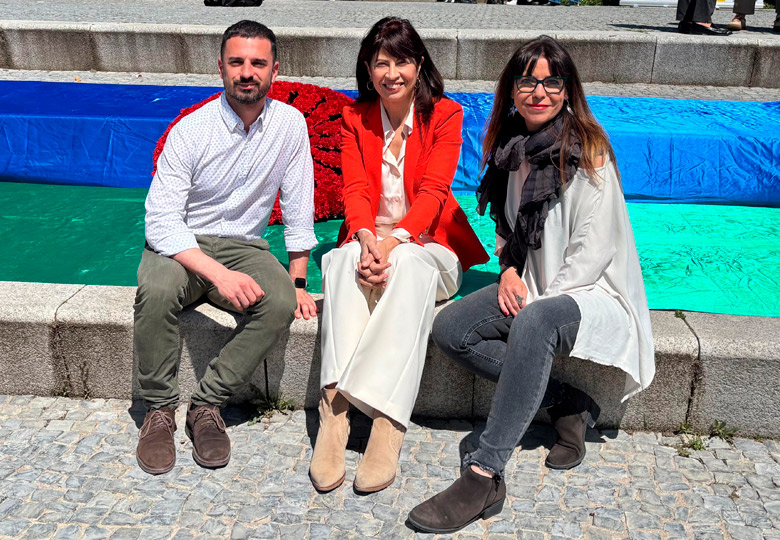
I think there is occasion and time for both. Obviously in a world of headlines or videos of less than a minute, you have to know how to put powerful messages in those formats, because the extreme right is strong there. And then, you also have to do pedagogy and explain things, I think we should dedicate more time to looking for real information about things than in the zasca, because misinformation is causing many people to lose confidence in democracy, especially among young people.
Hopefully in 10 years there will be no need for LGTBIQ+ activism because we are at a level of real equality in which it is not needed, but I am very afraid that if we do not correct education, and promote respect for diversity, I am very afraid that we will continue to have LGTBIphobia. I believe that activism has to adapt to the times, but it is a personal consideration, I deeply respect the internal processes of organizations and I believe that they have to be the ones to face this challenge.
I am from a small town in the Sierra de Huelva, and it is true that it may seem like it can be more complicated, especially because you can feel more alone as there are fewer LGTBIQ+ people. But it must be recognized that many towns in Spain are very respectful of LGTBIQ+ people, they organize Pride events and have programs for members of the group. As for example in Lozoyuela, in the Sierra Norte of Madrid. The good thing about this time is that through social networks you can find people like you, who can help you in this process (although you also have to be very careful with networks, especially if you are a minor). So I would tell them that if they are having a bad time, it will happen and that when it happens, you live a wonderful life.

RAINBOW QUESTIONS
Pedro Zerolo. He managed to convince an entire country that the rights for LGTBIQ+ people would make us a better and more dignified country.
The normal thing is diversity.
When I fully came out of the closet and got rid of many complexes and internalized homophobia that I had.
As RuPaul says, with the ability we have to choose our own family.
Santiago does not speak from a distance, but from experience. His activism did not begin in a seat, but in the streets, and this is evident in each response: in his commitment to alliances, in his unqualified defense of LGTBIQ+ rights and in his way of inhabiting politics without giving up being who he is. “When it happens, you live a wonderful life,” he tells us, looking ahead to the future. And I hope, as he dreams, a day will come when we no longer need these types of interviews to remember that we exist. But in the meantime, we will continue writing them.
View this post on Instagram