
It may sound like science fiction to you, or like a hobby for apocalypse lovers. But the truth is that preparationism is increasingly present in our conversations. From natural disasters to massive blackouts or social crises, having an emergency kit can make all the difference.
What if you are also part of the LGTBIQ+ collective? So, preparing a 72-hour kit is not just a practical measure… it can be a survival tool with a queer perspective.
What is preparationism?
Preparationism, also known as “prepping,” is the practice of anticipating emergency situations (power outages, earthquakes, evacuations, health crises, etc.) through planning, storing resources and developing basic skills.
In short: be prepared to endure without external help for at least 72 hours.
And no, it’s not paranoia. It’s care.
Why is it especially important for LGTBIQ+ people?
The short answer: because structural vulnerability does not disappear in an emergency. It intensifies.
In crisis contexts, queer people may face additional obstacles that the rest of the population does not experience:
-
Evacuation centers that do not respect gender identity.
-
Exclusion from traditional family networks.
-
Difficulties accessing specific medical care or hormonal medication.
- Advertisement - -
Discrimination in shared public spaces.
-
Invisible violence that worsens in contexts of chaos or misinformation.
- Publicidad-
Therefore, thinking about preparationism from a queer perspective not only makes sense: it is urgent.
What should a 72-hour kit with an LGTBIQ+ focus include?
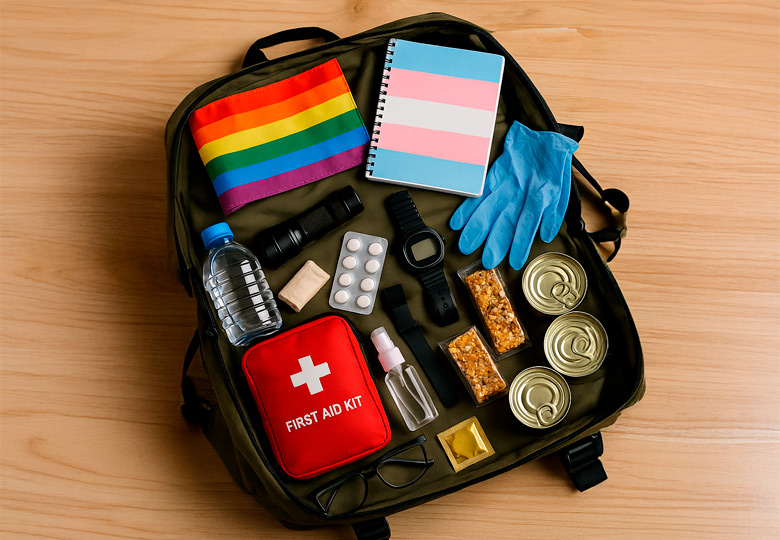
Although many elements are common to any emergency kit, there are others that should be adapted to our real needs. Here we leave you a basic guide divided by categories:
1. Essential elements
-
Drinking water (minimum 1.5 liters per day).
-
Non-perishable food (energy bars, cans, nuts).
-
Flashlight with extra batteries or solar charger.
-
Basic first aid kit (gauze, bandages, pain relievers, disinfectant).
-
Copies of personal documentation (ID, health card, medical information).
-
Cash.
2. Specific elements for LGTBIQ+ people
-
Hormonal medication (if you are undergoing treatment): at least 3 days of doses and a conservation plan.
-
Condoms, lubricants or contraceptives if they are part of your self-care or medical needs.
-
Clothes that you feel safe in: think about possible evacuations where you may have to sleep or share spaces.
-
Adapted hygiene items: sanitary pads, wipes, menstrual sponges, if you need them.
-
Identity documents with name and affirmed gender, if you have both (official and social), to reduce the risk of discrimination.
3. Emotional or personal extras
-
A letter written by you to you (yes, even if it sounds corny).
-
A small object that connects you with your identity or community: a pin, a photo, a poem.
-
List of safe contacts (friends, therapists, support groups).
-
A flag, if you think it is necessary. Because yes, there are times when remembering who you are is also a way of resisting.
Beyond the kit: prepare yourself mentally and socially
A kit is of little use if you don’t know how to use it or if you don’t have a network. Here are some complementary practices:
-
Review your city or neighborhood’s emergency plan.
-
Know meeting points and evacuation routes.
-
Talk to your chosen family or close group about what you would do if something happens.
-
Have an agreed upon meeting point in case of a blackout or loss of signal.
Preparing also means taking care of others. No one is saved alone.
Paranoia or realism?
There are those who believe that talking about survival kits is exaggerated. That “those things don’t happen.” But if we have learned anything in recent years, it is that uncertainty is real. Pandemics, wars, energy collapses, climate crises…
And while we cannot control what happens outside, we can decide how to take care of ourselves inside.
Queer preparationism is not pessimism. It is a radical statement: I want to continue existing, even when the world falters.
⚠️ What if this reinforces individualism?
Good question. Sometimes the discourse of preparationism can fall into a neoliberal trap: “save yourself, and good luck to the rest.” But from a collective and queer perspective, the objective is not only to survive individually, but to sustain ourselves together.
Therefore, we are not just talking about personal backpacks, but about creating neighborhood support networks, sharing resources, teaching others and building community through prevention.
Mutual care is also prepared.
Do you dare to create your own kit?
It may seem strange at first, even a little uncomfortable. But think about this: what would you need if you had to leave home tomorrow without knowing when you were going to return? What objects would speak about you? What would make you feel safe?
Starting to prepare your survival kit does not have to be military-oriented. You can do it from self-care, creativity and self-love. Because that is also political.