
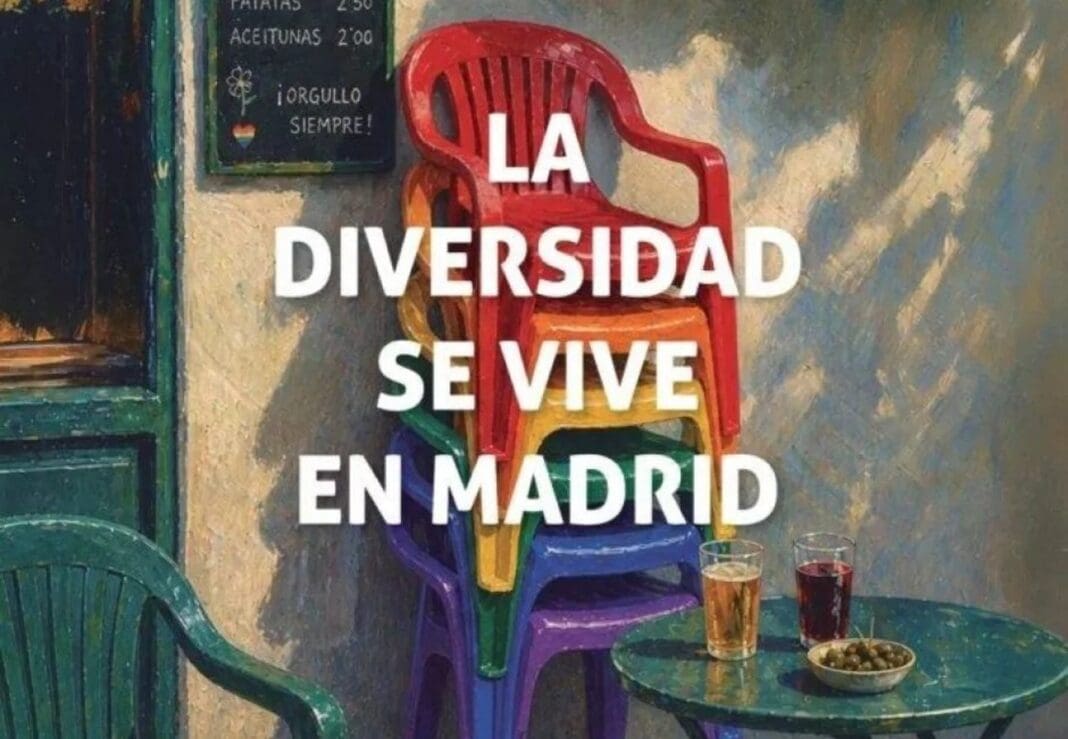
Terrace chairs, balconies with flowers and traditional sweets. The new Madrid City Council posters for Pride have raised an uncomfortable question: can Pride be celebrated without showing the people who give it meaning?
Madrid Pride is not just any party. It is one of the most important LGTBIQ+ mobilizations in the world and a space that has historically combined celebration, memory and vindication of rights.
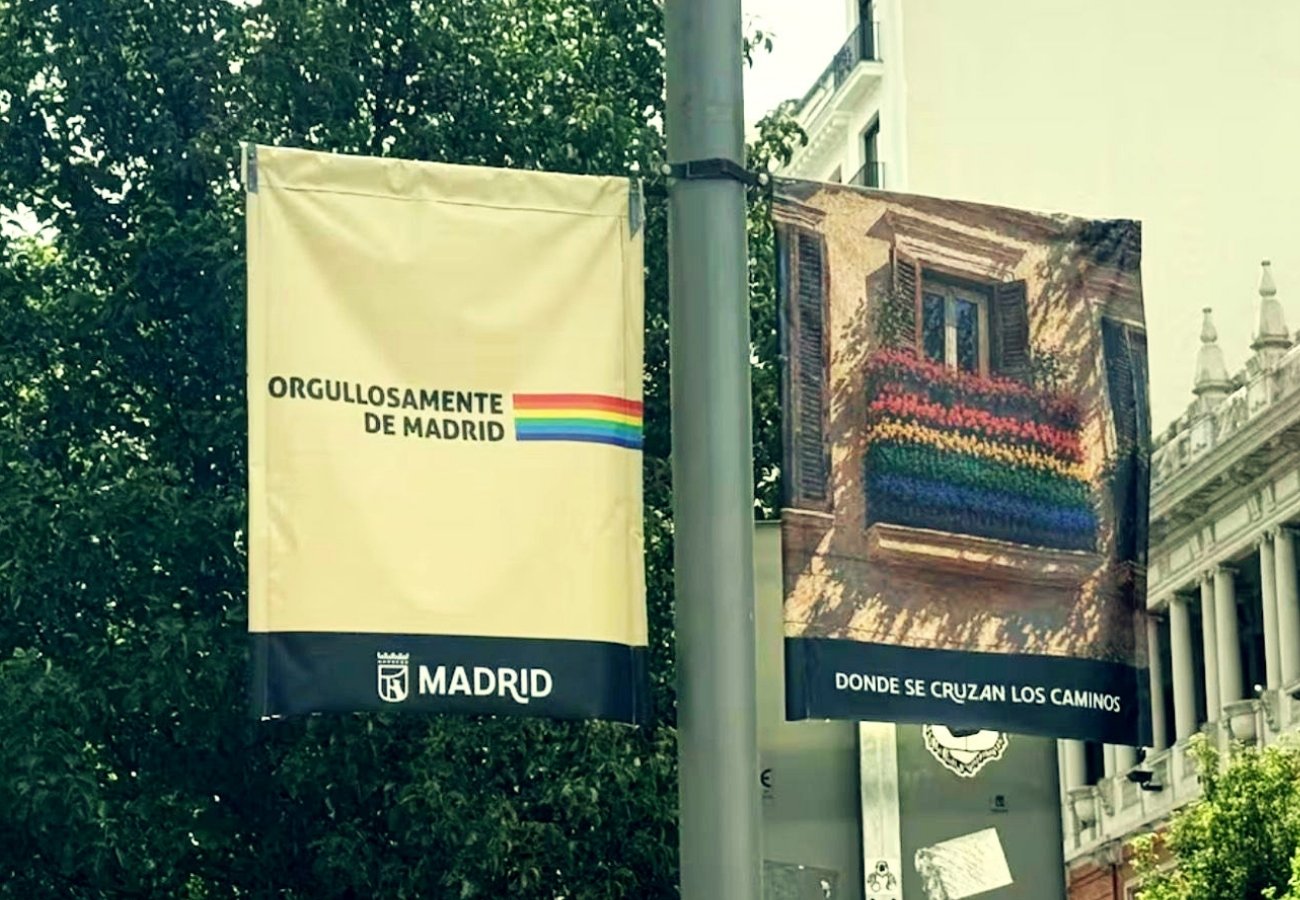
However, the posters presented this year by the City Council have generated strong controversy. Instead of showing people from the group, elements associated with the most traditional imaginary of Madrid appear: terraces, balconies and traditional shops.
The criticism did not take long to arrive. Various associations and activists maintain that the problem is not what appears on the posters, but what disappears: LGTBIQ+ people, their stories and their struggles. “Pride is an event to claim the rights of specific people,” denounce groups cited by national media.
The City Council, on the other hand, defends the campaign and considers that the controversy responds to interested interpretations.
The discussion goes far beyond graphic design. Open a debate about the current meaning of Pride:
- Is it a cultural celebration of the city?
- Is it a political protest?
- Can it be both at the same time?
- What happens when aesthetics replace people?
Because when faces, identities and grievances are removed, many wonder if the message is still the same.
And perhaps that is the real question behind these posters:
Are we seeing a campaign for Pride or a tourism campaign during Pride?