
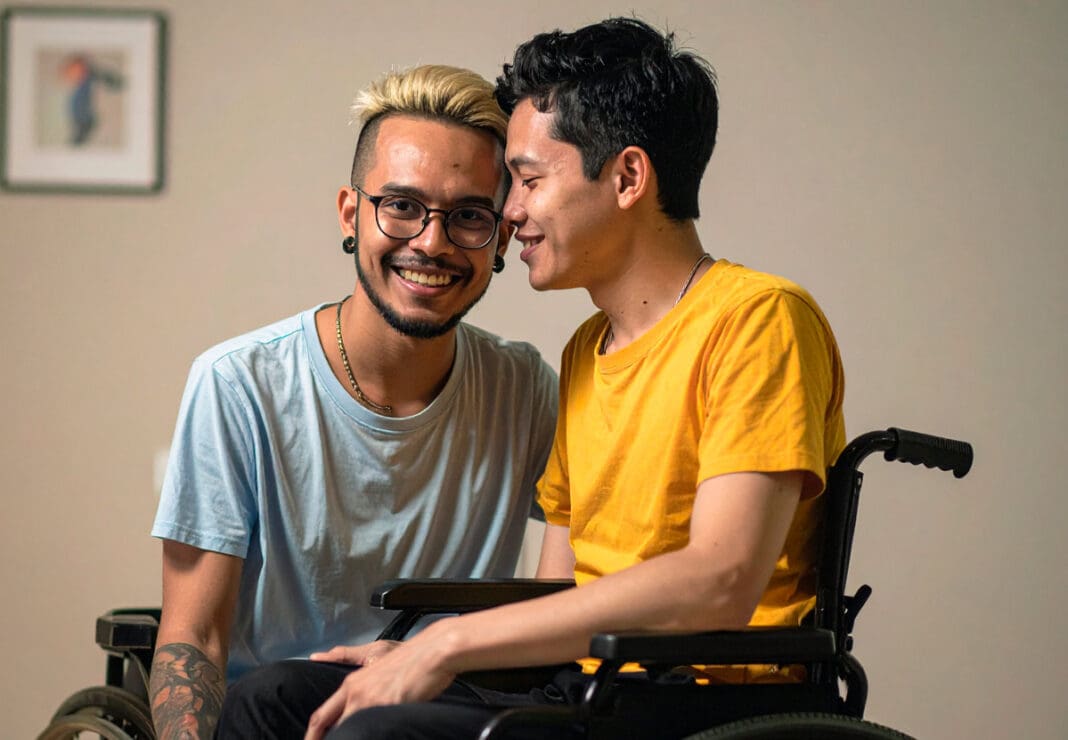
Sexuality is an essential aspect of human life that encompasses desire, relationships and pleasure. However, when it comes to people with functional diversity, myths and prejudices around their sexuality are numerous. It is often assumed that these people have no sexual desires or are not capable of maintaining intimate relationships. This article seeks to explore and demystify these misconceptions, promoting a more complete visibility and understanding of sexuality in the LGTBIQ+ group with functional diversity.
Sexuality: A Universal Right
Sexuality is a human right, recognized by various international organizations. However, in practice, many people with functional diversity face significant barriers that limit their sexual expression. These barriers can be physical, social or cultural. In many cases, the lack of inclusive sexual education and the stigmatization of disability contribute to the invisibility of sexual desire in this group.
It is crucial to understand that sexual desire is not exclusive to certain physical or mental abilities. People with functional diversity have the same right to explore their sexuality and enjoy intimate relationships as anyone else.
Common Myths About Sexuality and Disability
Myth 1: People with disabilities do not have sexual desires
One of the most persistent myths is that people with disabilities are asexual. This belief limits the understanding of their humanity and dehumanizes their experiences. The reality is that, like anyone, they can experience sexual attraction and desire. Functional diversity does not eliminate the ability to love or desire.
Myth 2: Disability prevents sexual relations
Physical or mental conditions are often thought to exclude people from having sexual relations. However, many people with disabilities have developed creative ways to experience intimacy. From using assistive technologies to finding understanding partners, the possibilities are varied and enriching.
Myth 3: The sexuality of people with disabilities is inappropriate
The notion that the sexuality of people with functional diversity is inappropriate or dangerous is another harmful myth. This idea is deeply rooted in prejudice and misinformation. The reality is that sexuality is a natural part of human life and should be accepted as such, regardless of a person’s physical or mental ability.
The Importance of Inclusive Sexual Education
Inclusive sexual education is essential to debunk the myths surrounding the sexuality of people with functional diversity. It is necessary to implement educational programs that address functional diversity and sexuality in a comprehensive manner. This not only empowers people with disabilities, but also raises awareness in society at large, promoting an environment of acceptance and understanding.
What should inclusive sexual education include?
- Clear and accessible information about sexuality, relationships and consent.
- Resources adapted to different types of functional diversity, including visual and tactile materials.
- Training for educators and health professionals on sexuality and disability issues.
Sexuality is a path full of nuances. The search for love and desire can be complex for anyone, but for those living with functional diversity, it can be marked by additional challenges. Questions like: How can I find a partner? Are my wishes valid? How do I communicate my needs? They are common and reflect the search for human connection.
It is essential to foster spaces where these questions can be discussed openly, without fear of being judged. Communication is key to building healthy and satisfying relationships.
Critical Perspectives on Sexuality and Disability
Despite the advances in the visibility of the sexuality of people with functional diversity, conflicts of interest persist in the way in which society addresses this issue. There is a tendency to romanticize the struggle of these people, which can lead to a superficial representation of their sexual experience. This perspective can get in the way of a deeper understanding of your wants and needs. It is vital to question how dominant narratives can perpetuate stigmas and fail to reflect the reality of the lives of many people with disabilities.
Debunking myths about sexuality in people with functional diversity not only benefits this group, but also enriches society as a whole. By empowering people to talk about their desires and promoting inclusive sexuality education, we can build a world where everyone has the opportunity to love and be loved.
On this path towards inclusion, each of us can contribute to creating a space where diversity functions as a source of wealth and not as a limitation. Are we willing to open our minds and hearts to this reality?