

The fundamental right to peaceful assembly, a pillar of European law, is being tested in Hungary. On October 4, 2025, the city of Pécs, the only enclave outside the capital, Budapest, which celebrates Pride annually, witnessed a massive demonstration in favor of LGTBIQ+ rights. Its organizer, Géza Buzás-Hábel, leader of Diverse Youth Network and human rights and Roma community activist, was notified a few weeks later (on October 16) that he was under criminal investigation.
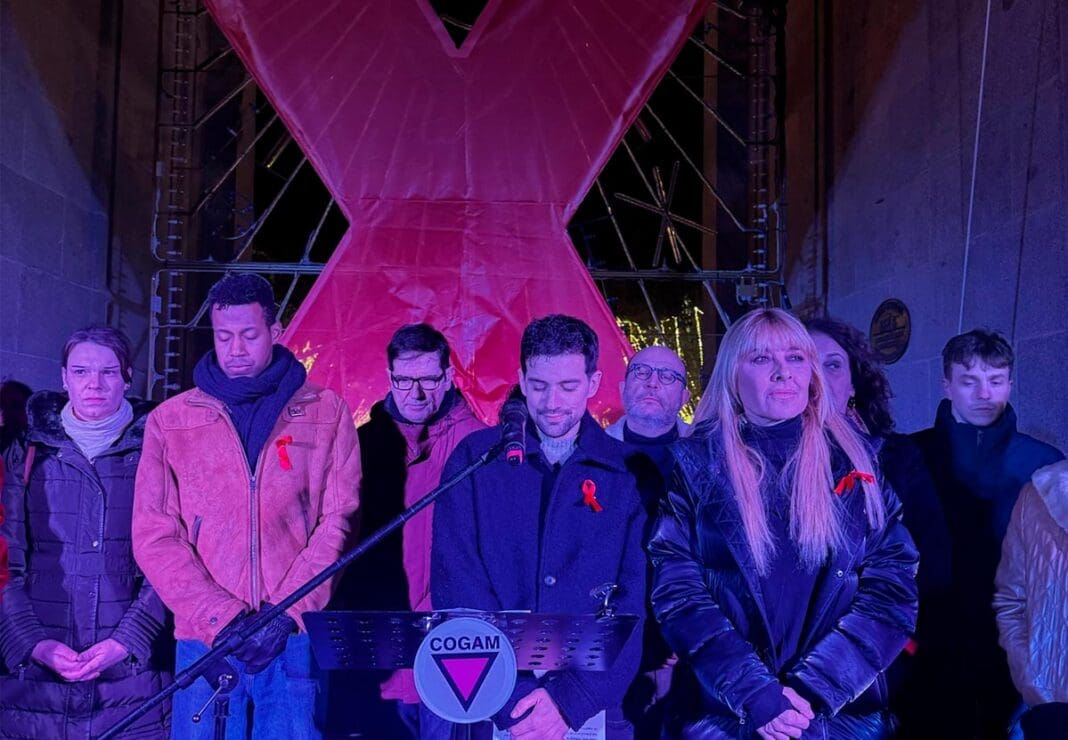
On October 28, while Géza was being interrogated, activists and civil society organizations gathered in front of the Pécs police station in an act of solidarity. The accusation is serious: organizing a “prohibited assembly”, a charge that could lead to up to a year in prison.
A Dangerous Precedent and the Accelerated Judicial Machinery
The situation of Géza Buzás-Hábel marks an alarming turning point: it is the first time in EU history that the organizer of a Pride parade has been criminally prosecuted. For the legal committee that supports him, including Zsolt Szekeres of the Hungarian Helsinki Committee, this is a “politically motivated procedure” with the clear objective of dissuading people from defending their rights.
One fact draws powerful attention: the unusual speed of the process. While in 2024 it took the Hungarian police an average of 352 days to recommend an indictment to the prosecutor’s office, in this case the procedure was completed in a matter of weeks. This speed, according to civil society organizations, only underlines the intention to turn Géza into a “deterrent example”, possibly with an eye on the April 2026 elections.
The activist has been categorical: “I did not deny my actions, but I will not plead guilty for exercising a fundamental right.”
The Excuse of ‘Child Protection’ and the Role of the Ultra-Right
The tightening of the assembly law in Hungary at the beginning of 2025 laid the foundation for this type of persecution. This new regulation, added to the constitutional amendments of April 2025 that limit fundamental rights in favor of the moral development of children, has created a hostile environment for the LGTBIQ+ community.
The authorities and their supporters justify harassment at LGTBIQ+ events with the so-called “child protection” law, which prohibits the “promotion of homosexuality or gender change to minors” under 18 years of age. Géza Buzás-Hábel calls this argument “ridiculous and meaningless”, and points out the real problems faced by Hungarian youth:
- Registration of access to quality education
- High unemployment
- Deterioration of the health system
- Systemic corruption
- Human rights violations
Curiously, the criminal process was accelerated after receiving three complaints, two of them from far-right figures. Among them is Tamás Gaudi-Nagy, director of what is known as ‘Nemzeti Jogvédő Szolgálat’, and Tamás Varga of the Mi Hazánk Movement, the largest far-right party in the country. The activist does not rule out that the process was already prepared in advance, but the intervention of these groups makes visible the alliance between political power and the most conservative movements.
The Fight for Visibility: Pécs as LGTBIQ+ Bulwark
Holding the Pride march in Pécs, a city outside the media spotlight of Budapest, is crucial. “We believe that the future of our community cannot depend on the attitudes of individual politicians,” says Géza.
For the activist, who identifies first and foremost as Roma and then as LGTBIQ+, visibility is one of the main objectives. In a country that he considers hostile to civil society, the activist and his organization, Diverse Youth Network, fight for the human rights of various minorities. Pride, in addition to being the final event of its human rights festival Freedom of My Identity, is organized in a fully accessible way, ensuring that all participants have access.
Géza’s story is a powerful reminder: “If Hungary, as an EU Member State, is allowed to criminalize the peaceful assembly of LGTBIQ+ people, it can do so with any group. When a basic democratic right is taken away from one group, it can be denied to anyone.”
If the European Union is based on the defense of fundamental rights, what concrete actions should it take to protect activists in countries where these rights are compromised?

To what extent has ‘child protection’ become a rhetorical tool to justify discriminatory policies, and what other minorities could be the next ‘scapegoats’ in the European context?
In your daily life, what can you do to give voice to the stories of people who, like Géza, fight for visibility and against stigma in hostile environments?
The bravery of Géza Buzás-Hábel and his team is unwavering. Despite the persecution, they have confirmed that they plan to organize the sixth edition of the Freedom of My Identity Festival and Pécs Pride next year, and will take their case to Strasbourg. The message is clear: the fight for freedom, dignity and democracy in Europe does not stop in the face of fear.