
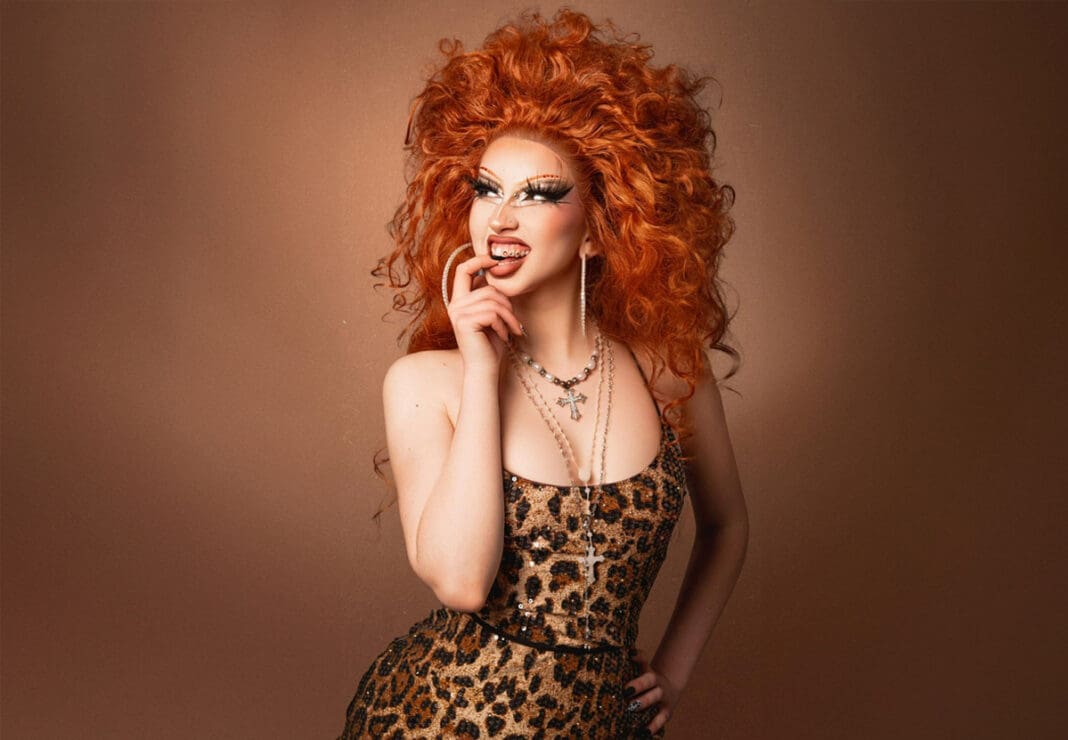
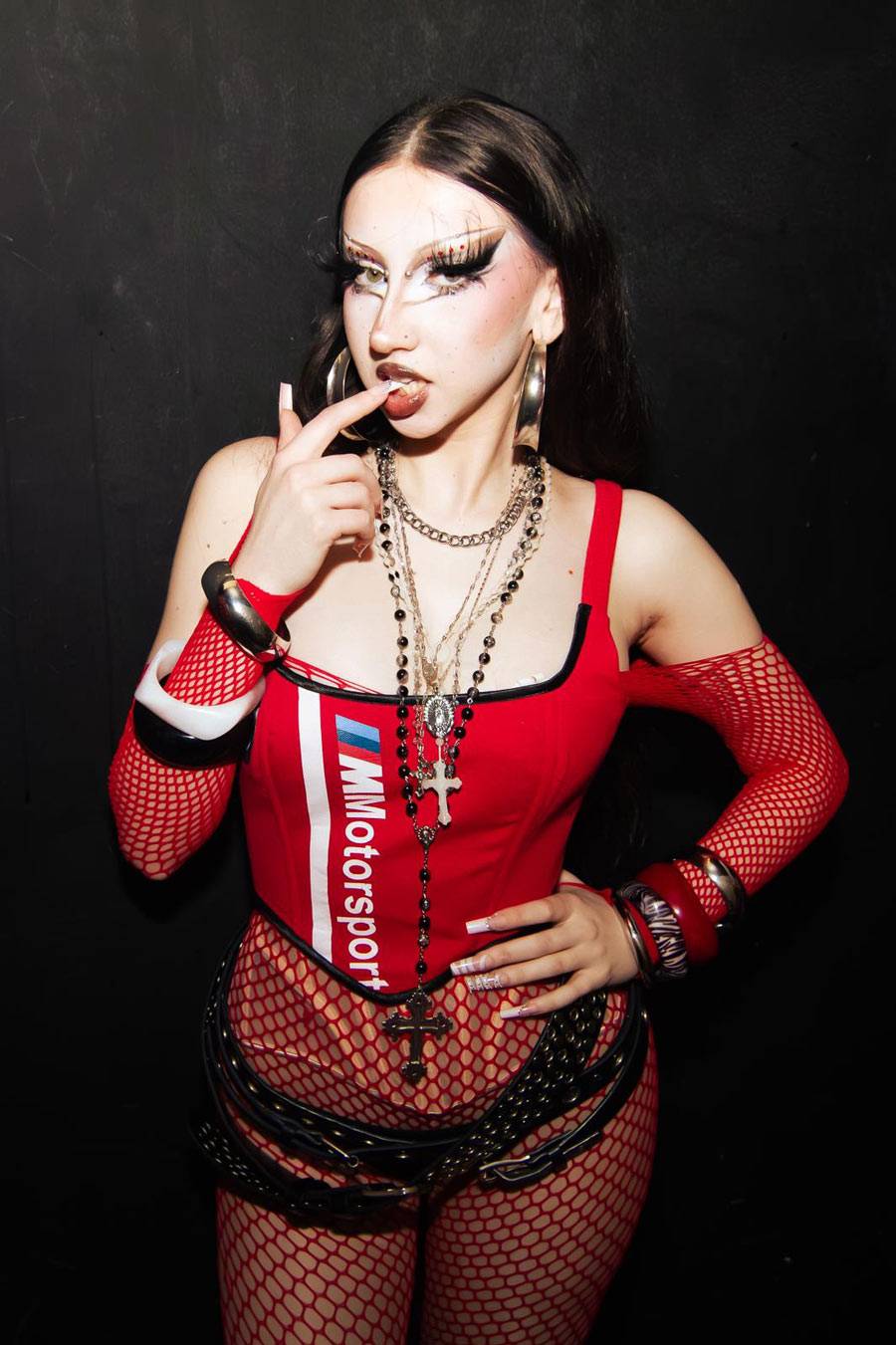
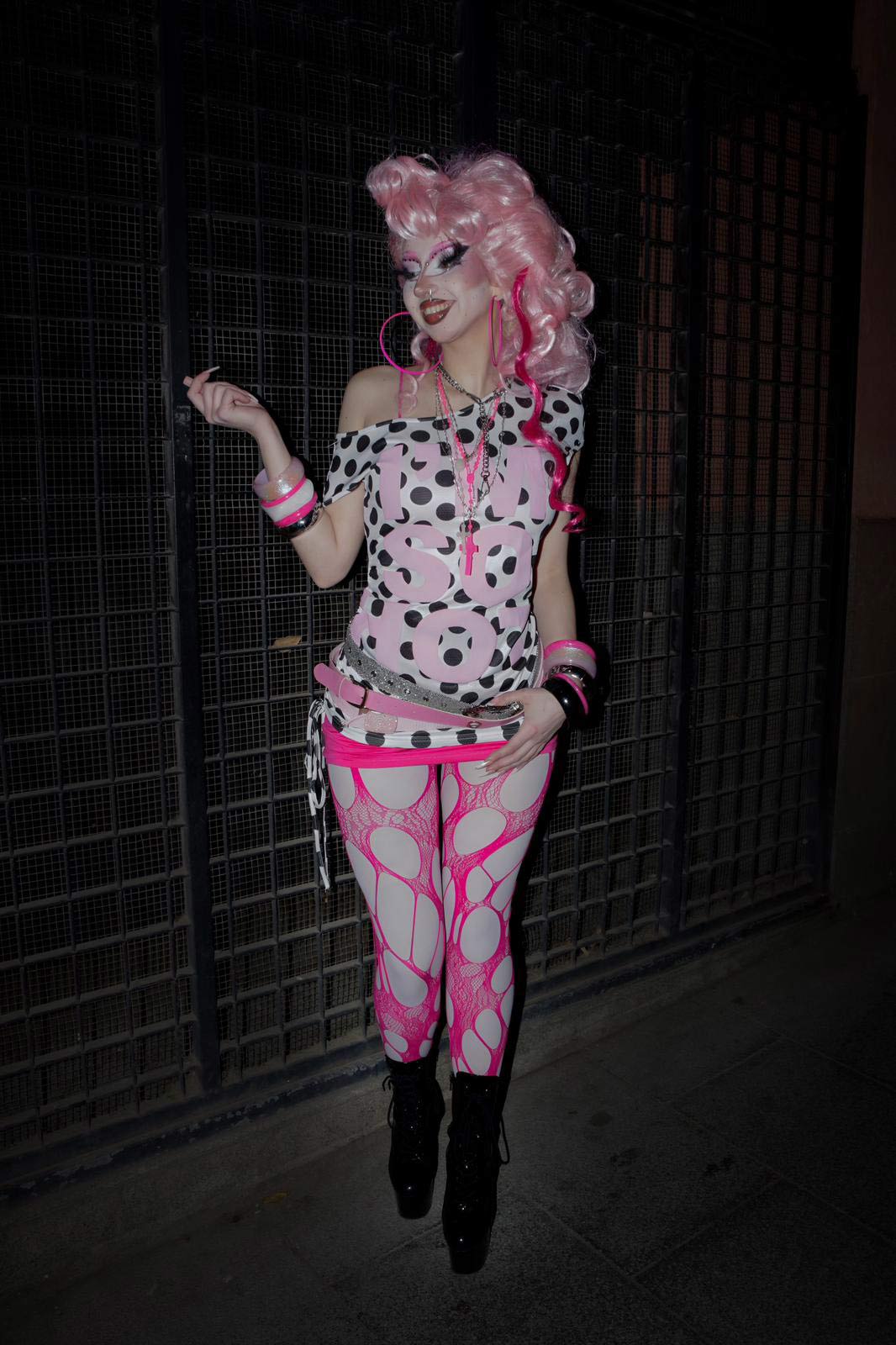
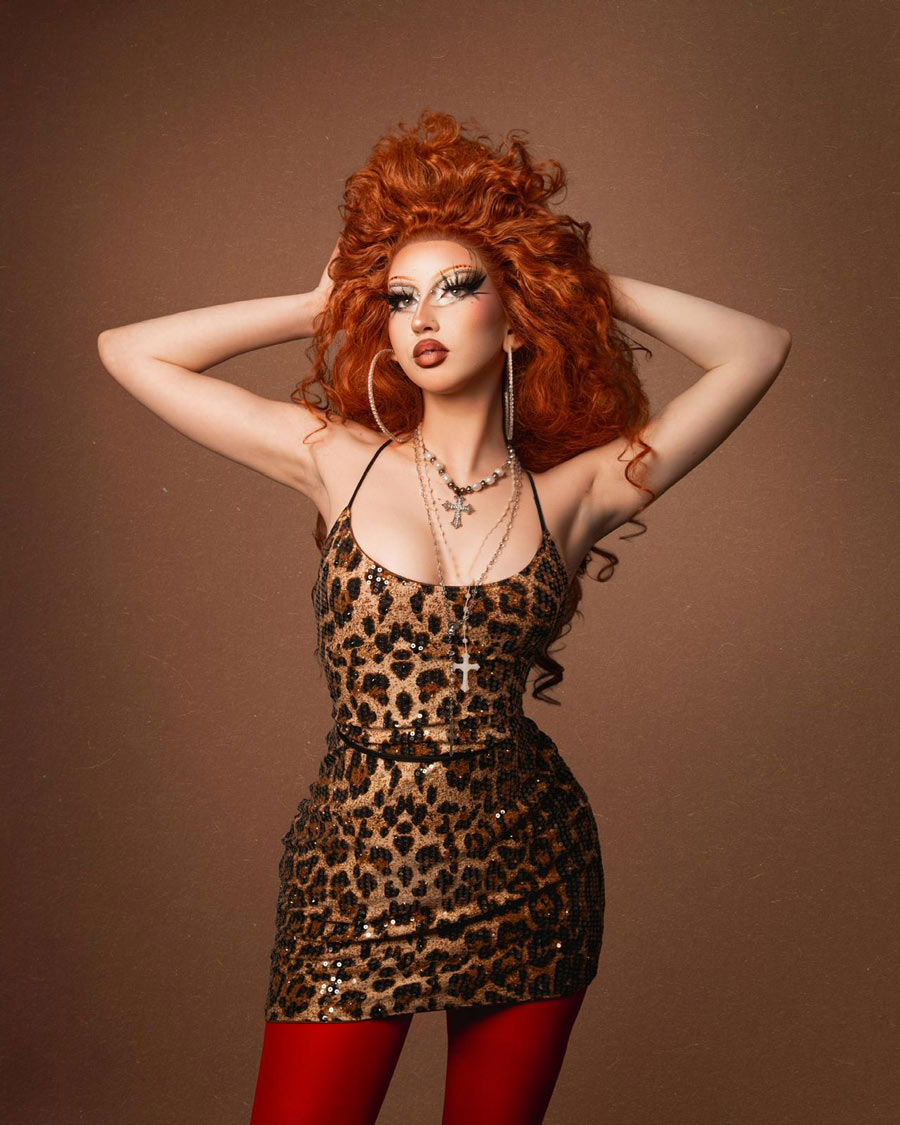
ILSEalamierda is a drag queen who breaks molds from an unusual place in drag: the Spanish Sign Language (SSL). The name of the project comes from a direct and political play between “Sign Language Interpreter” and the expression “go to hell.” Behind the character is Paula, a student of the University Degree in Sign Language and the Deaf Community, who has turned the drag stage into a space for accessibility, criticism of audism and reflection on the place of hearing people within the deaf community.
Question: ILSEalamierda is a name that does not leave anyone indifferent. How does this mix between “Sign Language Interpreter” and “go to hell” come about? What did you want to provoke—or point out—from the first moment?
I was clear about the name ILSE: I wanted it to be known that my shows are at LSE. At first, the idea was to put “simequereisilse” on Instagram, by the great Lola Flores, but it was already taken. Even though I reported the account, they didn’t take it away and in the end I was left with “dammit”, which is very funny.
Question: How do you integrate Sign Language into your drag shows? Is it just a communication tool or is it also part of the artistic language, humor and narrative of the show?
My shows are at LSE, like: I don’t integrate it as a separate tool.
Question: Drag is usually very visual and very sound. Do you think that the use of the LSE can open drag to deaf people who have historically been left out of these cultural spaces?
Totally. For me it is a way to expand who drag is aimed at and to remember that culture is not experienced in just one way. The LSE is not an added resource, it is part of the language of the show and my artistic identity.
Question: Have you received feedback from deaf people who have seen your shows or your work? What impact do you feel this type of proposals can have in terms of representation and access to culture?
Yes, I have received feedback from deaf people who have seen my work, and many talk about how special it is to come across a drag show designed by the LSE. I believe that proposals like this not only expand access to culture, but also generate identification and belonging.
Question: From your experience, how would you define audism and in what ways do you detect it in the cultural, artistic world or even in supposedly inclusive events?
Audism is the discrimination or attitude of superiority of hearing people towards deaf people, considering hearing as normal and disparaging deaf culture and sign language. It is very noticeable in the cultural and artistic world: events that are called inclusive but that do not think about the real needs of deaf people, such as shows without sign language interpreters.
Question: As a hearing person who works with and from Sign Language, how do you manage your place within the deaf community? What limits, responsibilities or learning do you always have in mind?
As a hearing person, my place in the deaf community is one of respect and learning. I do not speak for anyone and I seek to create shows where sign language and deaf culture are protagonists, opening spaces without appropriating them.
Question: In professional or institutional contexts – hiring, events, programming – have you encountered barriers or misunderstanding regarding accessibility and the LSE? How do you face them?
Yes, many times I find that they do not want to include LSE interpreters and what they are looking for is to appear inclusive without really being inclusive. In those cases, I make it clear from the beginning what is needed and, if I see that there is no real intention, I decide not to act. Accessibility is not a bonus, it’s part of the show.
Question: Drag is still often associated with gay men, although that is changing. What is it like to inhabit drag as a cis woman? Have you felt questioned or, on the contrary, empowered from that place?
I have felt it more on networks than in reality. In person, drag is often a much more open space than it appears from the outside. There are fools everywhere, of course, but it is true that many women who do drag demand more from themselves to be considered valid, as if we had to constantly prove that we deserve to be there.
Question: Do you think drag can also be an educational and social awareness tool? What things are you interested in the audience taking home after seeing you perform?
Yes, I think drag can also be used to learn and question things, without giving lessons. I like that the public leaves with a different perspective, with curiosity and with the desire to learn and know more.
Question: What are the next objectives of ILSEalamierda? Do you dream of specific scenarios, collaborations, educational projects or new formats where drag and sign language can be combined?
I am looking forward to this year and starting new projects. A new song is coming and I want to continue trying formats, growing and getting to know myself more as an artist. More than thinking about a specific scenario, right now I want to continue creating and see how far ILSE can go.
Rainbow Questions
- Who is your queer reference and why?
My friends. I feel very inspired surrounded by queer artists who work on fabric; I am very lucky to be surrounded by cool people.
2. If your life had an activist slogan embroidered on a t-shirt, what would it be?
Drag is also performed.
3. When did you feel freest in your skin?
When I stopped hating myself for being who I am. When I was little I lacked queer references and, like many people, that made me feel alone. Over time I found my place and now I couldn’t be happier.
4. What everyday queer superpower do you stick with?
With the ability to create family, support and community even when the world doesn’t make it easy for you.