
An art that has always been there, but was rarely named
When we talk about drag, almost everyone thinks of queens. Impossible makeup, mile-long wigs and shows full of glitter and fantasy. However, there is a drag world that remains in the media shadow: that of the drag kings.
Today we want to open the door to this universe of performative masculinities, creativity, criticism and fun. Because the drag kings are here, and it’s time to meet them, applaud them and sell out their shows.
What is a drag king?
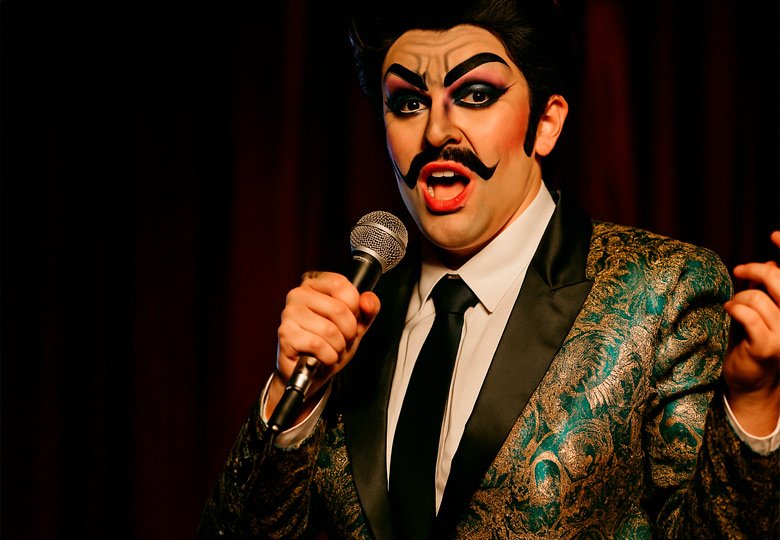
A drag king is an artist who creates a male character, exaggerating and playing with gender codes. It can be a cis gay man doing extreme masculinity, a transmasculine person exploring their identity or a non-binary person investigating gender as performance.
🔍 Why don’t we see drag kings on TV or on big stages?
Because the system continues to prioritize the hypersexualized feminine as a spectacle and the drag king breaks with that vision. It shows comic, critical, sensual or grotesque masculinities, and that makes those who want to keep gender as something fixed and serious uncomfortable.
Where to see drag king shows in Spain
Although the scene is still small, there are more and more spaces that program their shows. Here we leave you some key points:
Madrid
-
La Ká Bar Colectivo (Lavapiés): shows and open mic with drag kings monthly.
-
Sala Maravillas (Malasaña): queer cabaret sessions that usually include king artists.
Barcelona
-
La Federica (Poble Sec): diverse drag programming, including drag kings on special nights.
-
Manifest (Raval): queer and dragtivist parties with kings on the billboard.
- Advertisement -
Valencia
-
Radiocity: queer cabaret events where Tito Sánchez and other king artists perform.
Other cities
In places like Bilbao, Seville or Granada there are emerging king artists who perform at queer festivals or LGTBIQ+ events. We recommend following accounts of groups such as Drag Kings Spain or LGTBIQ+ spaces in your city.
Why support king art?
Because making drag kings visible is questioning masculinity as something untouchable. It’s about laughing at it, playing with its limits and creating new ways of being and wanting. Additionally, many kings are trans or non-binary people who find drag a space for exploration and empowerment.
Critical perspective: is the drag king a safe space for everyone?
Although this art seeks to break gender norms, it has also received criticism. Some voices point out that certain shows reproduce machismo or toxic stereotypes of masculinity. Others point to the lack of space for racialized drag kings or the hypersexualization of transmasculine bodies as a claim. Perhaps the question is: how do we make drag king a critical, safe and intersectional art for everyone?
How to support the drag king scene
✅ Follow drag kings on social networks and share their art.
✅ Attend their shows and pay admission whenever you can.
✅ If you schedule events, include drag kings on your poster.
✅ Learn about drag history beyond RuPaul.
✅ Talk about them in your groups. Visibility begins with the word.
Drag kings are pure creative and political power. They invite us to think about what masculinity is, who inhabits it and how we can laugh at it to free ourselves. His art is resistance, criticism and celebration.
So the next time you’re looking for a drag show, remember: kings exist too. And they are waiting for your applause.