
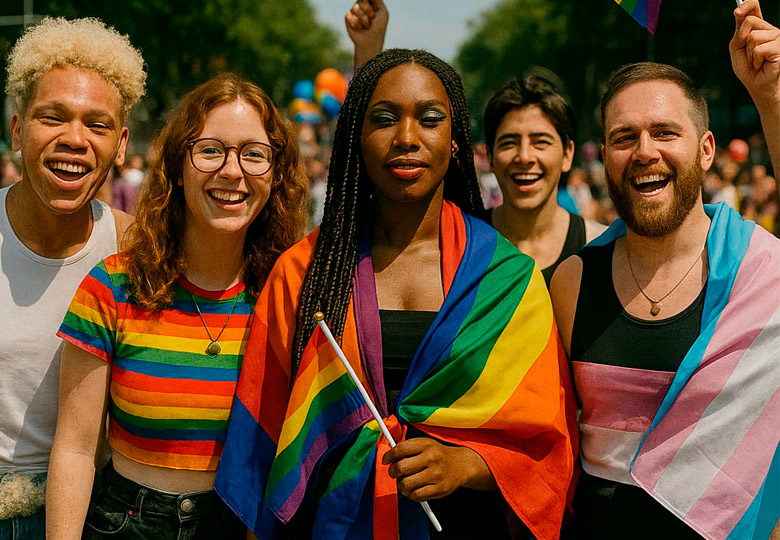
Every June 28 the world is filled with rainbows, banners and celebrations. But do we really know why this date is commemorated? Why did that day become a symbol of struggle, memory and pride?
Behind the glitter and the floats, there is history, rage and resistance. And this article is an invitation to remember it.
🌈 Why June 28?
On June 28, 1969, in New York, the Stonewall riots began, considered the beginning of the modern movement for LGTBIQ+ rights.
For decades, New York police carried out constant raids on gay bars. In the early hours of the 28th, at the Stonewall Inn, a venue in Greenwich Village, the community decided to say enough.
🔥 The Stonewall riots: when fear turned into rage
That night, the police broke in like so many other times.
But something changed.
While they were removing clients, reviewing documents, and arresting trans people for “wearing incorrect clothing,” the crowd began to clash.
First with words, then with coins, bottles and bricks.
For days, the streets of the Village were the scene of protests, clashes and community organizing.
The collective cry that would become Pride had been born.
✊🏼 Who was in charge?
Although history has sought to whitewash and masculinize Stonewall, the truth is that it was racialized trans women, transmasculine people, drag queens and sex workers who started the revolt.
Keynames:
- Marsha P. Johnson, black trans woman and tireless activist, founder of STAR (Street Transvestite Action Revolutionaries).
- Sylvia Rivera, Latina trans woman who fought for the rights of the homeless and sex workers.
- Stormé DeLarverie, butch lesbian who, according to several accounts, was one of the first to resist arrest, igniting the spark of the revolt.
Without them, there would be no Pride. Remembering them is an act of historical justice.

🏳️🌈 The fight that followed
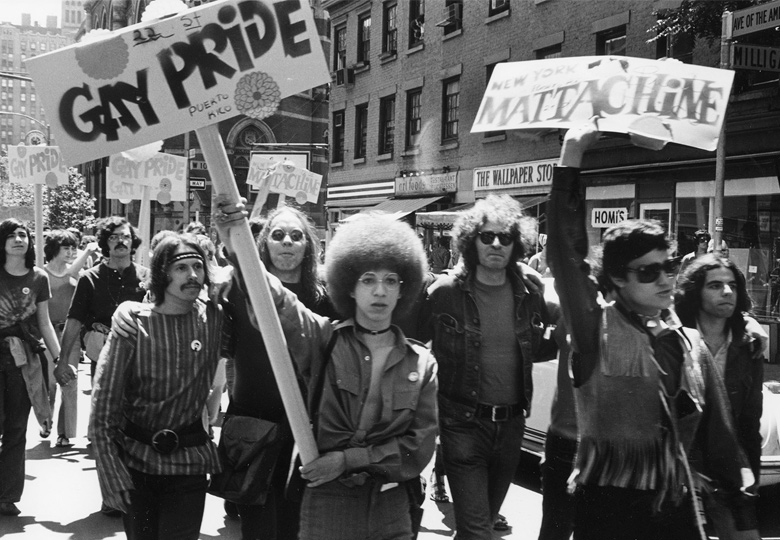
After Stonewall, the first Pride march was born in New York in 1970. Since then, the movement spread throughout the world, adapting to each context, but always with a common message: living and loving is not a crime, and diversity is not hidden.
The conquest of rights has been slow and uneven:
- Decriminalization of homosexuality.
- Recognition of trans identities.
- Access to comprehensive health.
- Equal marriage and adoption.
- Laws against hate crimes.
But discrimination persists. And that is why every June 28 is not just a party: it is memory and protest.
🤔 Critical perspective: are we forgetting the political root?
Today, many Pride marches look more like a sponsored parade than a demonstration.
Pinkwashing and the commodification of pride have emptied of content a day born of pain and resistance.
Are we really honoring Marsha and Sylvia when we buy rainbow t-shirts from companies that exploit trans people?
Do we know why we are marching or are we just going for the party?
There is no single answer. But it’s worth asking.
💍 20 years of equal marriage in Spain: a story that began with courage
This year marks 20 years since the approval of equal marriage in Spain, becoming the third country in the world to recognize this right.
It was 2005, and after intense political and social debates, Congress approved the reform that changed the lives of thousands of couples.
🌟 Pedro Zerolo: the politician who put his body and soul
We cannot talk about this milestone without mentioning Pedro Zerolo, socialist activist and politician, openly gay, who worked tirelessly for real equality.
Zerolo not only defended marriage as a legal right, but as a symbol of dignity. His famous phrase:
“Love is not the exclusive property of anyone. It is a common good.”
It resonates today more than ever. Thanks to its struggle and that of thousands of activists, Spain opened a path that other countries would follow later.
✨ Celebrate so as not to forget
The International Day of the Rights of LGTBIQ+ People is not just a memory of Stonewall.
It is a tribute to all those who fought before, a hug to those who continue to be oppressed today, and a commitment to future generations.
Because as long as there is a place where loving is a risk, as long as there are laws that deny identities, as long as there are families that expel children for being who they are…
We will continue marching every June 28.