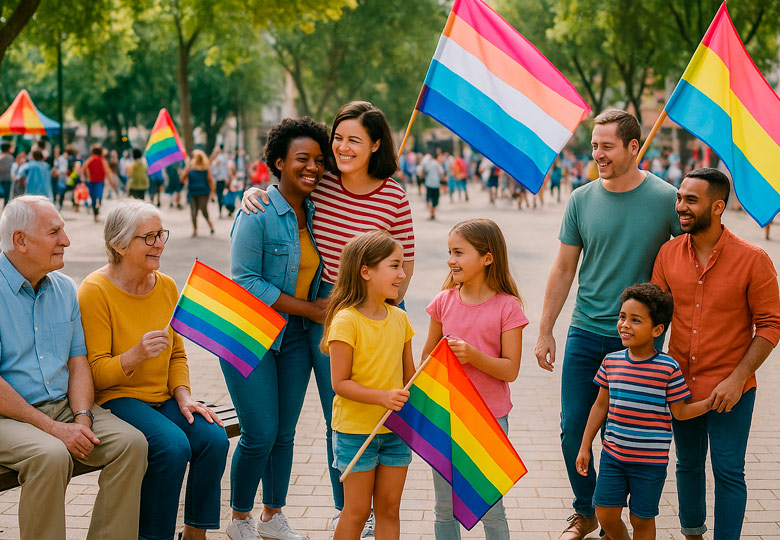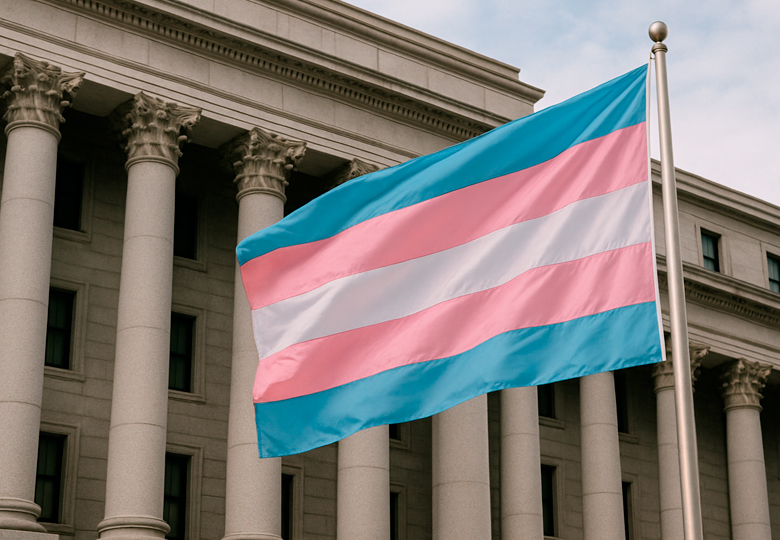

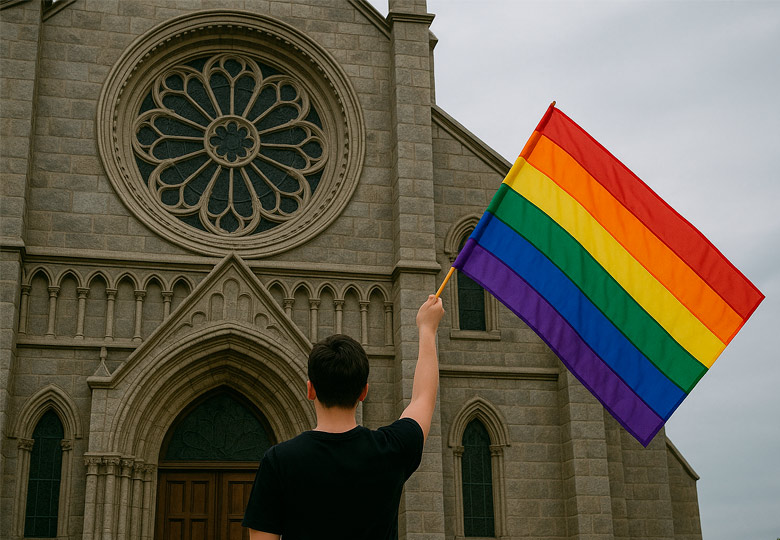
The death of Pope Francis has marked the closing of a complex but significant stage for the Catholic Church. His figure, although contradictory for some, represented an unprecedented discursive turn in the relationship between the Vatican and the LGTBIQ+ collective. Now, with his absence, an uncertain scenario opens up, in which expectations, fears and challenges are mixed for those who continue to seek a dignified place within the ecclesiastical institution.
A legacy of words, not reforms
Francis will be remembered for his inclusive language, for his gestures of closeness towards LGTBIQ+ people and for a willingness to listen unusual in his predecessors. From his now famous “Who am I to judge?” to his support for civil unions, the Argentine Pope opened symbolic doors that resonated throughout the world.
However, it is important to recognize that his legacy was more pastoral than structural. The official teachings of the Church did not change in depth: the doctrine on homosexuality was not modified, nor were blessings admitted for same-sex couples, nor was access to the priesthood for openly LGTBIQ+ people reviewed.
Now what? The emptiness behind a conciliatory figure
The death of Francis leaves a feeling of emptiness in those who saw in him a possible bridge between faith and identity. His empathetic style did not guarantee rights, but it did allow a symbolic space where many could feel, at least, heard.
With the election of a new Pope—still uncertain at the time of writing this article—, the great unknown is whether the path will be one of continuity or setback. The College of Cardinals that will elect the next pontiff has been largely renewed by Francis himself, which could favor a similar profile. But there are also conservative sectors that have shown discomfort with their openings, and could promote a change of course.
Main challenges of the LGTBIQ+ community in the Church
Beyond papal leadership, there are structural and cultural challenges that directly affect LGTBIQ+ people who are part of the Catholic Church. Some of the most urgent include:
1. Ecclesiastical recognition
Although Francis expressed his support for civil unions, the Church continues not to officially recognize same-sex couples. This lack of symbolic and spiritual validation continues to generate exclusion and pain for believers who wish to live their faith without giving up their emotional or gender identity.
2. Real inclusion in pastoral life
LGTBIQ+ people continue to encounter obstacles to fully participating in community life: from limitations in pastoral roles to discrimination in local parishes. Inclusive pastoral care is still an exception, not a norm.
3. Training of clergy in sexual and gender diversity
Much of the symbolic or verbal violence within the Church comes from ignorance. The training of seminarians and pastoral agents on diversity issues is scarce or non-existent. Without educational changes, empathy does not become real transformation.
4. Safe spaces for LGTBIQ+ believers
Many people in the collective feel that they must choose between their faith and their identity. Creating welcoming and safe communities is an urgent need. Without them, exclusion is perpetuated and spirituality is lived with guilt or fear.
5. Visibility and representation
Institutional silence continues to be a barrier. Very few LGTBIQ+ voices are heard within ecclesiastical structures. Visibility is key to humanizing experiences and breaking deep-seated prejudices.
Is a truly inclusive Church possible?
This is one of the questions facing the current moment. Can such a hierarchical and doctrinal institution really open itself to the diversity of bodies, desires and identities? Or will the reforms remain superficial as long as the theological framework that sustains discrimination is not questioned?

Maybe we don’t have a clear answer yet. But what we do know is that the voices within the Church are no longer univocal. There are networks of LGTBIQ+ Catholics around the world, movements that work for a diverse Church and theologians who reinterpret sacred texts from inclusive perspectives.
Resistance exists. And also hope.
A critical look: wait or build on the outside?
Faced with this crossroads, it is worth asking if it makes sense to continue waiting for changes from within or if it is time to build autonomous spiritual spaces, outside of institutional logic. Until when must LGTBIQ+ people ask for permission to fully exist within a community of faith? This tension between reform and rupture is still latent, and there is no single answer.
The important thing, perhaps, is that spirituality is not kidnapped by dogma, and that everyone can find, or create, a space where they can live their faith without being violated.
Conclusion: between uncertainty and possibility
The death of Pope Francis not only implies the end of a leadership, but also an opportunity to rethink what type of Church we want. The LGTBIQ+ collective faces enormous challenges, yes, but it has also demonstrated an immense capacity for resistance, spiritual creativity, and the search for justice.
The next pontificate will be decisive. But beyond who occupies Peter’s throne, the true change will come from below, from those who no longer accept a faith that excludes, and fight for a radically human, radically loving spirituality.