


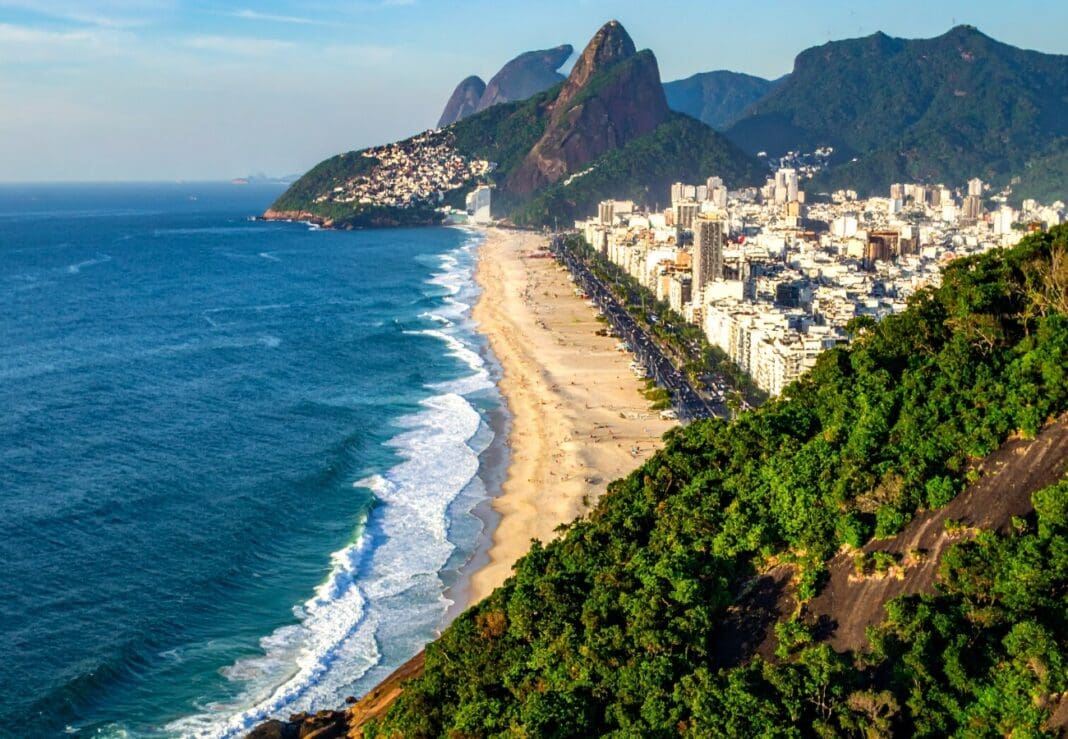
Brazil, the largest country in South America, is famous not only for its lush nature and rich culture, but also for its vibrant cities and annual parades that attract millions of visitors from around the world. From the bustling Carnival of Rio de Janeiro to the colorful festivities of Salvador de Bahia, Brazil becomes an epicenter of celebration and diversity.
Shining Cities
Rio de Janeiro: The Jewel of Brazil
Rio de Janeiro is, without a doubt, one of the most emblematic cities in Brazil. Known for its stunning natural landscape, where the mountains meet the ocean, Rio is also famous for its vibrant nightlife and rich culture. The Rio Carnival, held every year before Lent, is one of the biggest spectacles in the world, with samba parades lighting up the streets and attracting millions of tourists.
Blocos de rua, or street parades, are an essential part of Carnival, where the community comes together to celebrate regardless of sexual orientation, race or social class. Isn’t it fascinating how one event can bring so many people together in one celebration?
Salvador de Bahía: Culture and Tradition
About 1,500 kilometers north of Rio, Salvador de Bahía is another vibrant city that deserves to be mentioned. Renowned for its deep African heritage and music, Salvador becomes a center of celebration during Carnival. Here, the parades are a mix of tradition and modernity, where Afro-Brazilian music, such as samba-reggae, resonates in every corner.
Salvador Carnival is also known for being more accessible and participatory, with thousands of people joining the parades without needing expensive tickets. This inclusive approach allows everyone, regardless of their background, to feel part of the celebration. How does this influence the perception of Brazilian cultural identity?
São Paulo: The Capital of Diversity
São Paulo, the largest city in Brazil, is famous for its diversity. The city hosts one of the largest LGTBIQ+ pride parades in the world, where thousands of people gather to celebrate diversity and inclusion. This event is not only a party; It is a political act that seeks to make visible and defend the rights of the LGTBIQ+ community in a country where homophobia continues to be a serious problem.
The parades in São Paulo are an example of how festivities can be a platform for social change. In this context, the demand for rights is intertwined with the celebration of life. Are we seeing a real change in social acceptance thanks to these cultural manifestations?
Annual Parades: Beyond the Party
The annual parades in Brazil are not just festive events; They are a representation of the country’s cultural identity. Through them, social, political and cultural issues are explored, and communities that are often marginalized are given a voice. For example, the Rio Carnival not only shows the beauty of samba and Brazilian rhythm, but is also a space where issues such as inequality and the fight for the rights of the LGTBIQ+ community are discussed.
Parades also act as spaces of inclusion. In a world where divisions are often the norm, Carnival and other festivals in Brazil offer an opportunity for people to express themselves freely. This is especially relevant for the LGTBIQ+ community, who find in these events a place where they can be authentic without fear of judgment.
However, it is important to ask ourselves: to what extent do these parades manage to be truly inclusive of all identities?
Despite the joy and celebration that parades bring, there are also criticisms. Some argue that Carnival has become too commercialized, losing its original essence. Large corporations often sponsor events, which can blur the political and social message the celebration originally sought to promote. Is Carnival becoming an empty spectacle rather than an act of resistance and cultural affirmation? It is a question that deserves reflection.
Brazil is a country of contrasts and celebrations, where vibrant cities and annual parades reflect its rich cultural diversity. Events like Carnival and the LGTBIQ+ pride parade in São Paulo are perfect examples of how culture can be a vehicle for inclusion and social change. As the country moves forward, the question remains: will we be able to build a society where everyone has a place in this never-ending party?