
Is it possible to work without hiding who you are? That is the question that marked the recent meeting between Yolanda Díaz, Minister of Labor and Social Economy, and the LGTBI+ State Federation. In a global moment where the rights of the collective are being attacked on different fronts, Spain is committed to taking another step in the defense of real equality in the workplace.
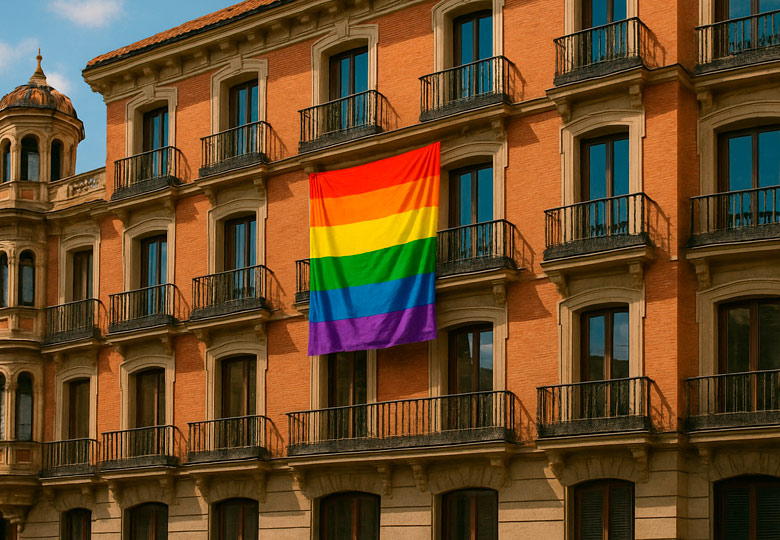
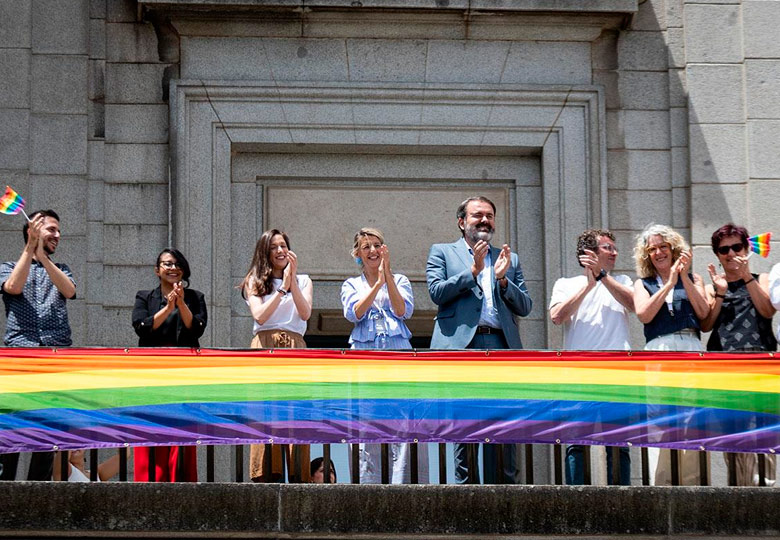
The meeting, held at the Ministry headquarters, was more than symbolic: together with the president of the Federation, Paula Iglesias, the LGTBI+ flag was displayed in the institutional building. A gesture that goes beyond visibility and seeks to reaffirm the Government’s commitment to the rights of the collective, also within offices, factories and offices.
A decree that marks a before and after
One of the central points of the meeting was the assessment of Royal Decree 1026/2024, in force since October last year. This standard, directly linked to the Law for Real and Effective Equality for Trans and LGTBI+ People, requires all companies with more than 50 workers to adopt specific measures to guarantee equality for the group.
What does this entail? Protocols against harassment due to orientation or identity, specific training, and adapted equality plans. It is the first time that legislation in Spain – and one of the few in the world – establishes these obligations so clearly.
“We want a country where no one has to hide who they are to keep their job,” Díaz said. And although it sounds logical, reality shows that there is still a long way to go.
LGBTI+ visibility at work: a pending challenge
The regulatory progress is undeniable. But how is it being applied on a daily basis? According to the Business Confidence Index, prepared by the LGTBI+ State Federation and the consulting firm 40dB, the data are encouraging… but also worrying.
- 74.6% positively value the entry into force of the decree.
- However, only 26% feel visible to their peers.
- And just 12% compared to superiors.
- In addition, 8.3% reported having received unequal treatment.
- The workplace continues to concentrate more than 11% of cases of harassment and other forms of violence against the group.
The conclusion is not easy. Although the law is there, many LGTBI+ people still have to choose between their visibility and their job security. Business culture, prejudices and lack of training continue to weigh.
Accompanying gender transition in employment
Another of the advances presented was the protocol for accompaniment to trans people in the work environment, a pioneering guide in Europe developed by the LGTBI+ State Federation. This document offers guidelines so that companies can manage traffic processes safely, without improvisations or discrimination.
This protocol is, for many trans people, a vital tool. It is not enough to say that “the door is open.” We must guarantee that the path is safe, dignified and accompanied.
What if the commitment is not as firm as it seems?
Although the advances are real, not everyone sees this process with the same eyes. Some critical voices warn of the risk that these measures remain at the symbolic level. Placing a flag or signing a protocol can have an impact, yes, but if it is not accompanied by inspections, resources, real monitoring and business will, it could become just another pinkwashing strategy. There is also the risk that the focus on diversity will be used as a smokescreen against other persistent inequalities in the labor market, such as precariousness or the wage gap.
What’s coming: training, negotiation and more rights
Both the Ministry and the Federation have insisted on the need for companies, unions and business organizations to negotiate and implement the measuresof the Royal Decree. They have also agreed to continue with the development of the protocol for trans people and promote equality trainingthrough the State Foundation for Employment Training.
The sectors that are already applying these measures successfully, such as early childhood education or care for people with disabilities, point the way forward. But this transformation still needs to reach all corners of the working world.
“The laws are only the first step, not the end of the road,” Paula Iglesias recalled. A reminder that should not be forgotten.
A common roadmap
The commitment is clear: transform workplaces into safe spaces for everyone. And do it not only through discourse, but through practices, resources and active listening to those who have been historically marginalized.

Will they make it? Only time and social surveillance will tell. But at least, for now, there is a roadmap, political will and voices willing to ensure that change is not just a promise.