


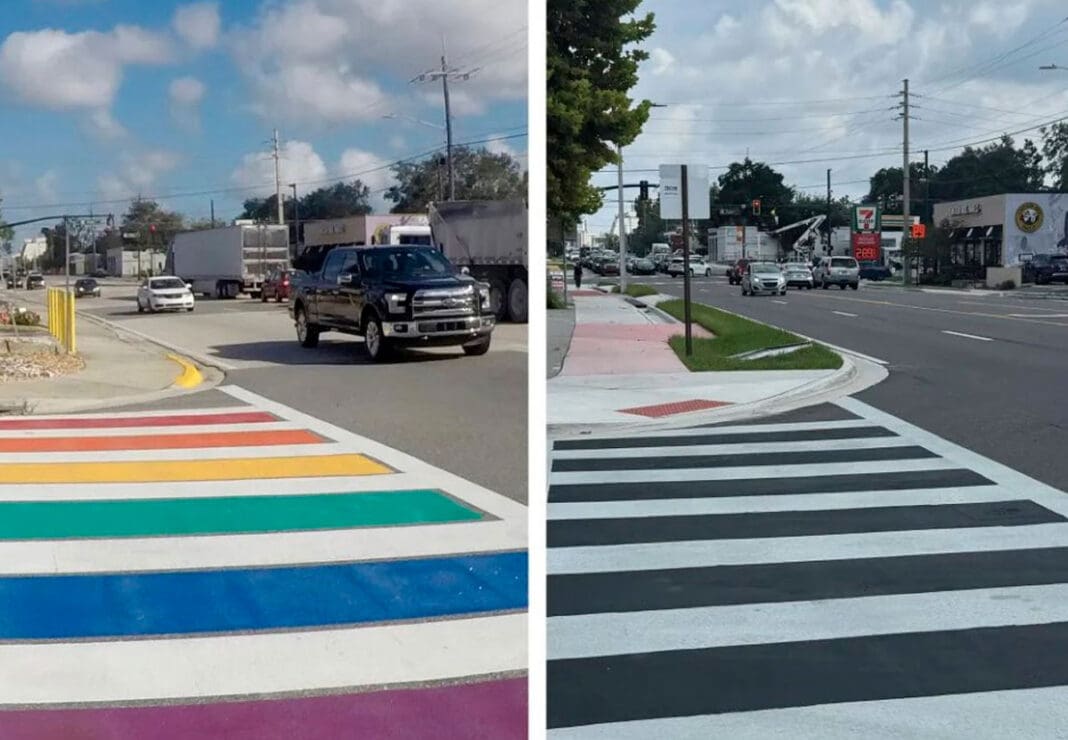
The early morning brought a bitter surprise to the residents of Orlando. The rainbow-colored crosswalk, painted in tribute to the 49 victims of the Pulse club massacre in 2016, appeared covered in black. The order, according to US media, came directly from the administration of Donald Trump.
A symbol erased in silence
That zebra crossing, located on Orange Avenue, was not a simple urban decoration. It represented grief, memory and resistance of the LGTBIQ+ community. For many it was a living reminder that what happened at Pulse should not be repeated or forgotten.
Orlando Mayor Buddy Dyer was quick to react. In statements in X, he described the elimination of the rainbow as a “cruel political act”. He assured that there was no security argument that justified covering it, and denounced that the decision was made unilaterally and without public debate.

The “safe roads initiative”
The action is part of the “Highways Safe Initiative” campaign, promoted by the Department of Transportation under Trump. According to Transportation Secretary Sean Duffy, crosswalks with “unconventional” colors can distract drivers and pedestrians. “Taxpayer money should go toward safe streets, not political banners,” he declared.
The measure did not expressly mention rainbow steps, but ended up applying to them. The result: the disappearance of a memorial that had been accepted and defended by much of the local community.
The FLDOT paved over the rainbow crosswalk at the Pulse memorial last night.
This comes after state and federal directives ordered its removal.
LGBTQ+ people deserve representation everywhere, but especially when mourning the 2nd deadliest mass shooting in American history. pic.twitter.com/jl1NNlhVam
— Jack Petocz (@Jack_Petocz) August 21, 2025
Immediate citizen reaction
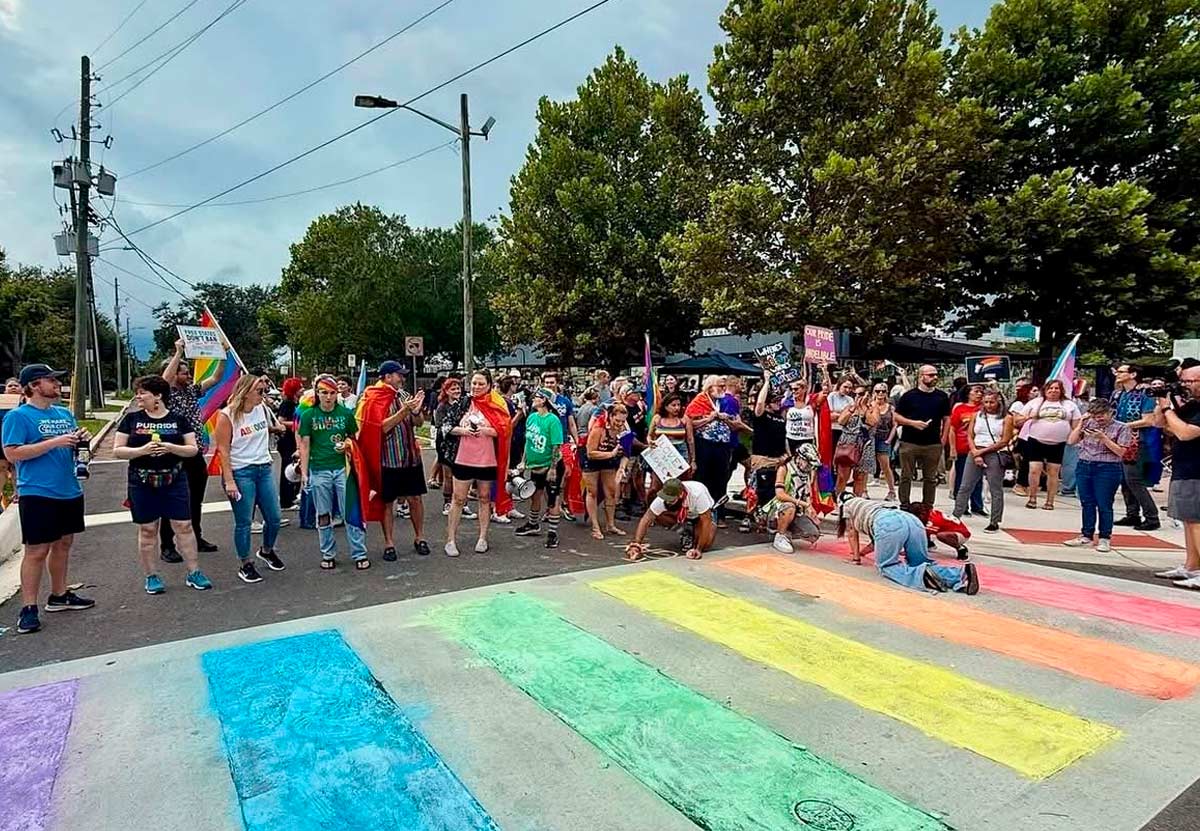
The response from the neighbors was quick. Outraged, they painted the colors again on the black strip a few hours later. For many, it was a reaffirmation: erasing symbols does not erase memory or struggle.
The mayor insisted that the step not only improved road safety, but was also a promise from Orlando to the victims. “Our commitment to them remains intact,” he stressed.
A question of security or ideology?
The debate is not new. Is it a technical measure to avoid accidents or a political movement with an ideological background? Mobility experts point out that there are no conclusive studies that link pavement colors with an increased risk. However, what is evident is the symbolic impact of these actions in a city marked by a tragedy that still hurts.
Last night, the DeSantis administration snuck in and tried to quietly erase the state-approved crosswalk to honor the 49 people murdered at Pulse Nightclub.
So this afternoon, the community showed up to do a little chalking.
I love you, Orlando. 🌈 pic.twitter.com/gDDCaFY7oC
— Brandon Wolf (@bjoewolf) August 22, 2025
Although the indignation is understandable, not everyone shares the same vision. Some voices question whether rainbow crossings should take up space on public roads when road regulations require uniformity. There are also those who believe the Biden administration or local governments could have acted more quickly to protect these memorials. The question is inevitable: are we facing a real security problem or a political pulse that instrumentalizes the memory of the victims?