

Today, the stories projected on the big screen are a reflection of our world, which is increasingly diverse and complex. However, not everyone seems to be prepared for this evolution. Recently, a controversial opinion has ignited the debate about the inclusion of the LGTBIQ+ community in films aimed at the little ones. Are we ready for diversity to be part of every narrative? Or is there still a long way to go in acceptance and understanding?
The disagreement of a rapper and an animated scene
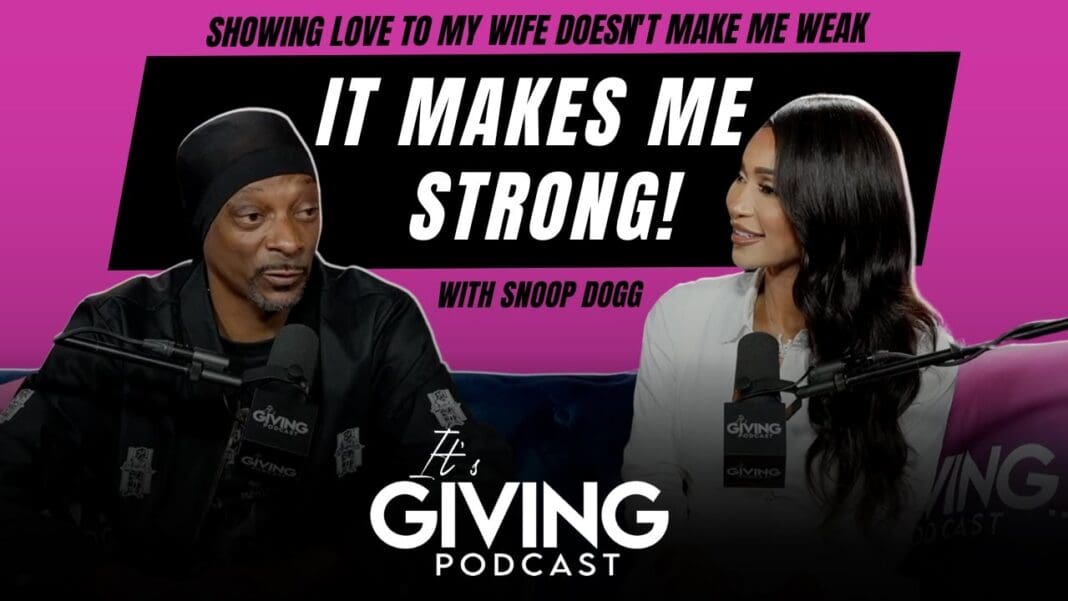
The controversy arises from the statements of the iconic Californian rapper Snoop Dogg. In a recent interview on the It’s Giving podcast, the artist shared a personal experience that left him, in his own words, “scared of going to the cinema to see a children’s movie”. The origin of his concern lies in the movie Lightyear, the acclaimed spin-off of Toy Story that, by the way, generated a stir in various countries due to a particular scene.
In that scene, a female character, played by Keke Palmer, is shown in a lesbian relationship, where she kisses her partner and they have a child together. This moment, although minimal in the overall context of the film, was the epicenter of controversy for the rapper. “I went to see the movie with my grandson… and suddenly his character appears in that scene, in which it is seen that he had a baby, but with a woman,”said Snoop Dogg.
The innocent question and the uncomfortable answer
The high point for the artist came when his grandson, in the middle of the movie theater, asked him a question that confused him: “Dad Snoop, how could he have a baby with another woman?”. The innocence of the question, in contrast to the rapper’s discomfort, invites us to reflect. Is it lack of familiarity with these narratives that generates the perplexity, or is it a matter of personal predisposition?
Snoop Dogg admitted to feeling completely disarmed. “Shit, I didn’t come for this, I just came to watch a fucking movie”, he remembered thinking at that moment. His only response to the child was “Shhh… We’re at the movies, eat the popcorn”, despite the little boy’s insistence. This moment, without a doubt, makes us think about the importance of being prepared to address diversity issues with younger people, even if they are not part of our personal experience. Would it be different if children’s family history included various forms of love and family from the beginning?
Diversity on screen: A question of age or open-mindedness?
Snoop Dogg’s reflection did not come out of nowhere. Dr. Sarah Fontenot, host of the podcast, had introduced the topic with a statement that also deserves our attention: “lately they are not really men until they turn 45”, attributing part of this reality to a supposed “single mother epidemic”. According to her, women are educating their children only from their own individual method, which has led to “women being much more masculine and men, much more feminine”.
The rapper, however, found the cause of this supposed reality in early exposure to the diversity of sexualities and ways of life. “What’s the point of this? They’re children. Do we have to teach them things like that at these ages? They put me in the middle of shit for which I don’t have the answers,”he said. This position opens a crucial debate: is there an “appropriate” age for children to be exposed to the diversity of identities and relationships? Or is childhood precisely the ideal time to foster openness and understanding towards all forms of existence?
The LGTBIQ+ community and the echo on social networks
Snoop Dogg’s statements have not gone unnoticed, especially among his followers and the LGTBIQ+ community. For years, despite certain inconsistencies, the artist has been considered a reference for personal freedom and tolerance, which has led a part of his audience to express their disappointment. “I had Snoop as someone who was quite open and inclusive,” one fan commented.
For many, the rapper’s inability to answer such a simple question from his grandson was striking. “I could have just told him that they had adopted the child if he didn’t want to go into further explanations,” one comment on the video suggested. Others were more direct, questioning possible underlying homophobia: “What a horrible opinion about a lesbian couple. It’s 2025, and we’re still that homophobic?”. There were even those who resorted to humor, joking about the artist’s possible disorientation: “Possibly he was so high during the film that he couldn’t even resolve a simple question about the real world.”
This incident brings us to a fundamental point: representation matters. The stories we see on screen influence how we perceive the world and how we relate to diversity. That a character is part of the LGTBIQ+ community in a children’s film is not indoctrination, but a reflection of the reality of many families. Isn’t it time for screens to reflect all realities, without fear and naturally? Or is the fear of the unknown still a bigger obstacle than we think?