
The country’s first openly gay head of government claims to receive daily threats and refuses to “become small” in the face of hatred
Rob Jetten, the new Prime Minister of the Netherlands and the country’s first openly homosexual head of government, has publicly denounced that he has been facing constant homophobic attacks, threats and complaints for more than a decade.
In his first press conference after taking office, the progressive liberal leader recognized that the public exposure of his private life is not an image strategy, but a way to make visible a reality that, according to him, has been normalized in the Dutch public debate: the systematic attack based on sexual orientation.
“Daily threats” in full political leadership
Jetten assured that the homophobia he suffers translates into practically daily threats and frequent complaints, and that for years he decided not to hide or abandon public spaces.

“In the Netherlands it seems to have become normal to attack someone because of their sexual orientation,” he said, adding that his personal experience is not exceptional, but rather a reflection of a pressure that other minorities also suffer due to their religion or racial origin.
The prime minister explained that, although he feels that he has developed a “thick skin” in the face of hate, he is aware that many people do not have that support or institutional protection.
Private life, public exposure and social networks
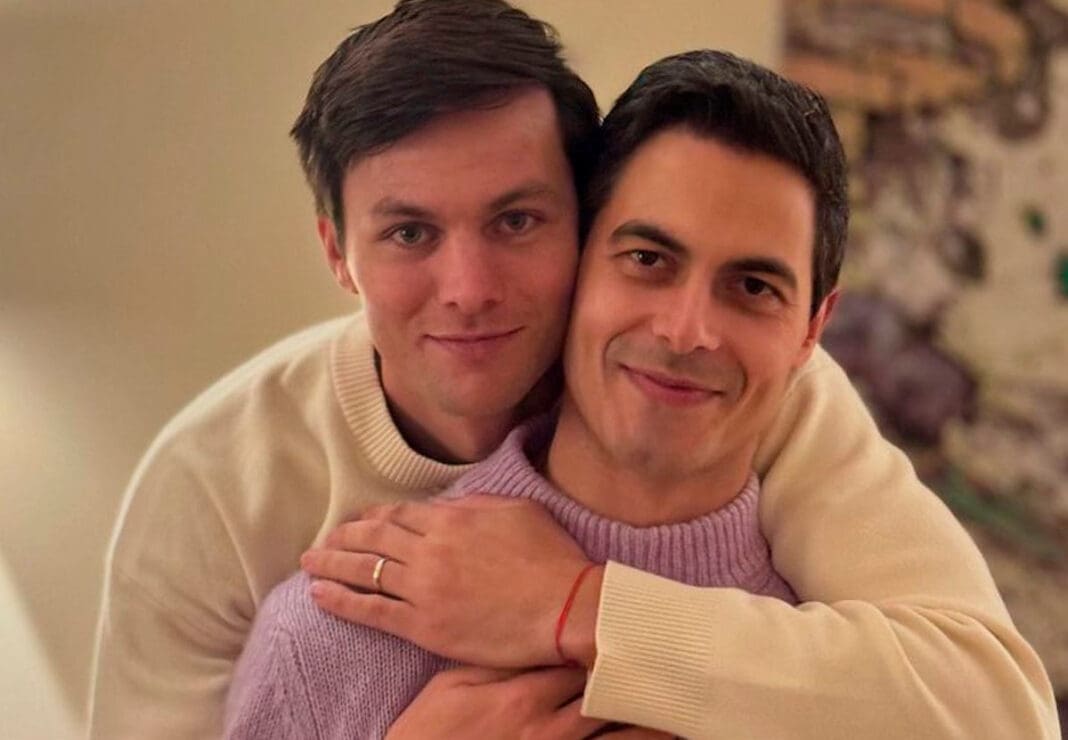
Part of the debate arose after the publication of content on social networks where he appears with his partner, the Argentine hockey player Nicolás Keenan.
An analysis by the Dutch newspaper NRC revealed that, in the first days of his mandate, Jetten received more than 200 homophobic reactions from 180 different accounts on the social network
Jetten defended that he will not show “everything” of his private life, but he will not allow hatred to condition his visibility.
The question is inevitable:
To what extent is LGTBIQ+ political representation still perceived as a provocation in certain sectors?
The personal and the political
The prime minister insisted that his priority is the government agenda – housing, pensions and international relations – and that his sexual orientation should not overshadow the political debate.
However, he also argued that the personal and the political cannot be completely separated when harassment is directly linked to identity.
“I’m not going to make myself small,” he summarized his position.

In 2020, he already shared a video reading some of the hate comments he received, questioning those who doubt the need for days against homophobia.
Europe in the mirror
Jetten’s statements occur in a European context where reactionary discourses have gained institutional presence in several countries.
For decades, the Netherlands was a benchmark in LGTBIQ+ rights, being the first country in the world to approve equal marriage in 2001. However, the head of Government’s own testimony shows that legal equality does not automatically eliminate symbolic violence.
Representation matters. But it’s also uncomfortable.
The underlying question is whether Europe is regressing culturally while maintaining advanced legal frameworks.
Visibility as an act of resistance?
Jetten’s position can be interpreted as an exercise in democratic resistance: not making sexual orientation the center of the debate, but also not allowing it to be a reason for silence.
Because when a prime minister receives daily attacks for being gay, the problem is not private. It is structural.
And it affects the entire LGTBIQ+ community.