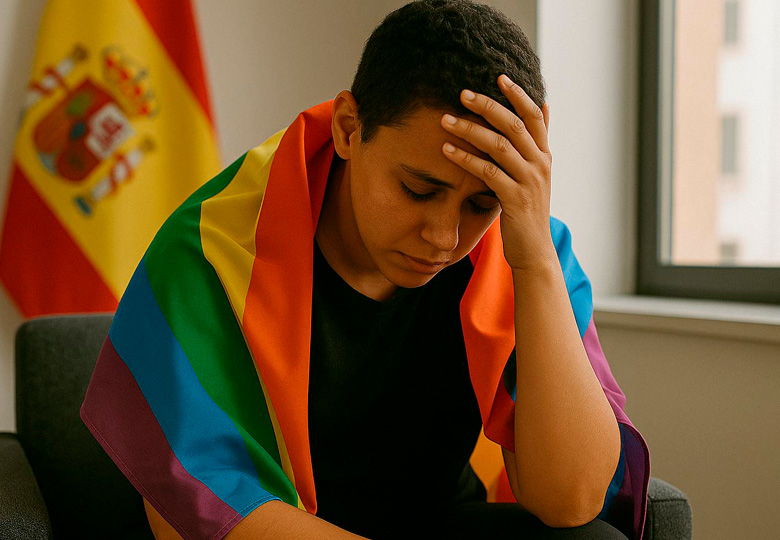

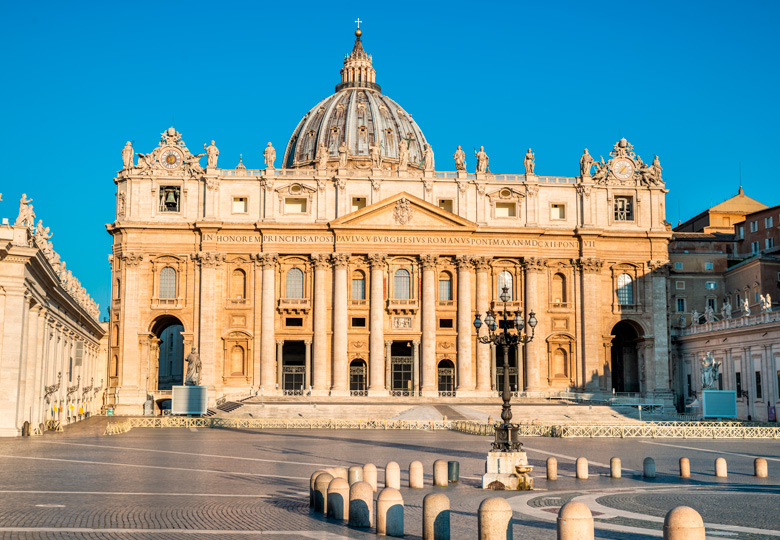
Francis’ papacy has been marked by gestures that many consider open, especially when compared to his predecessors. His attitude towards LGTBIQ+ collective has generated headlines around the world, and has been seen by some people as a symbol of hope. But can Pope Francis really be considered a defender of the rights of LGTBIQ+ people? Or are his words, although conciliatory, still limited by the doctrinal framework of the Catholic Church?
A new language in the Vatican
Since his election in 2013, Jorge Mario Bergoglio—the first Latin American pope—surprised with a more approachable, simple and empathetic style. His famous phrase “Who am I to judge?”, delivered in 2013 when he was asked about homosexual priests, marked a before and after in the Vatican discourse.
It was not a formal approval, but it was a clear sign of a change in tone. For the first time, the highest representative of the Church spoke about homosexuality without resorting to condemnation, judgment or moralizing.

And that symbolic gesture had enormous weight. Because language matters. And much more so in an institution where words are read with a magnifying glass and where each papal declaration becomes doctrine, or at least pastoral guidance.
Concrete facts: What did Francisco do for the LGTBIQ+ community?
In addition to the discursive change, Pope Francis promoted some notable advances. Among them:
-
Recognition of civil unions: In 2020, during the documentary Francesco, the Pope expressed his support for laws that legally protect same-sex couples, stating that “Homosexual people have the right to be in a family”. Although this is not equivalent to support for equal marriage within the Church, it was an explicit support for a legal figure that guarantees rights.
-
Meetings with LGTBIQ+ people: Francis received various people from the group at the Vatican, including same-sex couples and activists. On some occasions, he has even sent letters of support and publicly encouraged priests who work with LGTBIQ+ communities, such as the case of Jesuit James Martin.
-
Reflection on diverse families: In Amoris Laetitia, his exhortation on the family, although he does not directly mention same-sex couples, one perceives an openness towards new family configurations and an insistence on the value of welcoming and listening.
Doctrinal limits: the tension between openness and tradition
Now, these gestures—although significant—have not been accompanied by substantial changes in the official doctrine of the Vatican. The Church continues to consider homosexual relationships as “disordered” from a moral point of view, and has not opened the door to ecclesiastical recognition of LGTBIQ+ couples.
In 2021, the Vatican published a document reiterating that “It is not licit to impart the blessing to unions between people of the same sex”, causing deep disappointment among LGTBIQ+ faithful and allies. Although Francis did not personally sign that text, its publication under his pontificate shows the limits of his leadership on this issue.
And the Pope, although reformist in certain aspects, remains a leader deeply linked to the doctrinal structure of the Church. Many of his statements—although more human and sensitive—do not represent a break with official theology, but rather a pastoral reinterpretation.
A brave or strategically ambiguous stance?
Francis’s ambivalence has also generated criticism. For some people, the way they act represents a courage within a deeply conservative system. For others, their symbolic gestures are not enough: they are just words with no real impact on the lives and rights of LGTBIQ+ people inside and outside the Church.

Are good intentions enough when it comes to human rights? Or is it necessary to demand concrete actions, even from religious institutions?
The figure of the Pope, due to his political and spiritual dimension, is always crossed by multiple interpretations. Perhaps their strategy is not so much to revolutionize the Church at once, but to move it slowly, from within, to avoid deeper resistance. But that implies very different times than those required by the urgency of those who continue to be excluded.
A Pope loved by many, but still distant for others
It cannot be denied that Francis has generated sympathy in much of the world, even among non-believing sectors. His plain style, his concern for the poor and his desire for dialogue have expanded the margins of what is possible within the ecclesial institution.
However, with regard to the LGTBIQ+ group, the distance between words and deeds is still great. Even though he has become emotionally close, even though he has spoken of welcome, of forgiveness, of inclusion, has not broken with the structure that perpetuates discrimination.
Those who are part of the group and remain believers often experience a double tension: their faith and their identity collide in a system that has not yet fully recognized them. And that pain, although it is sometimes cushioned by gestures of tenderness or understanding, does not disappear.
Critical perspective: what happens to power?
A deeper analysis leads us to wonder about the real power that the Pope has within his own institution. Although he is the maximum leader, does not rule alone, and their decisions must coexist with the resistance of more conservative sectors within the clergy. Furthermore, sometimes their statements seem more designed for media impact than for real internal change.
Are we facing a leader who believes in inclusion, but who does not dare to move forward for fear of institutional breakdown? Or before a figure that only disguises with words a position that, deep down, has not changed that much?
Defender of rights or conciliatory figure?
So, can we say that Pope Francis has been a defender of the rights of the LGTBIQ+ collective? The answer, like almost everything in his pontificate, is not simple.
Yes, it has been more open, empathetic and human than many of his predecessors. Yes, it has generated spaces for dialogue where before there was only silence or condemnation. But not, has not promoted doctrinal reforms that guarantee real equality within the Church.
His legacy in this area is probably somewhere in the middle: has sown seeds, but the fruits—if they arrive—will come later, perhaps from other ecclesiastical leaders or from stronger social pressure.
In the meantime, the question remains open. And it is still urgent: How much longer must we wait for equality to stop being a promise and become a reality also within the Church?