
Every year, as July approaches, images of shiny floats, dancing bodies, flying flags and thundering music in the city center return.
And every year, someone says again: “what a great time you had at that parade.”
But no.
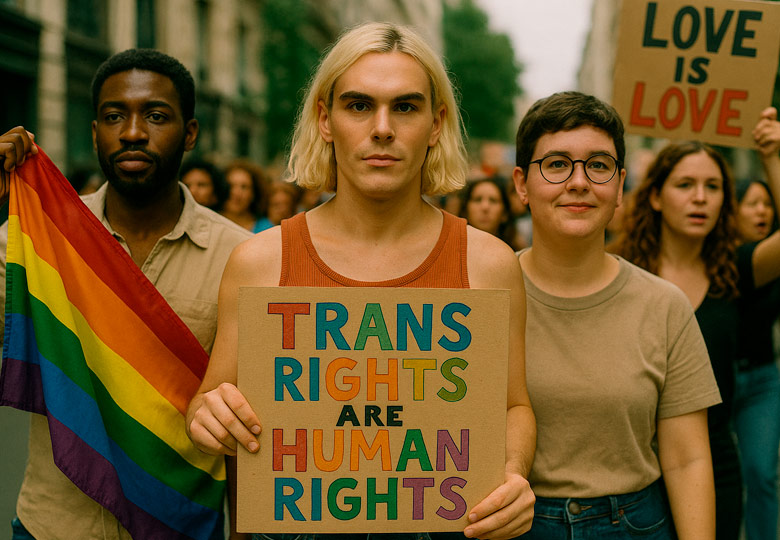
It is not a parade. It is a demonstration. A march. A political act.
And although there are sequins, what is behind it is history, pain, resistance and pride.
🎉 Why so much trouble with a word?
Because words matter.
Saying “parade” turns Pride into a spectacle. Something to look at, to applaud, to consume from the sidelines.
Saying “demonstration” returns it to its roots: a fight for rights, for memory, for social justice.
A demonstration is a collective statement that occupies public space with a political demand.
A parade is something else.
And if the LGTBIQ+ struggle continues to be necessary —because it is—, we need to continue demonstrating.
📜 A little historical context
The first Pride march was not a party. It was a response to police violence.
It happened in New York, in 1969, after the Stonewall riots. One more raid, but with a different ending.
Marsha P. Johnson, Sylvia Rivera and other trans, racialized and homeless activists said enough.
And so, Pride was born. Not from comfort, but from organized rage.
In Spain, the first Pride demonstration was in 1977, in Barcelona. And it ended with police charges.
It was not legal until years later.
Since then, every June 28 (or the nearest Saturday), we take to the streets to remember and protest.
🧠 Why it is still a demonstration (in the middle of 2025)
Legal progress may have been made.
Some streets may be dyed rainbows.
There may be a lot of inclusive marketing sold in June.
But reality still hurts:
- Trans people continue to be killed in many countries.
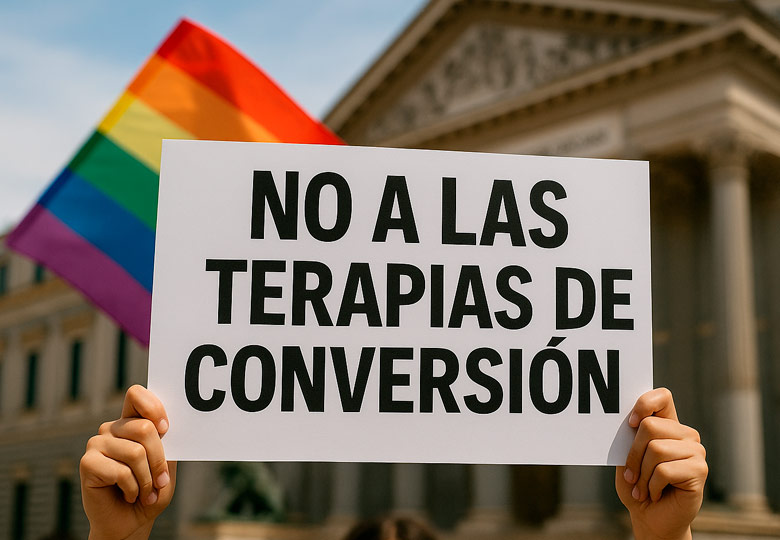
- There are still conversion therapies (yes, also in Spain).
- Queer teenagers continue to be harassed in classrooms.
- They continue to kick people out of the house for being LGTBIQ+.
- They continue to make us invisible in health centers, institutions and the media.
Do we really believe that there are no more reasons to go out on the streets?
🌈 And the music, the colors, the celebration…?
Of course they are. Because celebrating is also political.
Dancing in the street without fear is a form of vindication.
Showing ourselves, without censorship or apology, is a victory against the closet.
It is not about “party or fight”. It is about both at the same time.
Happiness is also protest when they have wanted to see you sad all your life.
📌 Key differences: parade vs demonstration
|
Parade |
Demonstration |
|---|---|
|
Visual spectacle |
Political action |
|
Audience as spectator |
Public as active agent |
|
Organized by institutions, brands or governments |
Organized by social groups |
|
Not always with a cause behind |
You have specific demands |
|
You can see it from the barrier |
You live from within |
👀 What if there are marks? Isn’t it all marketing?
This is where the debate gets complicated.
Many brands join Pride to improve their image. Sometimes without coherence, without commitment and without hiring people from the group.
This is called pinkwashing.
But there are also companies that truly support, that give space, that have inclusive internal policies, that hire LGTBIQ+ people and that are present all year round, not just in June.
The key? Distinguish between supporting and appropriating. Between adding and shining without having fought.
💬 What if Pride is diluting?
There are people from the group itself who are beginning to wonder if Pride is losing political strength.
Yes we have let our guard down.
If we have allowed the party to cover up the rage.
And it is valid to question it. Because it is true that many demonstrations no longer have banners, but sponsors.
And there are those who go “to see the show”, but don’t even know why it is done.
The solution? Repoliticize Pride.
Without losing joy. Without giving up visibility. But without forgetting why we started.
🧭 What can you do (yes, you)
- Don’t call it a parade. Call it a Pride demonstration.
- Participate: go beyond the selfie. Walk. Listen. Support.
- Carry a banner: express yourself. Tell the world why you are there.
- Get informed: know the story. Know the demands.
- Take care of others: not all LGTBIQ+ people feel safe in public spaces. Be a support network.
📣 When we march, we advance
Pride is not just a date. It is a collective memory.
It is the echo of those who fought before and the cry of those who still cannot do so.
It is not a parade because we are not here to entertain.
We come to say: here we are, we continue, we resist, and we are not going to hide anymore.
So, this year (and every year to come), when they ask you if you are going “to the parade”, smile and answer firmly:
“No. I’m going to the Pride rally. Are you coming?”