

What is a mariliendre and why do we keep talking about it?
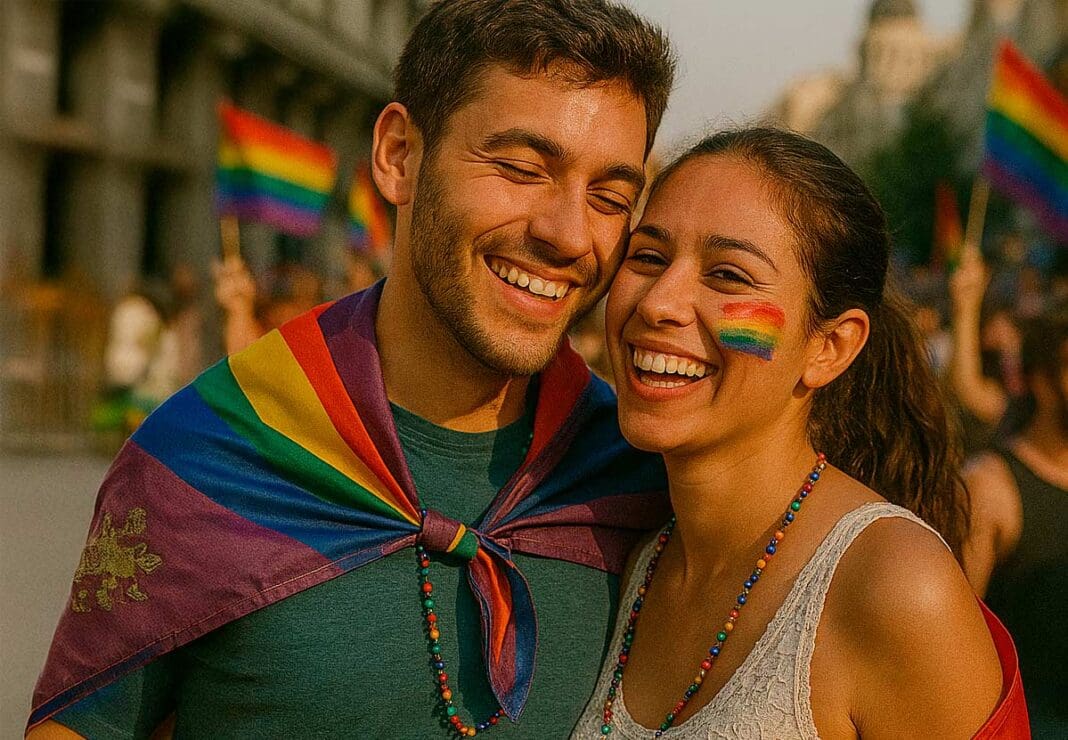
The word sounds like a joke, like the name of a gossipy neighbor or like an Almodóvar character. And, in a way, it is all of that at once. Mariliendre is a term that has been circulating for decades in the bars, parties and conversations of the LGTBIQ+ collective. It designates, in a few words, that heterosexual woman—almost always cisgender—who moves like a fish in water in queer environments, surrounded by gay friends (and not only), assuming a role as ally, accomplice and, sometimes, even unofficial protagonist.
But is this figure as positive as it seems? Or should we rethink it in light of current debates about gender, privilege and representation?
A little history: from the bar to TikTok
Although the figure of the mariliendre has existed for a long time, the term as such began to become popular in Spain at the end of the 20th century. It is said that it comes from the mixture between María, a generic name for women, and nit, that parasite that sticks to the hair. Affectionate? Not precisely. And yet, many wear it with pride, as a medal of unconditional love for their friends in the group.
During the 80s and 90s, in the midst of the explosion of urban queer culture, the mariliendre was almost a necessary character. While the world was still rejecting gays, they were there: listening, dancing, consoling and defending their pack. In more recent times, this relationship has also been made visible on social networks, in series such as Pose, Veneno or even RuPaul’s Drag Race, where the concept has evolved, but continues to generate debate.
Accidental allies or protagonists?
There is no doubt that many mariliendres have been great allies. Some have been in the front row at protests, given real emotional support at coming outs, and created safe spaces when there were none.
However, there are also criticisms: to what extent have some straight women used their closeness to the LGTBIQ+ community as a form of personal validation? What happens when they occupy spaces that do not belong to them? And what happens if in that “friendship” there are unequal power dynamics, paternalism or even fetishization?
This is where things get complicated. Because the truth is that there is no single way to be a mariliendre. There are those who experience this closeness through affection and commitment, and others who simply seek the brilliance of queerness without assuming the struggles that it entails.
Mariliendres today: inclusion or appropriation?
With the rise of intersectional feminism, discourses on identity and debates about safe spaces, the figure of the mariliendre has been revalued, but it has also been put under the magnifying glass.
Nowadays, “having gay friends” is no longer enough to call yourself an ally. Commitment is measured in another way: do you inform yourself about trans realities? Do you support causes beyond Pride? Do you intervene when you see LGBTIphobic or sexist attitudes, even in your circle?
Many people in the group no longer look favorably on that friend who calls herself a mariliendre but who, in reality, only appears for the photo or for the party. Or the one who turns his gay best friend into an emotional accessory or “pet.”
Because yes: queer is not a Saturday night costume. And being an ally is not a label for your Instagram profile either.
When the label is uncomfortable: should we retire the word?
Like any popular term, mariliendre is divisive. For some, it is a loving tribute to a real friendship that has survived rejection, secrets and many nights of laughter and tears. For others, it is an anachronistic word, loaded with condescension, that does not fit with current values of inclusion, horizontality and mutual care.
Also, it raises an interesting dilemma: why does a friendship need a specific label when it involves a straight cis woman and an LGTBIQ+ person? Isn’t it, in some way, a way of marking differences and not equalizing them?
Critical perspective: does mariliendre perpetuate stereotypes?
And now comes the awkward moment. Because it must also be said: some catties, even unintentionally, can reinforce harmful stereotypes. The image of the gay friend as the “fashionable confessor”, the “shopping companion” or the “sensitive and safe boy” has been exploited to the point of exhaustion in films, series and networks. And who usually accompanies that narrative? Well yes, the mariliendre.
From this critical perspective, the risk is in reducing LGTBIQ+ people to secondary characters in a story that, curiously, continues to center on a straight woman. For this reason, many voices within LGTBIQ+ activism invite us to question, reformulate or even leave this concept behind.
So… it’s time to say goodbye to the term?
Not necessarily. Perhaps, more than erasing the word, what we have to do is give it a new meaning. Make “mariliendre” stop being a folkloric or comedy figure, and become a real symbol of critical, empathetic and conscious alliance. An ally who does not steal the spotlight, who does not need a label, but who is there, listens, learns and defends.
Because friendship between straight women and people from the collective can be a space of transformative affection. But only if there is mutual listening, care and a commitment that goes beyond aesthetics or superficial complicity.
Key ideas to think about the role of the mariliendre today
- Question the label: Is it necessary or limiting?
- Listen before you speak: it’s not all about one.
- Participate from the support, not from the center.
- Learn about the real struggles of the collective, beyond the party.
- Make space, don’t take up space.
In summary…
The concept mariliendre can make us laugh, move us or make us uncomfortable, and that is already a good starting point. Because if it makes us think, question and talk, then it is still relevant. The key is how we use it, where we live it, and whether it is really serving to add value or simply to romanticize a dynamic that deserves to be rethought.
We may not have a definitive answer. But the next time someone defines themselves as mariliendre… maybe it’s a good time to ask them: and you, how do you really accompany them?